Drones are revolutionizing how we protect communities, respond to emergencies, and monitor public spaces, creating unprecedented opportunities for enhanced safety measures worldwide.

🚁 The Dawn of Aerial Intelligence in Public Safety
The integration of unmanned aerial vehicles into public safety operations represents one of the most significant technological advances in emergency services and law enforcement. These sophisticated flying machines have evolved from military tools to indispensable assets for civilian protection, offering capabilities that were once impossible or prohibitively expensive.
Public safety agencies worldwide are discovering that drones provide a unique vantage point that bridges the gap between ground-level operations and expensive helicopter deployments. With advanced sensors, thermal imaging capabilities, and real-time data transmission, these aerial platforms are transforming how first responders assess situations, deploy resources, and ultimately save lives.
The adoption rate among fire departments, police agencies, search and rescue teams, and emergency management organizations has accelerated dramatically. What began as experimental programs have matured into essential operational components that enhance situational awareness and reduce response times during critical incidents.
Emergency Response: Minutes That Save Lives ⏱️
When emergencies unfold, every second counts. Drones excel at rapid deployment, reaching incident scenes faster than traditional ground vehicles, especially in congested urban environments or remote locations. This speed advantage translates directly into better outcomes for those in distress.
Fire departments leverage thermal imaging drones to identify hotspots within burning structures, detect victims through smoke and darkness, and assess structural integrity before sending personnel into dangerous situations. These capabilities reduce firefighter injuries while improving rescue success rates significantly.
Search and Rescue Operations Reimagined
Missing person cases benefit tremendously from drone technology. Equipped with high-resolution cameras and thermal sensors, search drones can cover vast areas in fractions of the time required by ground teams. They navigate difficult terrain—dense forests, mountainous regions, swamplands—that would slow or stop human searchers.
The technology proves particularly valuable during golden hours immediately following disappearances. Drones can systematically scan sectors, transmitting real-time imagery to command centers where coordinators direct ground resources to promising locations. This coordinated approach dramatically increases the probability of locating missing individuals before conditions deteriorate.
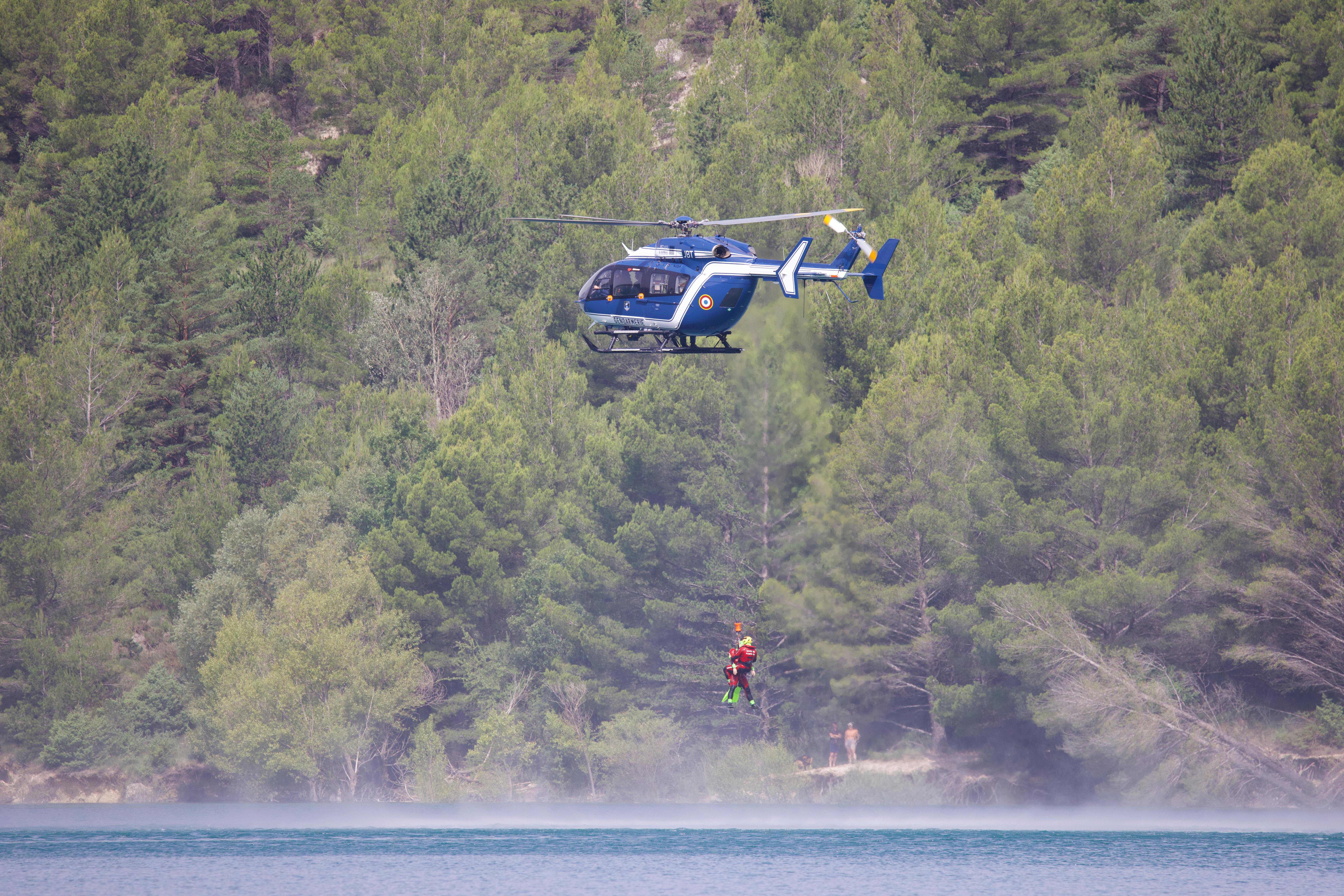
Water rescue scenarios also benefit from aerial surveillance. Drones spot swimmers in distress, track currents, and even deliver flotation devices to struggling individuals while rescue boats make their approach. Several agencies now carry drones equipped with deployable life preservers as standard equipment.
Law Enforcement: Eyes in the Sky 👮
Police departments worldwide are incorporating drones into their operational toolkit for various applications that enhance officer safety and investigative capabilities. These applications range from tactical support during high-risk situations to routine documentation of traffic accidents.
During active shooter incidents or barricaded suspect situations, drones provide critical intelligence without exposing officers to gunfire. They can peer into windows, navigate around buildings, and establish perimeters while keeping personnel at safe distances. This reconnaissance capability informs tactical decisions and helps negotiators understand the situation more completely.
Traffic Management and Accident Reconstruction
Major traffic accidents often require extensive investigation and documentation, processes that traditionally kept highways closed for hours. Drones now capture comprehensive aerial photogrammetry in minutes, creating detailed 3D models of crash scenes. This efficiency reduces road closure times while providing superior documentation for insurance claims and legal proceedings.
Traffic monitoring represents another valuable application. During major events, natural disasters, or infrastructure failures, drones assess traffic patterns and identify bottlenecks, enabling traffic management centers to implement effective detour strategies and keep communities mobile.
🌊 Natural Disaster Response and Damage Assessment
When hurricanes, earthquakes, floods, or wildfires strike, understanding the scope of damage quickly determines how effectively communities can respond. Drones excel at rapid damage assessment, flying over affected areas to document destruction, identify stranded residents, and locate infrastructure failures.
Following Hurricane disasters, emergency management teams deploy drone fleets to survey neighborhoods, prioritizing rescue operations and guiding recovery resources. The aerial perspective reveals impassable roads, compromised bridges, and isolated populations that might otherwise remain undiscovered for days.
Wildfire Monitoring and Management
Wildfire response has been transformed by drone technology. Specialized units equipped with thermal cameras monitor fire perimeters day and night, detecting hotspots that might escape ground observation. This intelligence guides firefighting aircraft, ground crews, and evacuation orders with unprecedented precision.
Beyond active firefighting, drones conduct post-fire assessments to identify smoldering areas that could reignite and evaluate burn patterns to improve future forest management strategies. Some advanced systems even deploy ignition devices for controlled burns, executing prescribed fire plans with minimal personnel risk.
Critical Infrastructure Protection and Inspection 🏗️
Public safety extends beyond emergency response to include preventing failures in critical infrastructure. Drones routinely inspect bridges, dams, power lines, cell towers, and industrial facilities, identifying potential problems before they become catastrophic failures.
Bridge inspections exemplify these benefits perfectly. Traditional inspections require expensive equipment, lane closures, and significant personnel risk. Drones conduct detailed visual inspections of bridge understructures, capturing high-resolution imagery of every structural element in hours rather than days, at a fraction of the cost and without disrupting traffic.
Power Grid and Utility Monitoring
Electric utilities deploy drones to patrol transmission lines across vast distances, identifying damaged insulators, vegetation encroachment, and equipment degradation. Thermal imaging detects overheating components before failures occur, preventing outages that could affect thousands of customers.
Following storms, utility drones rapidly assess damage across entire service territories, prioritizing repair crews and providing realistic restoration timelines. This application has become standard practice for progressive utility companies committed to resilient infrastructure.
Crowd Management and Public Event Security 🎉
Large public gatherings—concerts, sporting events, protests, festivals—present complex security challenges. Drones provide event security teams with comprehensive situational awareness, monitoring crowd density, identifying potential disturbances, and guiding security personnel to emerging problems.
The aerial perspective helps coordinators recognize dangerous crowd dynamics before stampedes or crushes occur. Security teams can implement crowd control measures proactively rather than reactively, significantly reducing injury risks at major events.
Beyond security, drones assist with traffic flow management around venues, medical emergency response within crowds, and lost child reunification. Some progressive venues have integrated drones into standard operational procedures for all major events.
📡 Advanced Technologies Enhancing Drone Capabilities
The effectiveness of public safety drones continues expanding through technological innovation. Artificial intelligence and machine learning algorithms now enable autonomous operations, object recognition, and predictive analytics that multiply drone utility exponentially.
Thermal Imaging and Multispectral Sensors
Modern public safety drones carry sophisticated sensor packages far beyond standard cameras. Thermal imaging cameras detect heat signatures through smoke, darkness, and foliage, proving invaluable for search operations, fire response, and suspect apprehension. These sensors reveal what human eyes cannot see, fundamentally expanding operational capabilities.
Multispectral imaging assesses environmental conditions, detects chemical spills, monitors water quality, and identifies stressed vegetation that might indicate infrastructure problems. These advanced sensors transform drones into versatile inspection platforms applicable across numerous public safety domains.
AI-Powered Analytics and Autonomous Operations
Artificial intelligence enables drones to recognize specific objects—vehicles, individuals, hazardous materials—and automatically alert operators to significant findings. Machine learning algorithms analyze footage faster than human operators, highlighting important details that might otherwise be missed during information-rich emergencies.
Autonomous flight capabilities allow drones to execute pre-programmed inspection routes, systematically documenting infrastructure or patrolling defined areas without constant pilot attention. This automation frees operators to analyze incoming data rather than concentrating solely on flight control.
Building Effective Public Safety Drone Programs 🎯
Successful implementation requires more than purchasing drones. Agencies must develop comprehensive programs encompassing training, policy development, community engagement, and ongoing operational refinement.
Pilot training programs should exceed basic recreational flight instruction, incorporating emergency scenario practice, sensor operation, data management, and understanding of applicable regulations. Many progressive agencies require pilots to maintain commercial certifications and complete specialized public safety drone courses.
Policy and Privacy Considerations
Public safety drone operations must balance operational effectiveness with legitimate privacy concerns. Transparent policies governing data retention, flight restrictions, and appropriate use cases build community trust while protecting civil liberties.
Best practices include establishing clear guidelines about when drones may be deployed, implementing data security protocols, limiting retention periods for non-evidentiary footage, and conducting regular community engagement sessions. These measures demonstrate responsible stewardship of powerful surveillance technology.
Overcoming Implementation Challenges 💡
Despite obvious benefits, agencies face several obstacles when establishing drone programs. Budget constraints, regulatory complexity, training requirements, and community concerns can slow or prevent implementation without strategic approaches.
Grant funding from federal and state sources can offset initial acquisition costs. Many successful programs began with modest equipment budgets, demonstrating value through pilot projects before expanding capabilities. Partnerships with neighboring jurisdictions enable resource sharing and reduce individual agency expenses.
Regulatory Navigation and Airspace Integration
Aviation regulations continue evolving as drone operations expand. Public safety agencies must navigate Federal Aviation Administration requirements, secure necessary waivers for operations beyond visual line of sight, and coordinate with air traffic control in controlled airspace.
Progressive agencies assign personnel to monitor regulatory developments and maintain relationships with aviation authorities. This proactive approach ensures programs remain compliant while advocating for regulation modifications that enhance public safety capabilities.
The Future Landscape of Public Safety Drones 🚀
Emerging technologies promise even greater capabilities. Drone swarm operations will enable multiple coordinated units working together, vastly expanding coverage areas and operational complexity. Improved battery technology will extend flight times, while enhanced weatherproofing will reduce operational limitations.
Integration with smart city infrastructure will create responsive systems where drones automatically deploy to reported incidents, arriving before traditional responders. 5G networks will enable real-time transmission of high-definition sensor data, improving situational awareness for incident commanders.
Autonomous Emergency Response Systems
Future systems may feature drones that autonomously respond to 911 calls, arriving at scenes within minutes to provide initial assessment and relay critical information to approaching units. These systems would fundamentally transform emergency response timelines and resource allocation strategies.
Medical delivery drones represent another frontier, transporting defibrillators, medications, or blood products to emergency scenes faster than ambulances can navigate congested roads. Several pilot programs have demonstrated feasibility, with broader implementation likely within coming years.
Creating Safer Communities Through Innovation ✨
The evolution of public safety drone applications demonstrates how thoughtful technology adoption creates measurable improvements in community protection. These aerial platforms provide capabilities that enhance traditional emergency services rather than replacing human expertise and compassion.
Agencies that embrace drone technology position themselves at the forefront of public safety innovation, delivering superior service while optimizing resource allocation. The investment in equipment, training, and program development yields returns through lives saved, injuries prevented, and more efficient operations.
Communities benefit from faster emergency response, more thorough investigations, proactive infrastructure monitoring, and enhanced disaster resilience. These tangible improvements justify the effort required to implement effective drone programs and navigate associated challenges.
As technology continues advancing and operational experience grows, public safety drones will become increasingly integrated into standard practice. The agencies pioneering these applications today are establishing best practices and proving concepts that will shape public safety for decades.
The transformation is underway, with drones elevating safety standards across emergency services, law enforcement, infrastructure protection, and disaster response. This aerial revolution promises a safer tomorrow through innovation, dedication, and commitment to protecting those we serve.