Digital twin technology is revolutionizing emergency planning by creating virtual replicas of physical environments, enabling organizations to simulate, predict, and optimize crisis response strategies before disasters strike.

🌐 Understanding Digital Twins in Emergency Management Context
Digital twin models represent sophisticated virtual representations of physical assets, environments, or systems that continuously update based on real-time data. In emergency planning, these dynamic models create comprehensive digital replicas of cities, critical infrastructure, facilities, and entire regions. They integrate data from multiple sources including IoT sensors, satellite imagery, weather stations, and historical records to provide emergency managers with an unprecedented level of situational awareness.
The power of digital twins lies in their ability to mirror real-world conditions with remarkable accuracy. Unlike static maps or traditional planning tools, digital twins evolve continuously, incorporating new data streams and adapting to changing circumstances. This dynamic nature makes them invaluable for emergency preparedness, allowing organizations to test scenarios, identify vulnerabilities, and develop response strategies in a risk-free virtual environment.
Emergency management agencies worldwide are discovering that digital twin technology bridges the gap between theoretical planning and practical execution. By simulating disasters before they occur, responders can identify bottlenecks, optimize resource allocation, and develop more effective evacuation routes without risking lives or resources during actual emergencies.
🔧 Core Components That Make Digital Twins Effective
Effective digital twin implementations for emergency planning require several interconnected components working in harmony. The foundation begins with comprehensive data collection systems that gather information from diverse sources. IoT sensors monitor everything from structural integrity of buildings to traffic patterns, while weather stations provide meteorological data crucial for predicting natural disasters.
Geographic Information Systems (GIS) form another critical component, providing spatial context that allows emergency planners to visualize how disasters might unfold across different terrains and urban environments. These systems integrate topographical data, infrastructure layouts, population density information, and critical facility locations into cohesive digital representations.
Advanced analytics and artificial intelligence algorithms process vast amounts of data to identify patterns, predict outcomes, and generate actionable insights. Machine learning models can analyze historical disaster data to forecast how similar events might unfold in the future, while AI-powered simulations can test thousands of response scenarios in minutes.
Real-Time Data Integration Architecture
The architecture supporting digital twins must accommodate continuous data streams from multiple sources. Cloud computing platforms provide the scalability needed to process massive datasets, while edge computing enables rapid processing of time-sensitive information from field sensors. This hybrid approach ensures that digital twins remain current while maintaining the computational speed necessary for emergency decision-making.
Interoperability standards allow different systems to communicate seamlessly, ensuring that data from emergency services, utility companies, transportation networks, and government agencies flows into the digital twin without friction. This integration creates a holistic view of the emergency landscape that no single organization could achieve independently.
📊 Practical Applications Transforming Emergency Preparedness
Digital twins are revolutionizing flood management in coastal and riverside communities. By integrating real-time weather data, river level measurements, and topographical information, these models can predict flood patterns with remarkable precision. Emergency planners use these simulations to identify which neighborhoods face the greatest risk, optimize the placement of flood barriers, and develop evacuation routes that avoid areas likely to become impassable.
Fire departments are leveraging digital twin technology to prepare for urban wildfires and building fires. Virtual models of cities incorporate information about building materials, vegetation density, wind patterns, and water supply infrastructure. When fires break out, these models help commanders predict fire spread, identify optimal access routes for emergency vehicles, and determine the safest evacuation corridors for residents.
Healthcare systems utilize digital twins to prepare for mass casualty events and disease outbreaks. Hospital administrators can simulate patient surges, test bed allocation strategies, and optimize supply chain logistics before crises overwhelm their facilities. During the COVID-19 pandemic, several healthcare systems used digital twin models to predict ICU capacity needs and plan temporary facility expansions.
Infrastructure Resilience and Vulnerability Assessment
Critical infrastructure operators use digital twins to identify vulnerabilities before disasters expose them. Power companies simulate grid failures under various disaster scenarios, identifying weak points in their networks and developing strategies to maintain service during emergencies. Water utilities model how contamination might spread through distribution systems, enabling faster response to potential threats.
Transportation networks benefit significantly from digital twin applications. Cities create virtual models of their entire transportation infrastructure, allowing planners to simulate how evacuations would proceed during different disaster scenarios. These simulations reveal chokepoints, identify alternative routes, and help optimize traffic signal timing to facilitate rapid evacuations.
🎯 Strategic Benefits for Emergency Response Organizations
Organizations that implement digital twin technology for emergency planning experience substantial improvements in response effectiveness. The ability to test multiple scenarios without real-world consequences allows teams to identify optimal strategies through iterative experimentation. This approach reveals non-obvious solutions that traditional planning methods might miss.
Training programs gain new dimensions when conducted within digital twin environments. Emergency responders can practice coordinated responses to complex disasters in realistic virtual settings. These simulations provide valuable experience without exposing personnel to actual danger, while allowing trainers to introduce unexpected complications that test adaptability and decision-making skills.
Resource allocation becomes significantly more efficient when guided by digital twin insights. Emergency management agencies can determine optimal stockpile locations by simulating various disaster scenarios and analyzing which placements provide the fastest response times. This data-driven approach replaces guesswork with evidence-based strategy.
Cost Savings and Return on Investment
While digital twin implementation requires significant upfront investment, the long-term financial benefits often justify the expenditure. Organizations reduce costs associated with ineffective responses, minimize damage to infrastructure through better preparedness, and optimize resource deployment to avoid waste. Insurance companies increasingly recognize the value of digital twin-enabled preparedness, sometimes offering premium reductions to organizations that demonstrate sophisticated planning capabilities.
The predictive maintenance capabilities inherent in digital twin technology generate additional savings. By monitoring infrastructure health through continuous data collection, organizations can identify maintenance needs before failures occur, reducing emergency repair costs and preventing disaster-related infrastructure collapses.
🚀 Implementation Strategies for Maximum Impact
Successful digital twin implementation begins with clear objectives and stakeholder alignment. Organizations must identify specific emergency planning challenges they aim to address and ensure that all relevant parties understand the technology’s potential and limitations. Building consensus among emergency management agencies, government officials, and infrastructure operators creates the collaborative foundation necessary for success.
Starting with pilot projects allows organizations to demonstrate value before committing to full-scale implementations. Many successful programs begin by modeling a single facility or small geographic area, using early successes to build support for broader adoption. These initial projects provide valuable lessons about data integration challenges, user training needs, and technical requirements.
Data governance frameworks must address privacy concerns, security requirements, and sharing protocols. Digital twins aggregate sensitive information about infrastructure vulnerabilities, population movements, and critical systems. Establishing clear policies about data access, usage restrictions, and security measures protects against misuse while enabling appropriate information sharing during emergencies.
Building Cross-Organizational Partnerships
Digital twins achieve maximum effectiveness when they incorporate data from multiple organizations. Emergency management agencies should establish partnerships with utility companies, transportation authorities, healthcare systems, and private sector entities that control critical infrastructure. These collaborations require formal agreements defining data sharing protocols, update responsibilities, and access permissions.
Technical integration presents significant challenges when combining data from legacy systems with modern digital twin platforms. Organizations must invest in middleware solutions that translate between different data formats and establish standardized interfaces that allow seamless information exchange. These technical foundations enable the real-time data flows that make digital twins valuable for emergency response.
⚡ Advanced Technologies Enhancing Digital Twin Capabilities
Artificial intelligence and machine learning algorithms dramatically expand digital twin capabilities for emergency planning. These technologies identify patterns in historical disaster data, enabling predictive models that forecast how future events might unfold. Natural language processing allows emergency managers to query digital twins using conversational language, making sophisticated analyses accessible to non-technical users.
Augmented reality interfaces transform how responders interact with digital twin data during actual emergencies. First responders equipped with AR headsets can view real-time information overlaid on their physical environment, including building layouts, hazardous material locations, and optimal navigation routes. This technology bridges the gap between virtual planning and physical response operations.
Blockchain technology addresses trust and verification challenges in multi-stakeholder digital twin ecosystems. By creating immutable records of data provenance and modifications, blockchain ensures that all participants can trust the information presented by digital twins. This verification layer becomes particularly important when coordinating responses across organizational boundaries.
Internet of Things Integration
The proliferation of IoT devices provides digital twins with unprecedented data richness. Smart building systems monitor structural integrity, environmental conditions, and occupancy levels in real-time. Connected vehicles provide traffic pattern data that helps optimize evacuation routes. Environmental sensors detect early warning signs of disasters, from seismic activity to chemical leaks.
The challenge lies in managing the enormous data volumes these devices generate. Edge computing solutions process data locally before transmitting only relevant information to central digital twin platforms, reducing bandwidth requirements while maintaining real-time responsiveness. This distributed architecture ensures that digital twins remain current without overwhelming network infrastructure.
🌟 Overcoming Implementation Challenges
Technical complexity represents a significant barrier for many organizations considering digital twin adoption. The integration of diverse data sources, development of accurate models, and maintenance of system reliability require specialized expertise that may not exist within traditional emergency management agencies. Organizations address this challenge through partnerships with technology providers, recruitment of data scientists, and investments in training programs that build internal capabilities.
Data quality issues can undermine digital twin accuracy and user confidence. Incomplete datasets, outdated information, and measurement errors propagate through models, potentially leading to flawed recommendations. Establishing rigorous data validation processes, implementing automated quality checks, and creating feedback loops that identify and correct inaccuracies maintains the reliability essential for emergency planning applications.
Cultural resistance within organizations sometimes impedes digital twin adoption. Emergency responders accustomed to traditional planning methods may view digital twins with skepticism, particularly if early implementations suffer from technical problems or usability issues. Change management strategies that involve end users in design processes, demonstrate tangible benefits, and provide comprehensive training overcome this resistance.
Ensuring Model Accuracy and Validation
Digital twin models must accurately represent physical reality to provide value for emergency planning. Validation processes compare model predictions against actual outcomes from past emergencies, identifying discrepancies that indicate calibration needs. Regular validation exercises using historical data ensure that models remain accurate as systems evolve and conditions change.
Uncertainty quantification techniques acknowledge the limitations inherent in predictive models. Rather than presenting single outcomes, sophisticated digital twins provide probability distributions that characterize possible scenarios. This approach helps emergency planners understand the range of potential outcomes and prepare for multiple contingencies rather than relying on single-point predictions.
🔮 Future Developments Shaping Emergency Planning
The convergence of digital twin technology with quantum computing promises to revolutionize emergency planning capabilities. Quantum systems could process complex disaster simulations exponentially faster than current computers, enabling real-time optimization of response strategies as emergencies unfold. This computational power would allow emergency managers to evaluate millions of potential scenarios instantaneously, identifying optimal responses to rapidly evolving situations.
Autonomous systems guided by digital twin insights will increasingly support emergency response operations. Drones equipped with sensors could autonomously survey disaster areas, feeding real-time data back to digital twins that update response strategies accordingly. Autonomous vehicles might transport supplies or evacuate populations along routes optimized by digital twin simulations.
Social media integration will enhance digital twin awareness of population movements and emerging needs during disasters. Natural language processing algorithms could analyze social media posts to identify areas where people are trapped, injured, or require assistance, automatically updating digital twins with this crowdsourced intelligence. This integration would provide emergency managers with unprecedented situational awareness during fast-moving crises.
🎓 Building Organizational Capacity for Success
Organizations must invest in developing the human capabilities necessary to leverage digital twin technology effectively. Training programs should address both technical skills needed to operate and maintain systems and strategic competencies required to translate digital twin insights into actionable emergency plans. Cross-functional teams that include data scientists, emergency management professionals, and subject matter experts ensure that technical capabilities align with operational needs.
Executive leadership support proves critical for successful digital twin implementations. Leaders must champion the technology, allocate necessary resources, and drive the organizational changes required for adoption. This support includes defending initial investments during implementation phases when benefits may not yet be apparent and maintaining commitment through inevitable technical challenges.
Continuous improvement processes ensure that digital twin systems evolve to meet changing needs. After-action reviews following emergencies should evaluate how well digital twin predictions matched actual outcomes and identify opportunities for refinement. Regular stakeholder feedback sessions capture user experiences and generate ideas for enhancements that increase system value.
💡 Maximizing Value Through Strategic Integration
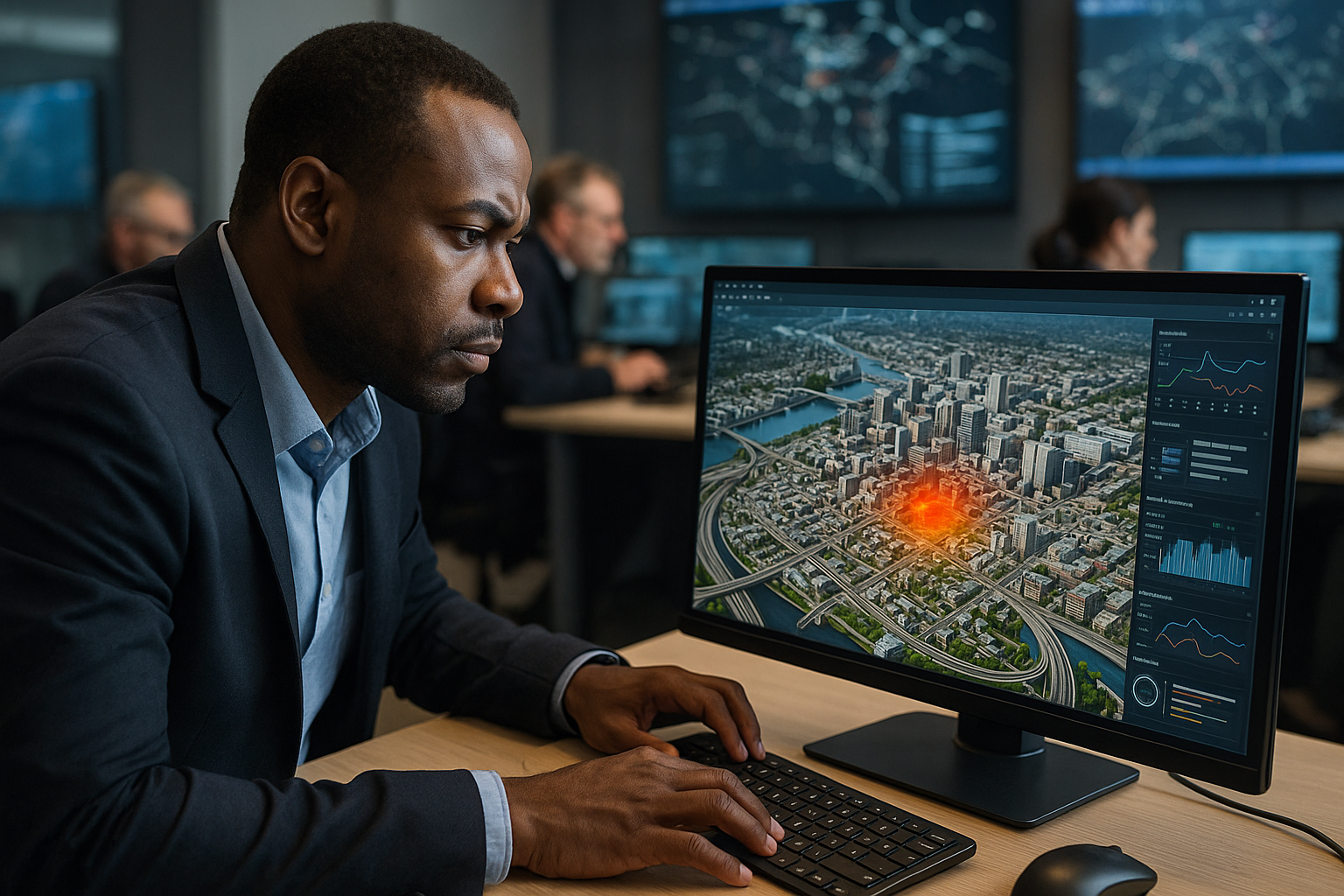
Digital twins achieve maximum impact when integrated into broader emergency management ecosystems rather than deployed as standalone tools. Connections to emergency operations centers, early warning systems, and communication platforms create seamless information flows that accelerate decision-making during crises. This integration ensures that digital twin insights reach decision-makers in actionable formats at critical moments.
Standardization efforts at national and international levels facilitate interoperability between different digital twin implementations. Common data formats, shared vocabularies, and standardized interfaces allow digital twins from different jurisdictions to exchange information during regional disasters that cross organizational boundaries. These standards enable the collaborative responses that large-scale emergencies demand.
The journey toward comprehensive emergency preparedness through digital twin technology requires sustained commitment, strategic investment, and collaborative partnerships. Organizations that embrace this transformative approach position themselves to protect lives, preserve infrastructure, and maintain community resilience in an era of increasingly complex and frequent disasters. The virtual environments created by digital twins provide safe spaces for experimentation, learning, and optimization that translate directly into more effective real-world emergency response capabilities.