
Smart wearables are revolutionizing emergency response, equipping first responders with real-time data, enhanced communication tools, and life-saving technology that transforms how they protect communities.

🚨 The Evolution of Emergency Response Technology
The landscape of emergency services has undergone remarkable transformation over the past decade. First responders—including paramedics, firefighters, police officers, and search-and-rescue teams—now operate in increasingly complex environments where split-second decisions can mean the difference between life and death. Traditional equipment, while reliable, often lacks the connectivity and intelligence needed to address modern challenges.
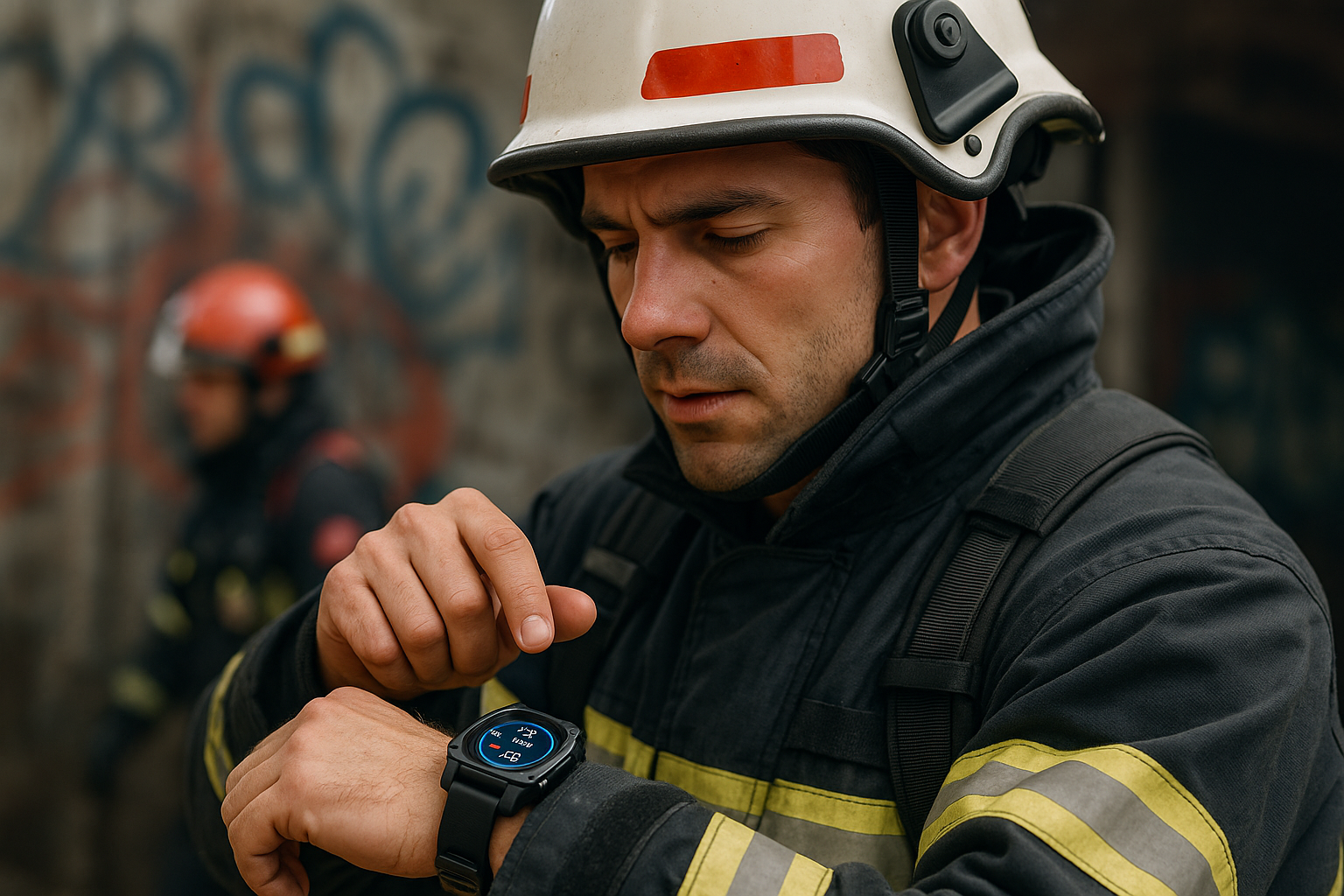
Smart wearables represent the next frontier in emergency response technology. These sophisticated devices integrate sensors, communication systems, and data analytics into compact, body-worn form factors. From smartwatches that monitor vital signs to augmented reality glasses that provide tactical information, these innovations are fundamentally changing how first responders work in the field.
The global market for wearable technology in public safety is experiencing exponential growth, with projections suggesting the sector will reach billions in value by 2030. This expansion reflects both technological advancement and the urgent need for tools that enhance responder safety while improving operational effectiveness.
Critical Capabilities: What Smart Wearables Bring to Emergency Situations
Real-Time Health Monitoring and Safety Alerts
One of the most transformative aspects of smart wearables is their ability to continuously monitor the wearer’s physiological condition. First responders frequently work in hazardous environments—burning buildings, contaminated zones, high-stress rescue operations—where physical exhaustion or exposure to dangerous substances can occur without immediate awareness.
Advanced wearable devices now track heart rate, body temperature, respiration rate, and even blood oxygen levels. When these metrics exceed safe thresholds, the system can automatically alert both the wearer and command personnel. This capability has already prevented numerous incidents of heat exhaustion, cardiac events, and other health emergencies among emergency workers.
Beyond basic vital signs, next-generation wearables incorporate environmental sensors that detect toxic gases, radiation levels, and air quality. Firefighters equipped with these devices receive immediate warnings about carbon monoxide concentrations or structural integrity issues, enabling them to make informed decisions about when to evacuate or request additional support.
Enhanced Communication and Coordination 📡
Effective communication remains the backbone of successful emergency operations. Traditional radio systems, while functional, present limitations in noisy environments and don’t always provide the contextual information needed for complex scenarios. Smart wearables address these challenges through multiple communication channels and intelligent information delivery.
Modern devices enable hands-free voice communication, text messaging, and even video transmission, all while allowing responders to keep their hands free for critical tasks. Voice-activated controls ensure that firefighters can request backup or relay information without fumbling for equipment in smoke-filled environments.
Location tracking integrated into wearables provides commanders with real-time visibility of team positions. This feature proves invaluable during large-scale incidents, building searches, or wilderness rescue operations where maintaining situational awareness across dispersed teams is essential for both mission success and personnel safety.
Transformative Technologies Shaping the Future
Augmented Reality for Tactical Intelligence
Augmented reality (AR) represents one of the most promising developments in first responder wearables. AR-enabled glasses or helmet-mounted displays overlay digital information onto the user’s field of view, providing instant access to building layouts, hazardous material data, victim medical histories, and navigation assistance.
Imagine a firefighter entering an unfamiliar structure with AR glasses displaying the building’s floor plan, highlighting the quickest route to trapped victims while indicating structural weaknesses detected by external sensors. This technology transforms how responders navigate dangerous environments, reducing response times and improving outcomes.
Police officers benefit similarly from AR systems that can display suspect information, vehicle registration data, or crowd analysis during public events. Emergency medical technicians gain access to patient records and treatment protocols without leaving the patient’s side, enabling faster, more informed medical interventions.
Artificial Intelligence and Predictive Analytics 🤖
The integration of artificial intelligence into wearable platforms creates opportunities for predictive capabilities that were previously impossible. Machine learning algorithms analyze patterns in physiological data, environmental conditions, and incident characteristics to anticipate problems before they become critical.
AI-powered wearables can predict when a firefighter is approaching dangerous levels of fatigue or heat stress, recommending rotation or rest before performance degrades. These systems learn individual baselines and adapt to each responder’s unique physiological profile, providing personalized safety recommendations.
Predictive analytics also enhance operational planning. By analyzing historical incident data alongside current conditions, AI systems can suggest optimal resource allocation, identify potential hazards, and recommend tactical approaches based on successful outcomes from similar past events.
Real-World Applications Saving Lives Today
Fire Service Innovations
Fire departments worldwide are adopting smart wearables to protect their personnel while improving firefighting effectiveness. Integrated thermal imaging sensors help firefighters see through smoke, identifying hot spots and locating victims in zero-visibility conditions. These compact sensors, embedded in helmets or worn on the body, provide continuous thermal awareness without requiring handheld devices.
Smart SCBA (Self-Contained Breathing Apparatus) systems monitor air consumption and automatically calculate remaining operational time. When air supplies run low, the system alerts both the firefighter and incident command, ensuring timely evacuation before emergency reserves are needed.
Several progressive fire services have implemented wearable devices that create digital accountability systems, automatically tracking personnel entry and exit from hazardous zones. This technology eliminates manual accountability procedures that can be error-prone during chaotic emergency scenes.
Emergency Medical Services Breakthroughs
Paramedics and emergency medical technicians leverage wearables to enhance patient care quality while improving their own safety. Smart gloves with embedded sensors can measure patient vital signs through touch, transmitting data directly to hospital emergency departments before the ambulance arrives.
Wearable cameras document patient interactions, providing valuable records for medical review and legal protection. These devices also enable telemedicine consultations, allowing field medics to receive real-time guidance from emergency physicians for complex cases.
Body-worn sensors help EMS personnel avoid repetitive strain injuries by monitoring lifting mechanics and alerting them to potentially harmful movements. Given the high rate of back injuries in emergency medical services, this preventive capability offers significant long-term health benefits.
Law Enforcement Safety and Accountability 👮
Police departments utilize smart wearables to enhance officer safety while promoting transparency and accountability. Body-worn cameras have become standard equipment in many jurisdictions, providing objective documentation of interactions with the public.
Advanced wearable systems now integrate biometric monitoring with situational awareness features. When an officer’s stress indicators suggest a potentially dangerous encounter, the system can automatically notify nearby units and begin recording, ensuring rapid backup response and comprehensive documentation.
Smart badges and wearable panic buttons enable officers to summon assistance without reaching for radio equipment—a critical capability during physical confrontations or other situations where manual activation isn’t possible.
Overcoming Implementation Challenges
Addressing Privacy and Data Security Concerns
The collection of continuous physiological and location data raises legitimate privacy concerns among first responders and the public. Successful implementation requires transparent policies governing data collection, storage, access, and retention. Organizations must balance operational benefits with individual privacy rights.
Robust cybersecurity measures are essential to protect sensitive information from unauthorized access or cyberattacks. Encryption, secure authentication, and regular security audits should be fundamental components of any wearable technology deployment.
Many agencies address these concerns by implementing clear guidelines that specify when recording occurs, who can access data, and how long information is retained. Involving first responders in policy development helps ensure procedures respect privacy while maintaining operational effectiveness.
Ensuring Durability and Reliability
Emergency response environments are inherently harsh. Wearable devices must withstand extreme temperatures, moisture, physical impacts, and exposure to chemicals or contaminants. Manufacturers continuously improve ruggedization techniques, but durability remains an ongoing challenge.
Battery life presents another critical consideration. Devices that require frequent recharging or fail mid-operation create safety risks rather than enhancing protection. Extended battery capabilities and rapid charging technologies are essential features for emergency response applications.
Standardization and interoperability across different devices and systems prevent vendor lock-in and ensure compatibility as technology evolves. Industry-wide standards facilitate information sharing between agencies and enable seamless integration of new capabilities.
Training and Cultural Adoption 📚
Technology alone doesn’t guarantee success—effective implementation requires comprehensive training and cultural acceptance. Many veteran first responders have decades of experience with traditional methods and may be skeptical of new technologies that alter established workflows.
Progressive agencies address this challenge through inclusive training programs that demonstrate clear benefits while respecting existing expertise. Hands-on practice sessions, peer mentorship, and gradual implementation help build confidence and competence with new systems.
Involving end-users in technology selection and testing creates buy-in and ensures chosen solutions address actual operational needs rather than implementing technology for its own sake. First responders who participate in development provide invaluable insights that improve device functionality and usability.
The Economic Case for Smart Wearables Investment
While initial procurement costs for smart wearables may seem substantial, comprehensive cost-benefit analysis typically demonstrates strong return on investment. Reduced injuries translate directly to lower workers’ compensation claims, decreased overtime for replacement personnel, and improved long-term workforce health.
Improved operational efficiency enables agencies to accomplish more with existing resources. Faster response times, enhanced coordination, and better situational awareness contribute to improved outcomes that justify technology investments.
Grant programs and public-private partnerships increasingly support emergency service technology adoption. Federal agencies, foundations, and technology companies offer funding opportunities that make advanced wearables accessible even for smaller departments with limited budgets.
🔮 Emerging Trends and Future Possibilities
Integration with Smart City Infrastructure
The evolution of smart cities creates opportunities for wearable technology to interact with broader urban systems. Connected traffic signals could automatically provide emergency vehicles with green lights, while building management systems might share real-time occupancy data and structural information directly to responding units.
Distributed sensor networks throughout urban environments could feed environmental data to first responder wearables, alerting them to hazardous conditions before they arrive on scene. This integration of personal, vehicle, and infrastructure technologies creates comprehensive situational awareness ecosystems.
Advanced Materials and Biointegration
Research into flexible electronics, smart fabrics, and biocompatible materials promises wearables that are increasingly comfortable and unobtrusive. Future devices might be woven directly into uniforms or integrated into protective equipment, eliminating the need for separate devices that could be forgotten or damaged.
Biointegrated sensors that interface directly with the body could provide unprecedented physiological monitoring accuracy while remaining completely invisible during operation. Though still largely experimental, these technologies represent the long-term trajectory of wearable development.
Drone Integration and Robotic Collaboration
Smart wearables increasingly serve as control interfaces for unmanned systems that extend first responder capabilities. Gesture-controlled drones can scout dangerous areas, delivering real-time video to AR displays. Ground robots equipped with sensors can enter collapsed structures or hazmat environments, operated remotely by personnel wearing haptic feedback devices.
This human-machine teaming approach multiplies responder effectiveness while minimizing risk exposure. As artificial intelligence advances, these robotic assistants will become increasingly autonomous, responding to verbal commands or anticipating responder needs based on situational context.
Building Tomorrow’s Emergency Response Today 🚀
The transformation of emergency services through smart wearable technology is not a distant possibility—it’s happening now. Forward-thinking agencies worldwide are implementing these systems, gathering real-world data, and refining approaches that will define the future of public safety.
Success requires collaboration among technology developers, emergency service professionals, policymakers, and communities. By working together to address technical challenges, privacy concerns, and implementation barriers, stakeholders can create systems that truly serve first responder needs while advancing public safety missions.
Investment in wearable technology represents investment in the people who run toward danger when others flee. These brave professionals deserve every advantage that modern technology can provide. Smart wearables don’t replace human judgment, courage, or expertise—they amplify these qualities, enabling first responders to work more safely, more effectively, and with greater confidence.
As technology continues advancing at remarkable pace, the gap between today’s capabilities and tomorrow’s possibilities narrows steadily. The emergency services that embrace innovation, invest in their personnel, and remain committed to continuous improvement will be best positioned to protect their communities in an increasingly complex world.
The future of emergency response is being written today, one innovative device and one committed first responder at a time. Smart wearables represent not just technological progress, but a fundamental commitment to those who dedicate their lives to protecting others. This investment in technology is ultimately an investment in safer communities, more effective emergency response, and the wellbeing of those who answer the call when help is needed most.