Facial recognition technology has rapidly evolved from science fiction into everyday reality, reshaping how we interact with devices, access services, and navigate public spaces while raising profound questions about personal privacy.

🔍 The Rise of Facial Recognition in Modern Society
Facial recognition technology has become ubiquitous in our daily lives, often operating invisibly in the background. From unlocking smartphones to boarding airplanes, this biometric authentication method analyzes unique facial features to identify individuals with remarkable accuracy. The technology leverages artificial intelligence and machine learning algorithms to map facial landmarks, creating digital signatures that can be matched against databases containing millions of faces.
The global facial recognition market has experienced explosive growth, with projections suggesting it will reach tens of billions of dollars within the next decade. Tech giants, government agencies, law enforcement organizations, and private businesses have rapidly adopted this technology, integrating it into security systems, payment platforms, and customer service applications.
However, this widespread adoption has occurred faster than regulatory frameworks could adapt, creating a complex landscape where innovation and privacy concerns collide. Understanding how this technology works and its implications for personal privacy has never been more critical for citizens, policymakers, and technology professionals alike.
Understanding How Facial Recognition Actually Works
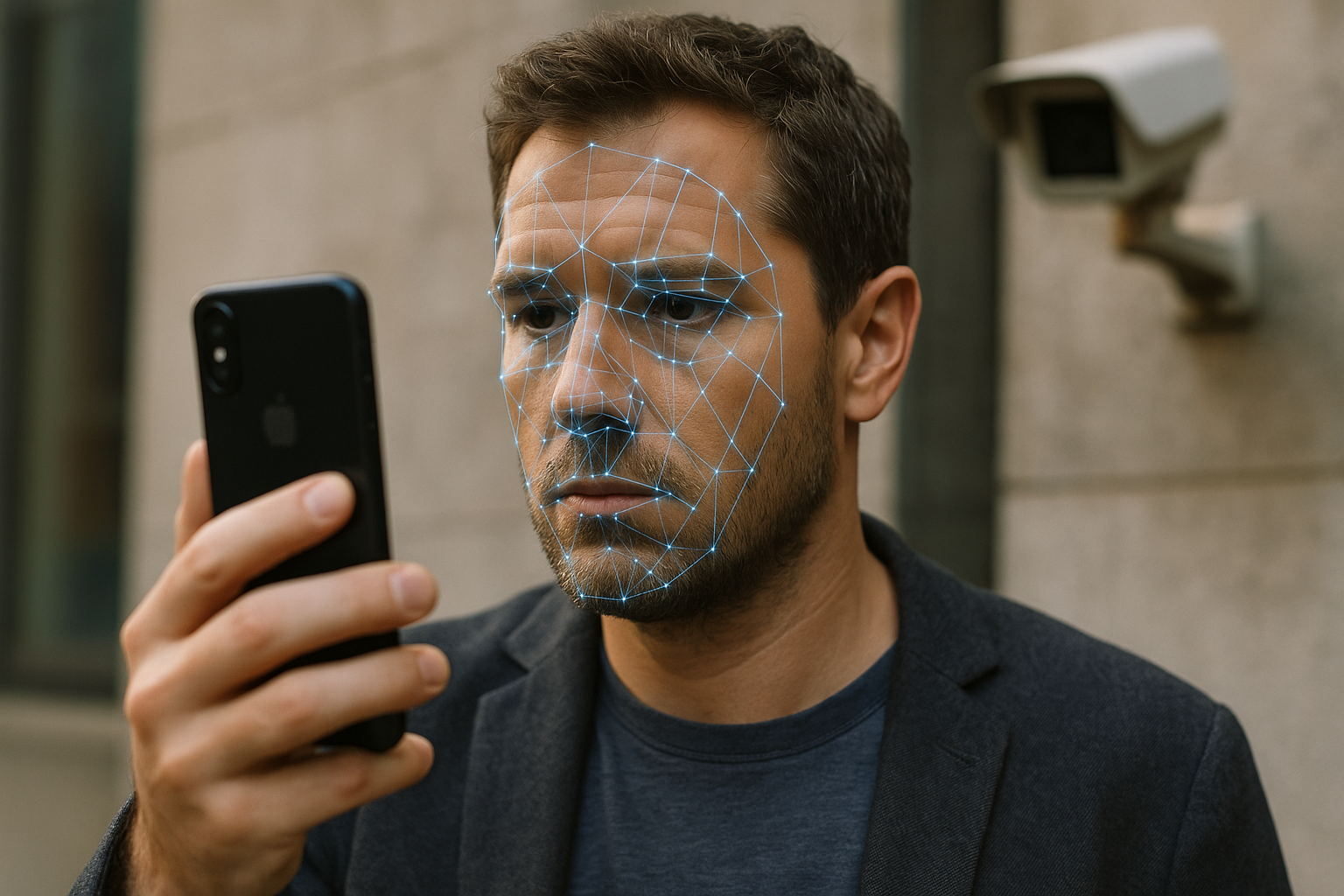
At its core, facial recognition technology follows a multi-step process that transforms human faces into mathematical representations. The system first detects a face within an image or video frame, distinguishing it from the background and other objects. Advanced algorithms identify key facial landmarks—including the distance between eyes, nose shape, jawline contours, and cheekbone structure.
These measurements are converted into a numerical code or “faceprint,” similar to how fingerprints uniquely identify individuals. This faceprint is then compared against a database of stored templates to find potential matches. Modern systems can perform these operations in milliseconds, enabling real-time identification even in crowded environments.
The Technology Behind the Scenes
Deep learning neural networks have dramatically improved facial recognition accuracy over the past decade. These systems learn from vast datasets containing millions of facial images, developing the ability to recognize faces across different angles, lighting conditions, and even with partial obstructions like sunglasses or masks.
The technology’s sophistication varies significantly based on its application. Consumer-grade systems for unlocking smartphones typically prioritize convenience and speed, while law enforcement applications emphasize accuracy and the ability to identify individuals from low-quality surveillance footage.
🌐 Where You Encounter Facial Recognition Daily
Most people interact with facial recognition technology far more frequently than they realize. These encounters span both voluntary and involuntary scenarios, each carrying different privacy implications and expectations.
Personal Devices and Consumer Applications
Smartphones represent the most common voluntary use of facial recognition. Apple’s Face ID and similar Android implementations allow users to unlock devices, authorize payments, and access sensitive applications using facial authentication. Photo organization apps automatically tag friends and family members, creating searchable image libraries based on facial recognition.
Social media platforms employ this technology to suggest tags in photos, detect faces for filters and effects, and even verify user identities during account recovery processes. These applications typically require explicit user consent and operate within controlled environments where individuals knowingly participate.
Public Spaces and Surveillance Networks
The involuntary deployment of facial recognition presents more complex privacy challenges. Airports use the technology for passenger screening and boarding processes, scanning travelers’ faces against passport photos and watchlists. Shopping centers install cameras with facial recognition capabilities to track customer movements, identify repeat visitors, and flag suspected shoplifters.
Law enforcement agencies increasingly rely on facial recognition to identify suspects, locate missing persons, and monitor public gatherings. Some cities have deployed extensive camera networks that continuously scan pedestrians, creating permanent records of people’s movements through urban spaces.
🛡️ The Privacy Implications Nobody Talks About
While facial recognition offers undeniable benefits for security and convenience, it introduces privacy risks that fundamentally differ from traditional identification methods. Unlike passwords or access cards, faces cannot be changed or left at home—they are permanent, public, and constantly visible.
Surveillance Without Consent or Awareness
Perhaps the most troubling aspect of facial recognition deployment is its capacity for covert operation. Unlike traditional surveillance methods that require human observation, automated facial recognition systems can track thousands of individuals simultaneously without their knowledge or consent.
This creates an environment where privacy expectations erode dramatically. Simply walking down a public street could mean having your identity recorded, stored in databases, and potentially shared with third parties or government agencies without any notification or opportunity to object.
Data Breaches and Unauthorized Access
Facial recognition systems rely on massive databases storing biometric templates representing millions of individuals. These repositories present attractive targets for cybercriminals and hostile state actors. Unlike credit card numbers that can be changed after a breach, facial biometric data remains compromised permanently once stolen.
Several high-profile breaches have already exposed facial recognition databases, including incidents involving government contractors and private companies. The long-term consequences of such breaches remain uncertain but potentially catastrophic for affected individuals.
Accuracy Problems and Algorithmic Bias
Despite impressive technological advances, facial recognition systems exhibit concerning accuracy disparities across different demographic groups. Multiple independent studies have documented significantly higher error rates when attempting to identify women, people of color, and elderly individuals compared to white males.
These biases stem from training data imbalances—many facial recognition systems learned from datasets disproportionately featuring lighter-skinned male faces. The consequences extend beyond mere inconvenience when these systems inform law enforcement decisions or access control to essential services.
Real-World Consequences of Misidentification
False positives in facial recognition systems have led to wrongful arrests, with several documented cases where innocent individuals spent time in custody due to algorithmic errors. These incidents disproportionately affect already marginalized communities, amplifying existing inequalities within the criminal justice system.
Even in lower-stakes applications, misidentification creates frustration and discrimination. Retail systems that incorrectly flag customers as previous shoplifters or access control systems that repeatedly fail to recognize legitimate users demonstrate how technical limitations translate into human harm.
⚖️ The Legal and Regulatory Landscape
Laws governing facial recognition technology vary dramatically across jurisdictions, reflecting divergent cultural attitudes toward privacy, security, and technological innovation. This patchwork regulatory environment creates confusion for both technology providers and citizens trying to understand their rights.
European Approaches to Biometric Privacy
The European Union’s General Data Protection Regulation (GDPR) classifies facial recognition data as sensitive biometric information requiring special protection. Organizations must obtain explicit consent before collecting or processing facial data, with narrow exceptions for law enforcement and national security purposes.
Several European cities and countries have gone further, implementing moratoria or outright bans on certain facial recognition applications. These measures reflect strong privacy traditions and public skepticism about mass surveillance technologies.
United States Fragmentation and State-Level Action
The United States lacks comprehensive federal legislation governing facial recognition technology, resulting in a fragmented regulatory landscape. Several states and municipalities have enacted their own rules, ranging from complete bans on government use to requirement for consent in commercial applications.
Illinois’ Biometric Information Privacy Act represents one of the strongest state-level protections, requiring companies to obtain written consent before collecting facial recognition data and imposing significant penalties for violations. California, Washington, and other states have followed with varying approaches balancing innovation and privacy protection.
🔐 Protecting Yourself in a Face-Scanning World
While individual actions cannot fully counteract institutional surveillance capabilities, several practical strategies can help minimize facial recognition exposure and protect personal privacy in everyday situations.
Managing Digital Footprints
Review privacy settings on social media platforms and disable facial recognition features where possible. Many services offer options to opt out of automatic photo tagging and facial analysis, though these settings often default to maximum data collection.
Consider the facial images you share online and their potential uses beyond your intended purpose. Photos posted publicly can be scraped and incorporated into facial recognition training datasets or identification databases without your knowledge or compensation.
Physical Countermeasures and Awareness
While less practical for daily life, understanding physical countermeasures provides insight into facial recognition limitations. Certain eyewear designs, makeup patterns, and accessories can interfere with facial recognition algorithms, though their effectiveness varies across different systems.
More importantly, develop awareness of where facial recognition systems operate. Many jurisdictions require signage notifying people of surveillance systems, though enforcement remains inconsistent. When possible, choose businesses and services that respect privacy and minimize biometric data collection.
The Technology Industry’s Responsibility
Technology companies developing and deploying facial recognition systems bear significant responsibility for addressing privacy concerns and preventing misuse. However, industry self-regulation has proven insufficient, with profit motives often outweighing privacy considerations.
Calls for Development Moratoria
Some major technology companies have voluntarily restricted facial recognition sales to law enforcement pending stronger regulations. These decisions followed employee pressure, academic criticism, and public advocacy highlighting the technology’s potential for abuse.
However, other companies continue aggressive development and deployment, arguing that abandoning the field leaves it to less responsible actors. This disagreement within the technology sector reflects broader societal tensions about balancing innovation with ethical considerations.
🌟 Finding Balance Between Innovation and Privacy
Facial recognition technology presents a paradigm case of how innovation can simultaneously deliver significant benefits and pose serious risks to fundamental rights. Resolving this tension requires nuanced approaches that neither blindly embrace nor categorically reject the technology.
Context-Specific Regulation
Effective governance should distinguish between different facial recognition applications based on their privacy implications. Voluntary use for personal device authentication raises minimal concerns compared to covert surveillance in public spaces or law enforcement applications with liberty implications.
Regulations might permit certain uses while prohibiting others, establishing clear boundaries based on consent, necessity, and proportionality. Transparency requirements, independent audits, and meaningful penalties for violations would help ensure compliance and accountability.
Empowering Individual Control
Privacy frameworks should prioritize individual autonomy over facial data. This includes rights to know when facial recognition systems are operating, access information collected about oneself, and request deletion of facial templates from databases.
Meaningful consent mechanisms must replace the current reality where individuals encounter facial recognition systems with no opportunity to object or opt out. This might include alternative authentication methods that don’t require biometric submission or the ability to navigate public spaces without constant identification.
The Road Ahead for Facial Recognition
Facial recognition technology will continue advancing regardless of regulatory interventions. Technical improvements promise even greater accuracy, faster processing, and expanded capabilities like emotion detection and behavioral prediction. These developments will intensify existing privacy tensions while introducing new ethical dilemmas.
The critical question isn’t whether facial recognition technology will exist, but rather how society chooses to govern its deployment and use. Will we accept ubiquitous facial surveillance as an inevitable feature of modern life, or will we establish meaningful limits that preserve privacy and individual autonomy?
This decision cannot be left solely to technology companies, government agencies, or privacy advocates acting in isolation. It requires informed public dialogue, democratic decision-making processes, and regulatory frameworks that can adapt as technology evolves.
💭 Why This Conversation Matters Now
The next few years represent a critical window for establishing governance frameworks around facial recognition technology. Decisions made today will shape surveillance capabilities, privacy expectations, and power relationships for decades to come.
Once facial recognition infrastructure becomes thoroughly embedded in social institutions and business operations, removing or restricting it becomes exponentially more difficult. Likewise, as populations grow accustomed to constant identification and tracking, expectations of privacy naturally erode, making it harder to assert rights that previous generations took for granted.
Understanding facial recognition technology—how it works, where it operates, and what it means for privacy—empowers individuals to make informed choices and participate meaningfully in democratic debates about technology governance. The complexities are real, but so are the stakes for privacy, liberty, and the kind of society we want to inhabit.
Whether through legislative action, corporate responsibility, technological solutions, or cultural shifts, addressing facial recognition’s privacy implications requires sustained attention and collective effort. The truth about this technology isn’t simple, but unlocking it represents an essential task for anyone who values privacy in the digital age.