Artificial intelligence is fundamentally reshaping how we approach infrastructure monitoring and maintenance, delivering unprecedented efficiency, safety, and cost-effectiveness across industries worldwide.

🏗️ The Infrastructure Challenge in the Modern Era
Our global infrastructure is aging at an alarming rate. Bridges, roads, pipelines, power grids, and buildings constructed decades ago are reaching critical maintenance thresholds. Traditional inspection methods—manual checks, scheduled maintenance, and reactive repairs—are proving inadequate for the scale and complexity of modern infrastructure networks.
The consequences of infrastructure failure extend far beyond inconvenience. Collapsed bridges claim lives, power grid failures disrupt entire regions, and pipeline leaks cause environmental catastrophes. The American Society of Civil Engineers estimates that the United States alone faces a $2.6 trillion infrastructure funding gap, with similar challenges echoing globally.
Enter artificial intelligence: a transformative force that’s revolutionizing how we monitor, predict, and maintain the physical systems that support modern civilization. By combining machine learning algorithms, sensor networks, computer vision, and predictive analytics, AI is enabling infrastructure managers to shift from reactive to proactive maintenance strategies.
Understanding AI-Powered Infrastructure Monitoring
AI-driven infrastructure monitoring represents a paradigm shift from traditional approaches. Instead of relying on periodic human inspections or waiting for failures to occur, intelligent systems continuously analyze data from multiple sources to assess structural health in real-time.
These systems leverage various technologies working in concert. Internet of Things (IoT) sensors embedded throughout infrastructure capture data on stress, vibration, temperature, corrosion, and other critical parameters. Machine learning algorithms process this massive data stream, identifying patterns that human observers might miss. Computer vision systems analyze imagery from drones, satellites, and fixed cameras to detect visible deterioration.
The Technology Stack Behind Smart Infrastructure
Modern AI monitoring systems integrate several sophisticated technologies. Edge computing devices process sensor data locally, reducing latency and bandwidth requirements. Cloud platforms aggregate information from distributed assets, enabling centralized oversight of geographically dispersed infrastructure. Deep learning neural networks identify anomalies by learning what “normal” looks like for each unique structure.
Natural language processing even enables these systems to incorporate maintenance logs, incident reports, and historical documentation into their predictive models. This comprehensive approach creates a digital twin of physical infrastructure—a virtual replica that mirrors real-world conditions and enables scenario testing without risking actual assets.
🔍 Computer Vision: Eyes That Never Blink
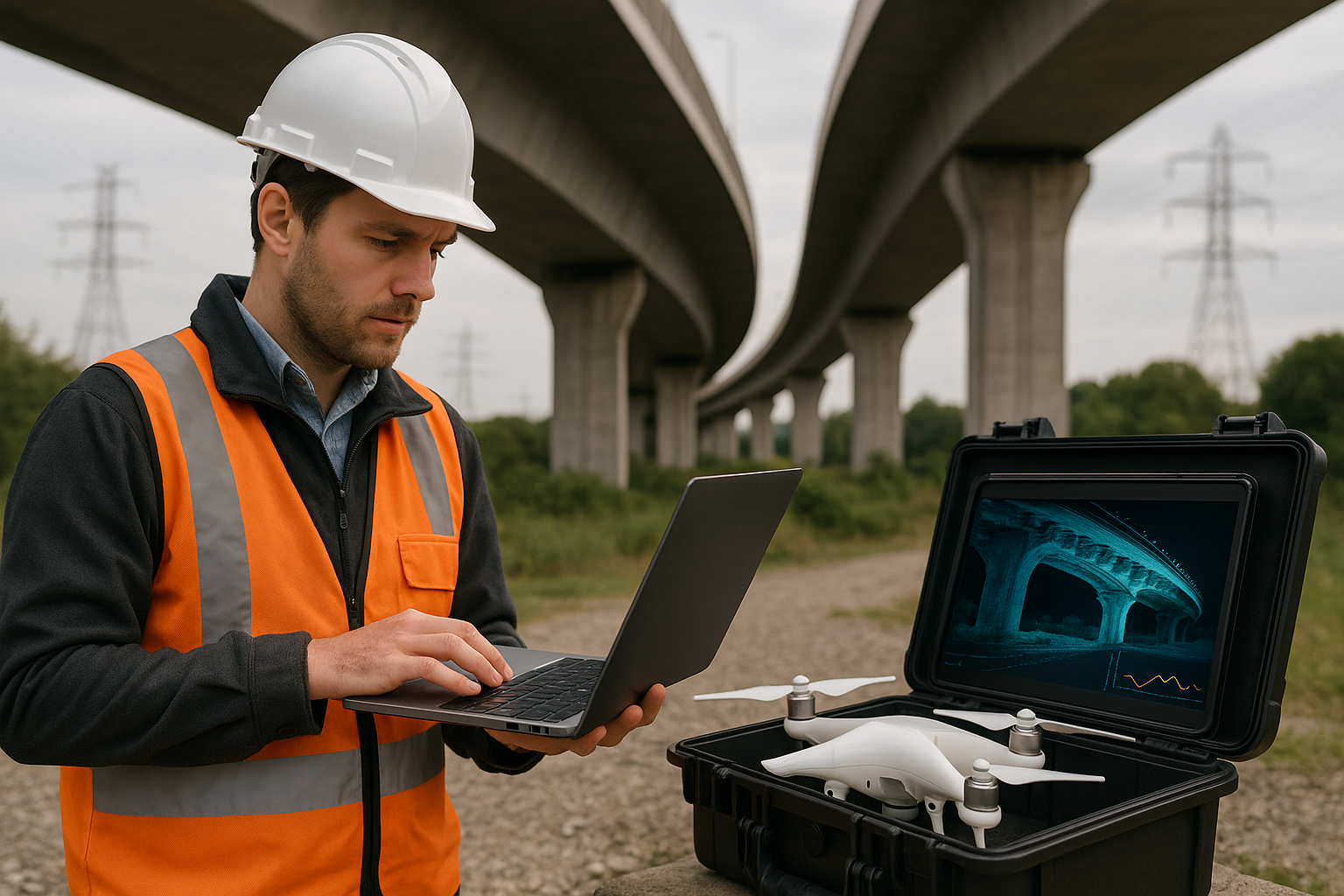
One of AI’s most visible impacts on infrastructure maintenance comes through computer vision applications. Autonomous drones equipped with high-resolution cameras and AI-powered image recognition now inspect bridges, towers, wind turbines, and other tall structures that previously required dangerous human climbing or expensive scaffolding.
These intelligent vision systems detect cracks narrower than human eyes can perceive, identify rust patterns indicating corrosion progression, and measure structural deformations with millimeter precision. What once required days of manual inspection now happens in hours, with greater accuracy and comprehensive documentation.
Railroad companies deploy AI vision systems that scan thousands of miles of track, identifying rail defects, damaged ties, and vegetation encroachment. Transportation departments use smart cameras to assess pavement condition across entire road networks, prioritizing repair resources based on objective data rather than complaints or scheduled rotations.
Thermal and Multispectral Imaging
Beyond visible light, AI analyzes thermal and multispectral imagery to detect problems invisible to conventional inspection. Infrared cameras identify heat signatures indicating electrical faults in power systems, water intrusion in building envelopes, or insulation failures in pipelines. Multispectral analysis reveals material stress before visible cracks appear.
This capability proves particularly valuable for infrastructure monitoring in challenging environments. Subsea pipelines, underground utilities, and structures in remote locations benefit from remote sensing technologies that reduce the need for costly and dangerous physical access.
Predictive Maintenance: Knowing Before Breaking
Perhaps the most transformative aspect of AI in infrastructure management is predictive maintenance—the ability to forecast failures before they occur. Traditional preventive maintenance follows fixed schedules, replacing components based on manufacturer recommendations or industry standards. This approach leads to unnecessary part replacements and still allows unexpected failures.
Predictive maintenance uses machine learning to analyze actual component condition and operating history, determining optimal maintenance timing for each specific asset. This approach maximizes component lifespan while minimizing failure risk, dramatically reducing both maintenance costs and downtime.
The Economics of Prediction
The financial benefits are substantial. Studies show predictive maintenance reduces maintenance costs by 25-30%, eliminates breakdowns by up to 70%, and decreases downtime by 35-45%. For industries where unplanned outages cost millions per hour, these improvements translate to enormous savings.
Beyond direct cost reduction, predictive maintenance enables better resource allocation. Maintenance crews receive optimized work schedules based on actual needs rather than arbitrary calendars. Parts inventory requirements decrease when replacements are precisely forecasted. Capital planning improves when asset lifespans are accurately predicted.
⚡ Smart Grid Infrastructure and Energy Systems
Energy infrastructure represents one of the most critical applications for AI monitoring. Modern power grids are extraordinarily complex networks distributing electricity across vast distances while balancing generation and consumption in real-time. Grid failures cascade rapidly, potentially affecting millions of people.
AI systems continuously monitor grid health, analyzing data from smart meters, substation sensors, and transmission line monitors. Machine learning algorithms detect anomalies indicating equipment degradation, predict demand patterns, and optimize power routing to prevent overloads. These systems identify developing faults hours or days before failure, enabling preventive interventions.
Renewable energy integration amplifies AI’s importance in grid management. Solar and wind generation fluctuate with weather conditions, requiring sophisticated forecasting and load balancing. AI predicts renewable output, coordinates battery storage systems, and manages distributed generation sources to maintain stable, reliable power delivery.
Transmission and Distribution Optimization
AI transforms how utilities manage their transmission and distribution infrastructure. Intelligent systems analyze weather forecasts, historical outage patterns, and real-time sensor data to predict storm damage and pre-position repair crews. Computer vision identifies vegetation threatening power lines before causing outages. Thermal imaging detects overheating transformers and connections before catastrophic failure.
These capabilities enable utilities to transition from reactive emergency response to strategic resilience planning, improving service reliability while reducing operational costs.
Transportation Infrastructure in the AI Age
Roads, bridges, railways, and airports form the circulatory system of modern economies. Maintaining this infrastructure traditionally required extensive manual inspection programs, with inspectors physically examining structures on fixed schedules. This approach is labor-intensive, expensive, and often identifies problems only after significant deterioration.
AI-powered monitoring systems now provide continuous assessment of transportation infrastructure health. Sensors embedded in bridge decks measure stress and vibration, with algorithms detecting changes indicating structural weakening. Pavement sensors and vehicle-mounted scanning systems assess road surface condition across entire networks.
Railway Applications
Railways have emerged as leaders in AI infrastructure monitoring. High-speed trains equipped with sensor arrays scan track condition at operating speeds, analyzing track geometry, rail wear, and fastener condition. AI algorithms process this data to identify defects requiring attention, often detecting subtle abnormalities that manual inspection would miss.
Predictive maintenance systems forecast rail replacement needs, optimize grinding schedules to extend track life, and identify locations prone to specific defect types. These capabilities improve both safety and operational efficiency, reducing derailment risk while minimizing track maintenance costs.
🌉 Bridge Monitoring: Structural Health Intelligence
Bridges represent particularly critical infrastructure assets where failure consequences are catastrophic. Traditional bridge inspection requires trained engineers to physically examine every component, a time-consuming process that still might miss critical defects hidden from view.
Modern bridge monitoring deploys networks of sensors measuring acceleration, strain, displacement, and environmental conditions. AI algorithms analyze this continuous data stream, creating sophisticated models of bridge behavior under various loading conditions. The systems detect subtle changes in structural response that indicate developing problems.
This approach identified issues in numerous bridges worldwide before they became visible or dangerous. In one notable case, AI monitoring detected increasing vibration patterns in a major bridge, prompting detailed inspection that revealed corrosion in critical cable connections. Repairs prevented what could have been a catastrophic failure.
Cable-Stayed and Suspension Bridges
Long-span bridges present unique monitoring challenges due to their complexity and exposure to dynamic loads from wind, traffic, and temperature variations. AI systems integrate data from hundreds of sensors, weather stations, and traffic cameras to understand how these factors interact and affect structural behavior.
Computer vision analyzes cable condition, detecting individual wire breaks in suspension cables before they compromise structural integrity. Acoustic monitoring listens for characteristic sounds indicating developing cracks or loose connections. These technologies provide comprehensive health assessment impossible through traditional methods.
Water and Wastewater Infrastructure Management
Water infrastructure faces mounting challenges from aging pipes, increasing demand, and climate change impacts. Leak detection represents a major concern, with some cities losing 30% or more of treated water to underground leaks. Traditional leak detection relies on visual identification or periodic manual surveys with acoustic equipment.
AI transforms water infrastructure monitoring through acoustic analysis, pressure monitoring, and flow analysis. Machine learning algorithms analyze pressure sensor data throughout distribution networks, identifying anomalies indicating leaks. Acoustic sensors detect the characteristic sounds of water escaping from pipes, with AI filtering out background noise and pinpointing leak locations.
Predictive Pipe Failure Modeling
Beyond leak detection, AI predicts which pipes are most likely to fail, enabling proactive replacement before breaks occur. These models incorporate pipe age, material, soil conditions, pressure history, and maintenance records to assess failure probability for every pipe segment in the network.
This capability allows utilities to optimize infrastructure investment, prioritizing replacements where failure risk is highest rather than working through the network chronologically. The approach reduces emergency repairs, minimizes service disruptions, and extends overall infrastructure lifespan.
💡 Building Management Systems and Smart Structures
Commercial buildings increasingly incorporate AI-powered monitoring for both structural health and operational efficiency. Intelligent building management systems optimize HVAC performance, lighting, and energy consumption while monitoring structural elements for signs of deterioration.
Sensor networks track building sway in tall structures, monitor foundation settlement, and detect water intrusion that could damage structural elements. AI algorithms distinguish between normal seasonal variations and concerning trends requiring investigation. These systems also optimize maintenance schedules for elevators, HVAC equipment, and other building systems.
The integration of structural monitoring with operational systems creates comprehensive building intelligence. AI correlates energy consumption patterns with weather conditions, occupancy levels, and equipment performance to identify inefficiencies. Predictive maintenance reduces equipment failures while extending system lifespans.
Implementation Challenges and Considerations
Despite its transformative potential, implementing AI infrastructure monitoring faces several challenges. Initial investment costs can be substantial, requiring sensor installation, communication infrastructure, and software platforms. Organizations accustomed to traditional maintenance approaches may resist changing established practices.
Data quality and integration pose significant hurdles. AI systems require substantial training data, which may not exist for older infrastructure. Integrating data from various sensor types, legacy systems, and external sources demands careful planning and robust data management practices.
Skills and Workforce Transformation
AI implementation necessitates workforce evolution. Maintenance personnel need training to work with intelligent systems, interpreting AI recommendations and conducting repairs identified by algorithms. Organizations must balance automation with human expertise, recognizing that AI enhances rather than replaces human judgment in complex situations.
This transition creates opportunities for upskilling existing workers while attracting new talent with data science and engineering backgrounds. Progressive organizations invest in training programs that equip their workforce for the AI-enabled future.
🚀 The Future of Intelligent Infrastructure
AI infrastructure monitoring continues evolving rapidly, with emerging technologies promising even greater capabilities. Digital twins—comprehensive virtual replicas of physical infrastructure—enable sophisticated scenario modeling and optimization. These systems allow engineers to test maintenance strategies, simulate failure scenarios, and optimize designs virtually before implementing changes in the real world.
5G networks and edge computing enhance monitoring capabilities by enabling real-time processing of massive data streams from distributed sensors. Quantum computing promises to solve optimization problems currently beyond classical computer capabilities, potentially revolutionizing infrastructure design and maintenance scheduling.
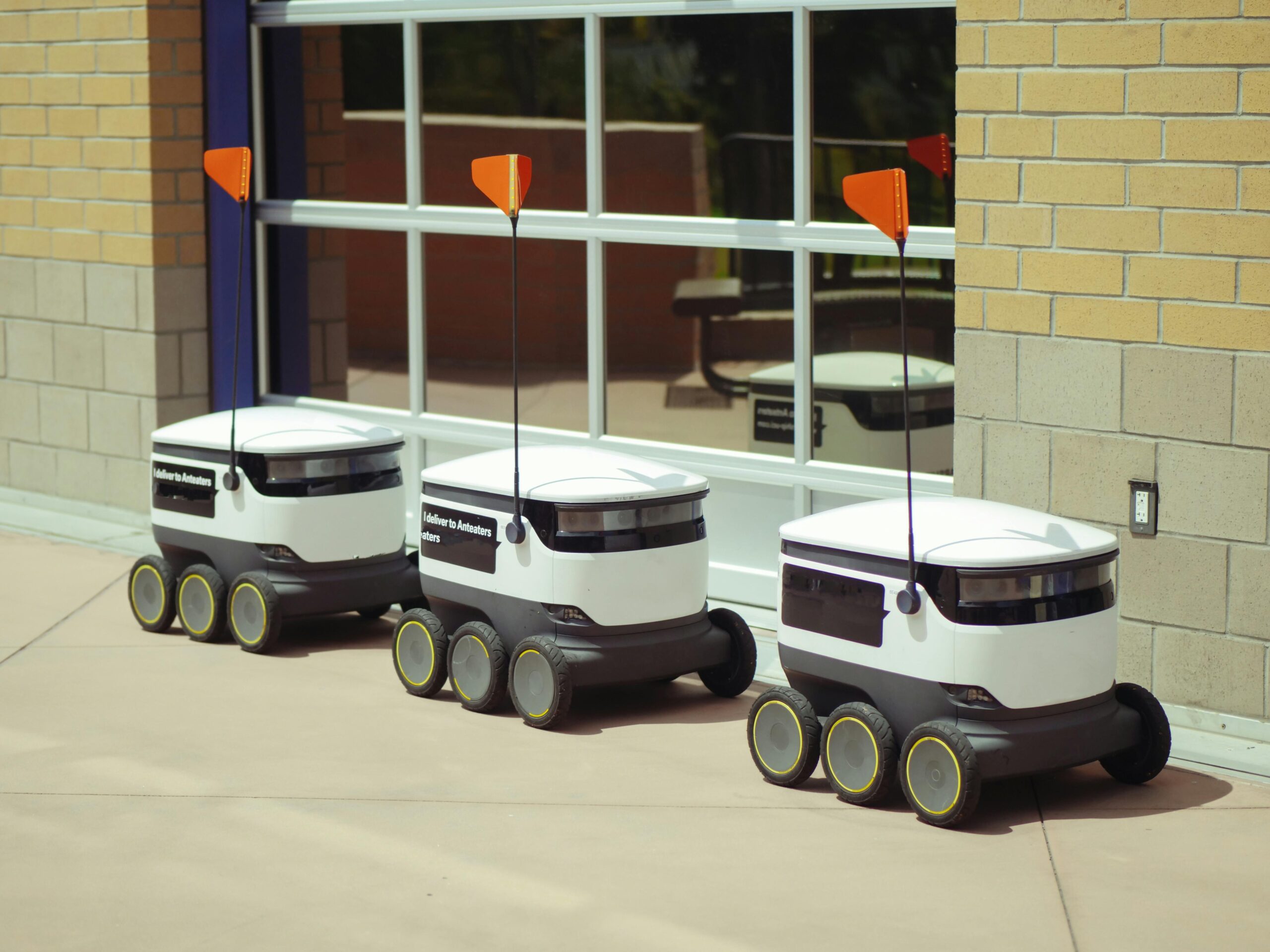
Autonomous maintenance systems represent another frontier. Robots equipped with AI navigate infrastructure environments, conducting inspections and even performing routine maintenance tasks. Drones with manipulator arms repair power lines, climbing robots inspect bridge cables, and autonomous vehicles survey road conditions continuously.
Integration with Smart Cities
Infrastructure monitoring increasingly integrates with broader smart city initiatives. Transportation systems, energy grids, water networks, and buildings form interconnected ecosystems managed through comprehensive AI platforms. This integration enables optimization across systems—for example, coordinating traffic signals to reduce road wear while minimizing energy consumption and emissions.
The convergence of AI, IoT, and infrastructure creates unprecedented opportunities for urban resilience and sustainability. Cities gain real-time visibility into all infrastructure systems, enabling rapid response to emergencies, efficient resource allocation, and data-driven planning for future needs.
Maximizing AI’s Infrastructure Impact
Organizations seeking to harness AI for infrastructure monitoring should adopt strategic approaches. Starting with pilot projects on critical assets allows teams to develop expertise while demonstrating value. Successful pilots build organizational support for broader deployment.
Data strategy forms the foundation for effective AI implementation. Organizations must establish protocols for sensor deployment, data collection, quality assurance, and integration. Investing in robust data infrastructure early prevents costly retrofits later.
Collaboration accelerates progress. Industry consortiums, research partnerships, and vendor ecosystems share knowledge, develop standards, and create interoperable solutions. Organizations benefit from collective learning rather than solving identical problems independently.
The transformation of infrastructure monitoring and maintenance through artificial intelligence represents one of the most significant technological shifts in civil engineering and asset management. By enabling continuous monitoring, predictive maintenance, and optimized resource allocation, AI addresses the mounting challenges of aging infrastructure while improving safety, reliability, and sustainability.
Success requires viewing AI not as a replacement for human expertise but as a powerful tool augmenting human capabilities. The combination of machine learning’s pattern recognition abilities with human judgment, creativity, and contextual understanding creates infrastructure management approaches superior to either alone.
As AI technologies continue advancing and deployment costs decline, intelligent infrastructure monitoring will transition from competitive advantage to operational necessity. Organizations embracing this transformation position themselves to deliver superior service, control costs, and ensure the infrastructure resilience our interconnected world demands. The future of infrastructure is intelligent, predictive, and continuously optimized—powered by AI working alongside human expertise to keep our critical systems performing at their peak.