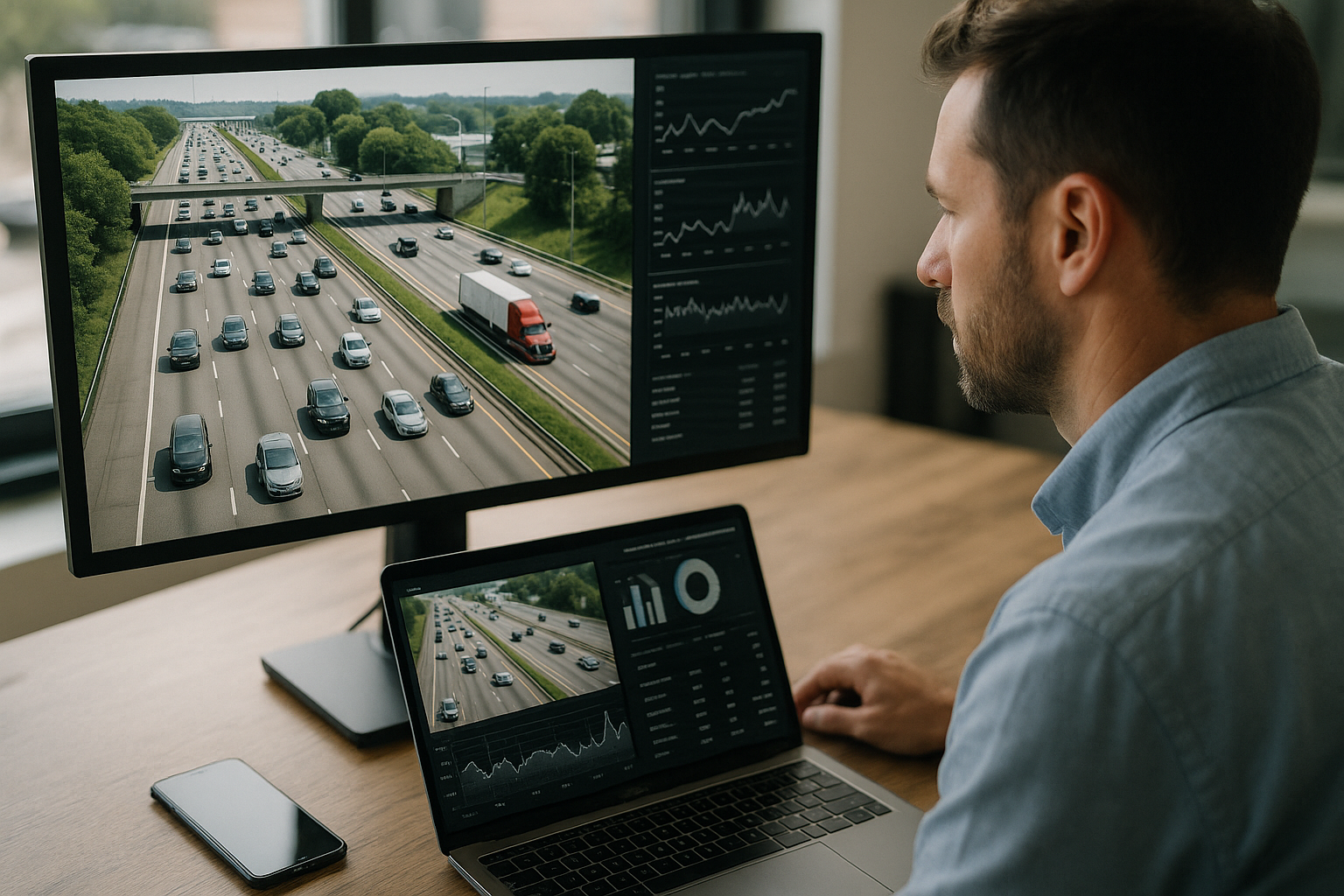
Real-time traffic monitoring has revolutionized how we navigate cities, turning unpredictable commutes into manageable journeys through intelligent data analysis and instant updates.

🚗 The Revolution of Smart Commuting in Modern Cities
Traffic congestion costs the average commuter countless hours and significant money each year. Traditional navigation methods relied on static maps and guesswork, leaving drivers frustrated in unexpected gridlock. Today’s technology landscape offers a dramatically different solution through real-time traffic monitoring systems that leverage crowd-sourced data, artificial intelligence, and predictive analytics to transform your daily commute.
These sophisticated platforms collect information from millions of users simultaneously, creating a living, breathing map of traffic conditions that updates every few seconds. The result? You receive accurate predictions about travel times, alternative route suggestions, and warnings about incidents before you even encounter them.
Understanding Real-Time Traffic Analytics Technology
Real-time traffic monitoring operates through a complex ecosystem of data collection points and analytical processes. GPS-enabled smartphones act as mobile sensors, anonymously reporting speed and location data as users travel. This crowdsourced information combines with data from municipal traffic cameras, road sensors, and official incident reports to create comprehensive traffic intelligence.
Machine learning algorithms process this massive influx of information, identifying patterns and predicting future conditions with remarkable accuracy. The system distinguishes between normal slowdowns and actual incidents, recognizes recurring congestion patterns at specific times, and even factors in external variables like weather conditions and special events.
Data Sources That Power Traffic Intelligence
Multiple data streams contribute to creating accurate real-time traffic pictures. Historical traffic patterns establish baseline expectations for different times and days. Current GPS data from active users provides immediate condition updates. Municipal infrastructure including traffic light systems and highway sensors adds official verification. Weather services integrate precipitation and visibility information that affects traffic flow. Emergency services report accidents and road closures the moment they occur.
This multi-source approach ensures redundancy and accuracy, cross-referencing information to eliminate false positives and provide the most reliable guidance possible.
🎯 Key Benefits of Real-Time Traffic Monitoring for Your Daily Commute
Implementing real-time traffic analytics into your commute strategy delivers tangible benefits that extend beyond simple time savings. Understanding these advantages helps maximize the value you extract from these sophisticated tools.
Time Efficiency and Predictability
The most immediate benefit is reclaiming lost time. Real-time traffic apps calculate optimal departure times based on your destination and typical traffic patterns. Instead of leaving unnecessarily early “just in case,” you depart at precisely the right moment to arrive on schedule. Dynamic rerouting automatically adjusts your path when conditions change, seamlessly guiding you around newly formed congestion without requiring manual intervention.
Predictability transforms from a luxury to a standard feature. You receive accurate arrival time estimates that account for current conditions, allowing you to confidently schedule appointments and commitments. This reliability reduces commute-related stress significantly, as uncertainty disappears from your travel equation.
Fuel Cost Reduction and Environmental Impact
Idling in traffic consumes fuel without moving you toward your destination. Real-time routing minimizes this waste by directing you along flowing routes rather than congested corridors. Studies indicate that optimized routing can reduce fuel consumption by 15-25% compared to traditional navigation methods.
The environmental benefits extend beyond individual savings. When thousands of drivers optimize their routes simultaneously, overall traffic distribution improves, reducing systemic congestion and lowering citywide emissions. Your personal efficiency contributes to collective environmental improvement.
Stress Reduction and Improved Safety
Knowledge eliminates anxiety. When your navigation app alerts you about delays ahead and automatically provides alternatives, you avoid the frustration of unexpected standstills. Voice-guided navigation allows eyes-on-road operation, improving safety while maintaining connectivity to real-time information.
Advanced systems provide warnings about hazards including stopped vehicles, objects on roadways, and dangerous weather conditions reported by other users. This community-powered safety network helps you anticipate and avoid potential accidents before they impact your journey.
📱 Leading Real-Time Traffic Monitoring Applications
Several platforms dominate the real-time traffic monitoring landscape, each offering unique features and capabilities. Understanding their strengths helps you select the optimal solution for your specific commuting needs.
Google Maps: The Comprehensive Navigation Standard
Google Maps has evolved into the world’s most widely used navigation platform, leveraging data from over a billion users worldwide. Its real-time traffic layer displays color-coded congestion levels, with red indicating heavy traffic and green showing free-flowing conditions. The platform excels at multi-modal routing, seamlessly combining driving, public transit, walking, and cycling options to identify the fastest overall route.
Integration with Google’s broader ecosystem enables powerful features like automatic departure notifications based on calendar appointments and real-time updates about business hours and popular times at destinations. The platform’s machine learning continuously improves, learning your routines and preferences to provide increasingly personalized suggestions.
Waze: Community-Powered Real-Time Intelligence
Waze distinguishes itself through aggressive community engagement and gamification. Users actively report incidents, hazards, and police presence, creating an exceptionally current information network. The platform’s routing algorithm prioritizes speed above all else, sometimes suggesting unconventional routes through residential areas that traditional navigation systems avoid.
Social features allow you to share arrival times with contacts and coordinate meetups with automatic notifications. The app’s personality shines through customizable voice navigation options and playful achievement system that rewards active participation in the community reporting network.
Apple Maps: Seamless Integration for iOS Ecosystem
Apple Maps has matured significantly since its challenging launch, now offering robust real-time traffic capabilities with exceptional privacy protections. The platform uses differential privacy techniques that collect useful traffic data without compromising individual user identification. Integration with Siri enables completely hands-free operation, and seamless handoff between iPhone, Apple Watch, and CarPlay creates a unified navigation experience.
The “Look Around” feature provides street-level imagery for familiarizing yourself with destinations before arrival, while curated guides highlight interesting locations along your route. For users deeply embedded in Apple’s ecosystem, the convenience and privacy features make this platform particularly compelling.
🔧 Maximizing Your Traffic Monitoring Strategy
Simply installing a navigation app doesn’t automatically maximize efficiency. Strategic implementation and habit formation unlock the full potential of real-time traffic analytics.
Proactive Departure Planning
Check traffic conditions before finalizing your departure time, not just as you’re walking out the door. Most platforms allow you to set future departure or arrival times, showing predicted traffic conditions at that specific moment. This forward-looking capability enables truly optimized scheduling rather than reactive navigation.
Set up notification alerts for your regular commute routes. Many apps can automatically notify you when unusual congestion develops on your typical path home, allowing you to adjust your departure time or plan alternative activities until conditions improve.
Exploring Alternative Routes
Don’t reflexively accept the first suggested route. Review alternatives, especially for regular commutes where learning secondary paths pays dividends over time. Understanding multiple route options builds mental flexibility and backup plans for when unexpected incidents block primary corridors.
Occasionally intentionally select alternative routes during low-traffic periods to familiarize yourself with them. When emergencies arise requiring quick rerouting, you’ll navigate these alternatives confidently rather than struggling with unfamiliar roads while stressed.
Leveraging Multi-Modal Transportation Options
Real-time traffic monitoring reveals when driving simply isn’t the optimal choice. During major events or severe congestion, public transit, ride-sharing, or cycling might deliver faster, less stressful results. Modern navigation platforms integrate these options, calculating door-to-door times that account for parking, walking segments, and transit schedules.
Flexibility in transportation mode selection transforms you from a driver stuck in traffic into a commuter who intelligently selects the best option for each journey’s specific circumstances.
🏢 Enterprise Applications: Fleet Management and Logistics
Real-time traffic analytics extend far beyond personal commuting, revolutionizing commercial logistics and fleet operations. Delivery services, transportation companies, and field service organizations leverage these technologies to optimize operations at scale.
Dynamic Route Optimization for Delivery Services
Commercial fleet management systems integrate real-time traffic data with delivery schedules, vehicle capacities, and customer time windows to calculate optimal routing sequences. These systems continuously recalculate throughout the day as conditions change, redirecting drivers to maintain on-time performance despite unpredictable traffic disruptions.
The result is measurable improvement in key performance indicators including deliveries per hour, fuel efficiency, and customer satisfaction scores. Companies implementing sophisticated traffic-aware routing typically report 10-20% improvements in operational efficiency within the first year.
Predictive Analytics for Strategic Planning
Historical traffic data accumulated over months and years enables strategic business decisions. Companies analyze traffic patterns when selecting new facility locations, timing their operating hours, or designing service territories. Understanding that a potential warehouse location experiences severe congestion during peak delivery hours might influence site selection toward alternatives with better traffic flow characteristics.
This data-driven approach to logistics planning reduces guesswork and creates competitive advantages through superior operational positioning.
Privacy Considerations in Traffic Data Collection
The same data collection that enables real-time traffic monitoring raises legitimate privacy questions. Understanding how platforms handle your information empowers informed decisions about which services to trust.
Reputable traffic monitoring platforms anonymize location data, separating identifying information from movement patterns before analysis. Your individual journey becomes one anonymous data point among millions, contributing to collective intelligence without exposing personal details. Many platforms allow you to review and delete your location history, providing transparency and control over stored information.
When evaluating traffic apps, review their privacy policies specifically regarding data collection, retention, and sharing practices. Platforms committed to user privacy clearly articulate these policies and provide meaningful controls over your information.
🌍 The Future of Traffic Monitoring and Smart Cities
Current real-time traffic monitoring represents just the beginning of truly intelligent transportation systems. Emerging technologies promise even more dramatic improvements to commute efficiency and urban mobility.
Vehicle-to-Infrastructure Communication
Next-generation transportation systems will enable direct communication between vehicles and road infrastructure. Traffic signals will optimize timing based on actual approaching traffic rather than fixed schedules. Highway systems will communicate speed recommendations directly to vehicles, smoothing traffic flow and preventing the phantom traffic jams caused by minor speed variations.
These systems will detect hazards through vehicle sensors and instantly broadcast warnings to all approaching traffic, creating safety networks far more responsive than current human reporting allows.
Autonomous Vehicle Integration
Autonomous vehicles will leverage real-time traffic intelligence as fundamental navigation input rather than optional enhancement. These vehicles will communicate with each other, coordinating merges and lane changes with precision impossible for human drivers. Traffic flow will smooth dramatically as automated systems eliminate the hesitation, aggression, and inconsistency that characterize human driving behavior.
The transition period combining autonomous and human-driven vehicles will present challenges, but real-time monitoring systems will adapt, identifying vehicle types and adjusting predictions accordingly.
Predictive Congestion Management
Advanced machine learning will shift traffic management from reactive to predictive. Systems will forecast congestion before it develops and implement preventive measures including adjusted signal timing, dynamic pricing for tolled routes, and proactive route suggestions that distribute traffic before bottlenecks form.
Imagine receiving a notification suggesting you delay your departure by ten minutes to avoid congestion that hasn’t yet developed but is predicted based on current conditions and known patterns. This proactive approach transforms traffic management from damage control to true optimization.
💡 Practical Tips for Immediate Implementation
You can begin maximizing commute efficiency today with these actionable strategies that require minimal effort but deliver measurable results.
- Enable traffic notifications: Configure your navigation app to alert you about unusual congestion on your regular routes automatically.
- Compare departure times: Before leaving, check estimated travel times for immediate departure versus waiting 15-30 minutes to avoid peak congestion.
- Save frequent destinations: Pre-program home, work, and other regular destinations for one-tap navigation activation.
- Install offline maps: Download maps for your region to maintain basic navigation capability during connectivity interruptions.
- Participate in reporting: When using community-based platforms, report incidents you encounter to improve data quality for all users.
- Review weekly patterns: Some apps provide weekly summaries showing your typical commute times and suggesting optimal departure windows.
- Combine with calendar integration: Allow navigation apps to access your calendar for automatic departure time recommendations based on appointment locations.
Transforming Commute Frustration into Empowerment
Real-time traffic monitoring fundamentally changes the relationship between commuters and congestion. Instead of helplessly enduring unpredictable delays, you gain agency through information and alternatives. Every minute saved compounds across weeks and months into substantial time reclamation.
Beyond individual benefits, widespread adoption of intelligent navigation creates systemic improvements. As more drivers optimize their routes, traffic distributes more evenly across available infrastructure, reducing peak bottlenecks and improving overall flow. Your personal efficiency contributes to collective progress toward smarter, more livable cities.
The technology continues evolving rapidly, with each generation of traffic monitoring systems becoming more accurate, predictive, and integrated with broader transportation networks. Early adopters who develop sophisticated navigation habits now position themselves to leverage even more powerful capabilities as they emerge.
Your commute doesn’t have to be wasted time filled with frustration and uncertainty. Real-time traffic monitoring transforms it into a managed component of your day, optimized for efficiency and reduced stress. The tools exist today, refined through years of development and supported by data from billions of journeys. Implementation requires only the decision to engage with these technologies strategically and the commitment to build new navigation habits that prioritize informed decision-making over routine repetition.
Start tomorrow morning by checking traffic conditions before your departure rather than after you’re already stuck. Notice the difference in your stress level and arrival time. That small change represents the beginning of a completely transformed commute experience, powered by real-time analytics that work continuously in the background to make your journey smoother, faster, and more predictable than ever before possible. 🚦