The future of urban development rests on our ability to design buildings that don’t just consume less energy—they produce zero emissions while creating healthier, more livable spaces for everyone.

🌍 The Urgent Need for Zero-Emission Buildings in Modern Society
Buildings account for nearly 40% of global carbon emissions, making them one of the largest contributors to climate change. As cities expand and populations grow, the construction and operation of public buildings and housing developments have become critical focal points in the fight against environmental degradation. The transition to zero-emission structures isn’t just an environmental imperative—it’s an economic opportunity that promises long-term savings, improved public health, and enhanced quality of life.
Zero-emission buildings operate without releasing greenhouse gases into the atmosphere. They achieve this through a combination of renewable energy generation, exceptional energy efficiency, and innovative design strategies that minimize resource consumption. Public buildings and affordable housing projects are particularly well-positioned to lead this transformation, serving as visible demonstrations of what’s possible when sustainability becomes a foundational principle rather than an afterthought.
Governments worldwide are recognizing this potential. The European Union has committed to making all new buildings zero-emission by 2030, while cities like Vancouver, Copenhagen, and Singapore have implemented aggressive green building standards. These policies reflect a growing understanding that sustainable architecture isn’t a luxury—it’s a necessity for creating resilient communities capable of thriving in an uncertain climate future.
🏗️ Core Principles of Zero-Emission Building Design
Designing buildings that produce no net emissions requires a holistic approach that integrates multiple systems and strategies. The foundation begins with passive design principles that work with natural forces rather than against them. Proper building orientation maximizes natural light and ventilation while minimizing heat gain in summer and heat loss in winter. This reduces the energy demand before any mechanical systems are even considered.
High-performance building envelopes form the second critical layer. Advanced insulation materials, triple-glazed windows, and airtight construction techniques create thermal barriers that dramatically reduce heating and cooling requirements. Some innovative projects use phase-change materials embedded in walls that absorb and release heat, naturally regulating indoor temperatures throughout the day.
Energy Generation and Storage Solutions
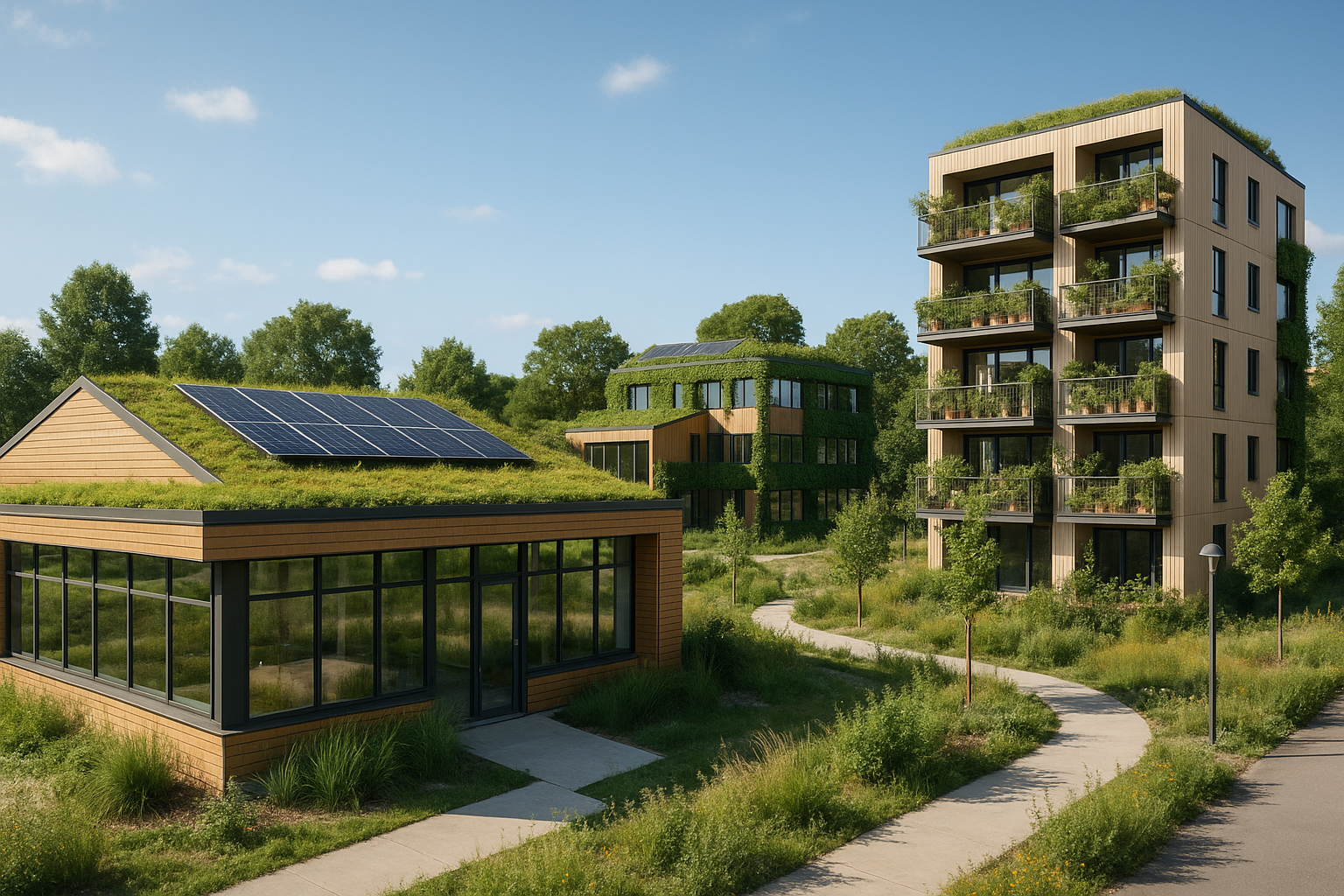
Renewable energy systems transform buildings from passive consumers into active producers. Solar photovoltaic panels have become the most common solution, with costs dropping by over 80% in the past decade. Building-integrated photovoltaics (BIPV) take this further by incorporating solar cells directly into roofing materials, facades, and even windows, turning entire building surfaces into energy generators.
Wind turbines, geothermal heat pumps, and combined heat and power systems provide additional renewable energy options depending on local conditions. Battery storage systems enable buildings to store excess energy generated during peak production times for use during periods of high demand or low renewable output, ensuring consistent zero-emission operation around the clock.
🏘️ Public Housing as a Catalyst for Green Transformation
Affordable housing projects offer unique opportunities to implement zero-emission design at scale. Unlike individual private homes, large public housing developments can leverage economies of scale to deploy advanced technologies more cost-effectively. These projects also serve broader social goals by demonstrating that sustainable living isn’t reserved for wealthy communities but can be accessible to all income levels.
Vienna’s social housing program provides a compelling example. The city has constructed thousands of zero-emission apartment units that combine exceptional energy efficiency with community-oriented design. Shared green spaces, rooftop gardens, and communal facilities reduce individual resource consumption while fostering social connections among residents. Renewable energy systems are integrated from the project’s inception, with solar panels and geothermal heating providing clean energy at costs comparable to conventional systems.
Singapore’s public housing authority has taken a different approach, retrofitting existing buildings to meet zero-emission standards. This demonstrates that sustainability isn’t just for new construction—the existing building stock can be transformed through strategic upgrades. Smart sensors optimize energy use, while vertical gardens and reflective coatings reduce cooling demands in the tropical climate.
Addressing Affordability Challenges
Critics often argue that zero-emission buildings cost more to construct, making them impractical for affordable housing. However, this perspective ignores lifecycle costs and long-term benefits. While upfront construction expenses may be 5-10% higher, operational costs drop dramatically—often by 50% or more—resulting in net savings within a few years.
Government incentives, green bonds, and innovative financing mechanisms further reduce barriers. Some jurisdictions offer property tax reductions, expedited permitting, or direct subsidies for zero-emission projects. Public-private partnerships enable cost-sharing arrangements where private developers contribute capital in exchange for long-term management contracts, aligning financial incentives with sustainability goals.
🏢 Public Buildings Setting Standards for Sustainable Design
Government buildings, schools, libraries, and community centers occupy prominent positions in urban landscapes, making them ideal vehicles for demonstrating sustainability leadership. When public institutions commit to zero-emission standards, they signal that environmental responsibility is a core civic value while educating citizens about what’s possible.
The Bullitt Center in Seattle, often called the greenest commercial building in the world, generates all its own energy through rooftop solar panels, collects and treats rainwater for all uses, and features composting toilets that eliminate sewage generation. Designed to last 250 years, it challenges conventional assumptions about building lifespans and demonstrates how structures can function as regenerative elements within urban ecosystems rather than extractive burdens.
Schools offer particularly powerful opportunities for sustainability education. When children attend zero-emission schools, they experience sustainable living firsthand. Interactive displays showing real-time energy generation and consumption turn buildings into living laboratories. Students learn about renewable energy, water conservation, and environmental stewardship not through abstract lessons but through daily interaction with their physical environment.
Community Centers as Resilience Hubs
Zero-emission public buildings increasingly serve dual purposes as community resilience hubs. During power outages or extreme weather events, buildings with on-site renewable energy and battery storage can continue operating when the broader grid fails. They provide safe spaces for vulnerable populations during heat waves, cold snaps, or other climate-related emergencies.
This resilience function adds significant value beyond environmental benefits. As climate change intensifies extreme weather events, buildings that remain functional during crises become critical community infrastructure. The additional investment in backup power systems and robust construction pays dividends when these facilities save lives during emergencies.
🔧 Innovative Technologies Driving the Zero-Emission Revolution
Technological advances are rapidly expanding what’s possible in sustainable building design. Smart building management systems use artificial intelligence to optimize energy consumption in real-time, learning occupancy patterns and adjusting heating, cooling, lighting, and ventilation accordingly. These systems can reduce energy use by 20-30% compared to conventional controls while improving occupant comfort.
Advanced materials are transforming building performance. Aerogel insulation provides exceptional thermal resistance in minimal thickness, enabling better insulation without sacrificing interior space. Self-healing concrete incorporates bacteria that produce limestone when cracks form, extending building lifespans while reducing maintenance needs and embodied carbon from repairs.
Emerging Innovations on the Horizon
Next-generation technologies promise even greater capabilities. Transparent solar cells could turn every window into an energy generator without compromising views or natural light. Carbon-negative building materials actively remove CO2 from the atmosphere during manufacturing, making construction a climate solution rather than a problem.
Building-integrated agriculture systems combine food production with energy efficiency. Vertical farms incorporated into building designs provide fresh produce for occupants while improving air quality and reducing urban heat island effects. These systems represent a convergence of sustainability strategies that address multiple challenges simultaneously.
📊 Measuring Success: Performance Metrics and Certification Systems
Effective zero-emission strategies require robust measurement and verification. Various certification systems have emerged to provide standardized frameworks for assessing building performance. LEED (Leadership in Energy and Environmental Design), BREEAM (Building Research Establishment Environmental Assessment Method), and the Living Building Challenge each offer different approaches to evaluating sustainability.
The International Living Future Institute’s Zero Energy certification requires buildings to generate as much energy as they consume over a full year of operation, verified through actual performance data rather than design projections. This performance-based approach ensures that buildings deliver on their sustainability promises in practice, not just theory.
Real-time monitoring systems enable continuous performance optimization. Sensors throughout buildings track energy consumption, indoor air quality, water usage, and occupant comfort. This data identifies opportunities for improvement and ensures systems continue operating at peak efficiency throughout the building’s lifespan.
🌱 Beyond Carbon: Holistic Sustainability in Building Design
While zero emissions focus primarily on carbon and energy, truly sustainable buildings address broader environmental and social dimensions. Water conservation systems capture rainwater for irrigation and toilet flushing, reducing demand on municipal supplies. Greywater recycling systems treat wastewater from sinks and showers for reuse, further minimizing consumption.
Material selection profoundly impacts environmental footprints. Sustainable buildings prioritize locally sourced, renewable, and recycled materials with low embodied carbon. Wood from sustainably managed forests sequesters carbon while providing excellent structural properties. Recycled steel and concrete reduce extraction of virgin materials while diverting waste from landfills.
Biophilic Design for Human Wellbeing
Sustainable buildings must support human health and wellbeing alongside environmental goals. Biophilic design principles incorporate natural elements—plants, natural light, organic materials, and connections to outdoor spaces—that reduce stress, improve cognitive function, and enhance overall quality of life.
Studies consistently show that occupants of green buildings experience better health outcomes, higher productivity, and greater satisfaction. Schools with better indoor air quality and natural lighting report improved student performance. Office workers in sustainable buildings take fewer sick days and report higher job satisfaction. These human benefits provide compelling justification for zero-emission design beyond environmental considerations alone.
🚀 Scaling Up: From Pilot Projects to Mainstream Practice
Transforming individual showcase projects into standard practice requires systemic changes across the building industry. Building codes and regulations play crucial roles by establishing minimum performance standards that raise the baseline for all construction. Progressive jurisdictions are updating codes to mandate zero-emission standards for new buildings while creating pathways for existing structures to achieve similar performance through renovations.
Professional education and workforce development ensure that architects, engineers, and construction workers possess the skills needed to design and build sustainable structures. Universities are integrating sustainability throughout curricula rather than treating it as a specialty topic, preparing the next generation of building professionals for a carbon-neutral future.
Financial markets increasingly recognize sustainability as a value driver. Green building certifications correlate with higher property values, lower vacancy rates, and reduced operating costs. As this becomes more widely understood, market forces will increasingly favor zero-emission design even without regulatory mandates.
💡 The Path Forward: Creating a Zero-Emission Built Environment
The transition to zero-emission buildings represents one of the most significant opportunities to address climate change while improving quality of life. Public buildings and affordable housing developments are uniquely positioned to lead this transformation, demonstrating that sustainability is achievable at scale across all economic levels.
Success requires coordinated action across multiple fronts. Policymakers must establish clear targets and supportive regulatory frameworks. Financial institutions need to recognize and reward sustainable building practices through favorable lending terms and investment strategies. Developers and construction professionals must embrace new technologies and methods, viewing sustainability as central to their mission rather than an optional add-on.
Most importantly, communities must demand better buildings. When citizens expect their public institutions to lead on climate action and when residents seek housing that supports their health while minimizing environmental impact, markets and governments will respond. The zero-emission buildings emerging today demonstrate what’s possible—now the challenge is making this the norm rather than the exception.
The buildings we construct today will shape our urban landscapes for decades or centuries to come. By prioritizing zero-emission design in public buildings and housing developments, we create infrastructure that serves immediate needs while building resilience for an uncertain future. This isn’t just about reducing emissions—it’s about reimagining what buildings can be and creating spaces where both people and planet can thrive together.