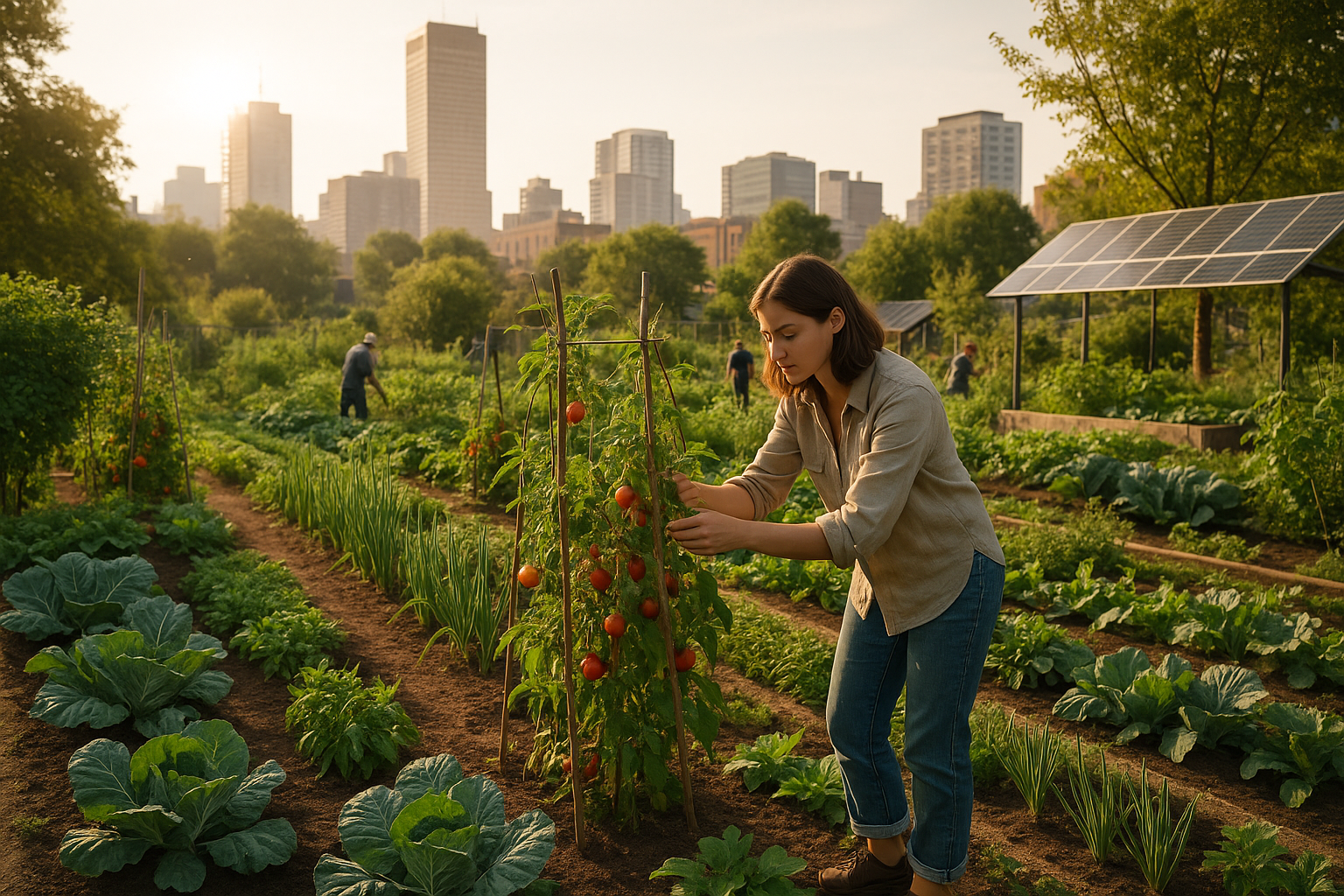
Urban spaces are transforming as communities embrace sustainable living through local food production, turning concrete jungles into vibrant green havens filled with life and purpose.

The concrete landscapes of modern cities are experiencing a remarkable metamorphosis. Where once there were empty lots, rooftops, and forgotten corners, thriving gardens now flourish, producing fresh vegetables, herbs, and connections between neighbors. This movement represents more than just a trend—it’s a fundamental reimagining of how urban communities can feed themselves, build resilience, and create sustainable futures in the heart of metropolitan areas.
Community gardens and urban agriculture initiatives have exploded in popularity across cities worldwide, driven by concerns about food security, environmental sustainability, and the desire for stronger community bonds. From Detroit to Singapore, London to Havana, urban residents are reclaiming space to grow food, cultivate biodiversity, and foster meaningful relationships with both nature and their neighbors.
🌱 The Roots of Urban Agriculture’s Renaissance
Urban agriculture isn’t a new concept. Throughout history, cities have maintained gardens and agricultural spaces within their boundaries. Victory gardens during World War II mobilized millions of urban dwellers to grow food, contributing significantly to national food supplies. However, post-war industrialization and suburban expansion pushed agriculture to rural peripheries, disconnecting city residents from food production.
The contemporary revival began gaining momentum in the 1970s and accelerated dramatically in the 21st century. Economic recessions, growing awareness of climate change, and concerns about industrial agriculture’s environmental impact have prompted urban communities to seek alternatives. The 2008 financial crisis, in particular, sparked renewed interest as people looked for ways to reduce expenses and increase food security.
Today’s urban agriculture movement encompasses diverse approaches, from small community gardens to sophisticated rooftop farms employing hydroponic technology. This diversity reflects the varied needs, resources, and contexts of urban communities worldwide, each adapting the concept to their unique circumstances.
Transforming Vacant Spaces Into Productive Ecosystems 🏙️
Cities contain surprising amounts of underutilized space. Abandoned lots, neglected public areas, rooftops, balconies, and even vertical surfaces present opportunities for agricultural transformation. Community organizations and municipal governments increasingly recognize these spaces as valuable assets rather than eyesores or wasted opportunities.
Detroit stands as perhaps the most dramatic example of urban agricultural transformation. As the city contracted following automotive industry decline, vast areas became vacant. Rather than viewing this as purely negative, residents established over 1,400 urban farms and gardens, transforming blight into productivity. These spaces now provide fresh produce, create jobs, and anchor neighborhood revitalization efforts.
Rooftop agriculture represents another frontier. Buildings across cities like New York, Tokyo, and Paris now host productive gardens on previously unused roofs. These installations provide multiple benefits: reducing building energy costs through natural insulation, managing stormwater runoff, creating habitat for pollinators, and producing food in the heart of urban areas where transportation distances are minimal.
Vertical Farming and Innovative Growing Techniques
Space constraints have inspired remarkable innovation in urban growing methods. Vertical farming systems maximize production in minimal footprints, using stacked layers to multiply growing area. Hydroponic and aeroponic systems eliminate soil requirements, reducing weight loads and enabling cultivation in locations where traditional gardening would be impossible.
These technologies, once prohibitively expensive, have become increasingly accessible. Community gardens now commonly incorporate vertical growing structures, container gardens, and innovative irrigation systems that make intensive production possible even in small spaces. The democratization of these techniques empowers ordinary residents to become effective urban farmers.
🥕 Food Security and Nutritional Justice
Food deserts—areas lacking access to affordable, nutritious food—plague cities worldwide, disproportionately affecting low-income communities and communities of color. Conventional grocery stores often avoid these neighborhoods, leaving residents dependent on convenience stores offering limited fresh produce options.
Urban agriculture directly addresses this injustice. Community gardens in underserved neighborhoods provide residents with fresh, nutritious produce regardless of retail availability. Studies consistently demonstrate that access to community gardens increases fruit and vegetable consumption, particularly among children, contributing to better health outcomes.
The financial impact is significant as well. Families participating in community gardens can substantially reduce food expenses while accessing higher quality produce than what they might otherwise afford. In cities where living costs continually rise, this economic benefit provides meaningful relief to struggling households.
Beyond immediate access, urban agriculture builds food literacy. Participants learn where food comes from, how it grows, and develop cooking skills to utilize fresh produce. This knowledge transforms relationships with food, creating lasting behavioral changes that extend far beyond garden participation.
Environmental Benefits That Extend Beyond the Garden 🌍
The environmental case for urban agriculture is compelling and multifaceted. Transportation represents a significant portion of food’s environmental footprint. Conventional produce often travels thousands of miles from farm to table, consuming fossil fuels and generating emissions. Locally grown food eliminates most of this transportation, dramatically reducing carbon footprints.
Urban green spaces, including gardens, provide crucial ecosystem services within cities. They absorb carbon dioxide, filter air pollutants, and reduce urban heat island effects that make cities significantly warmer than surrounding areas. Studies show that urban vegetation can reduce local temperatures by several degrees, decreasing energy consumption for cooling.
Water management benefits are equally important. Permeable garden soils absorb rainwater, reducing stormwater runoff that overwhelms urban drainage systems and carries pollutants into waterways. Rain gardens and bioswales integrated into urban agriculture projects provide natural water filtration, improving watershed health.
Biodiversity in Unexpected Places
Urban gardens create habitat islands for pollinators, birds, and beneficial insects struggling to survive in concrete environments. As pollinator populations decline globally, these urban refuges become increasingly critical. Gardens planted with diverse, native species provide food sources and nesting sites, supporting biodiversity conservation within city limits.
The presence of these species benefits not just the immediate garden but surrounding areas. Pollinators travel between urban green spaces, creating networks that support reproduction of plants throughout the city. This interconnected web of life demonstrates how individual gardens contribute to larger ecological health.
🤝 Building Social Capital and Community Resilience
Perhaps the most profound impacts of community gardens are social. In an era of increasing isolation and digital disconnection, gardens provide physical spaces where neighbors meet, work together toward common goals, and build relationships across differences.
Multigenerational connections flourish in garden settings. Elders share traditional knowledge and techniques with younger participants, while youth contribute energy and sometimes technical skills. These intergenerational exchanges preserve cultural heritage and create mutual respect that might not develop in age-segregated environments.
Gardens often bring together residents from diverse backgrounds, creating opportunities for cultural exchange. Different growing traditions, recipes, and plant varieties reflect participants’ heritage, enriching the community’s collective knowledge and appreciation for diversity. Food becomes a bridge across cultural divides.
Research demonstrates that neighborhoods with community gardens experience reduced crime rates and increased property values. The presence of cared-for green space signals community investment and oversight, discouraging antisocial behavior. More fundamentally, gardens create reasons for residents to be outside, increasing natural surveillance and neighbor familiarity.
Policy Support and Municipal Innovation 🏛️
Progressive cities increasingly recognize urban agriculture’s value and develop supportive policies. Municipal governments are revising zoning codes to permit agricultural activities, protecting community gardens through land trust arrangements, and integrating food production into urban planning frameworks.
Some cities offer financial incentives for urban agriculture initiatives. Tax breaks for property owners who dedicate land to food production, grants for community garden development, and subsidized water access for gardens all reduce barriers to participation. These investments pay dividends through environmental benefits, reduced public health costs, and stronger communities.
Public land allocation represents another crucial policy tool. Cities own significant unused properties that could support gardens. Forward-thinking municipalities create clear processes for community groups to access and steward these lands, transforming liabilities into community assets.
Overcoming Regulatory Obstacles
Despite growing support, obstacles remain. Outdated regulations sometimes prohibit or severely restrict urban agriculture. Health department rules designed for industrial agriculture may not accommodate small-scale urban operations. Building codes might not address rooftop gardens or vertical farming installations.
Advocates work to modernize these frameworks, demonstrating that appropriate regulations can ensure safety while enabling innovation. Model ordinances developed by organizations like the American Community Gardening Association provide templates for municipalities seeking to support urban agriculture while addressing legitimate concerns.
🛠️ Getting Started: Practical Steps for Urban Growers
For individuals and communities interested in starting urban agriculture projects, the process need not be overwhelming. Beginning with clear goals and realistic assessments of available resources sets projects up for success.
Site assessment is crucial. Evaluating sunlight exposure, water access, soil quality, and potential contamination informs what’s possible in a given location. Many urban soils contain lead or other contaminants from industrial history, requiring raised beds with imported soil or container growing approaches.
Community organizing lays the foundation for sustainable projects. Successful gardens typically have clear governance structures, defined membership processes, and fair plot allocation systems. Regular meetings, work parties, and social events maintain engagement and address conflicts before they escalate.
Essential Resources and Learning Opportunities
Numerous resources support aspiring urban gardeners. Agricultural extension offices provide region-specific growing information and often offer soil testing. Non-profit organizations like the American Community Gardening Association connect gardeners with expertise and networking opportunities.
Digital tools increasingly support urban agriculture. Apps help gardeners track planting schedules, identify pests, and connect with other growers. Online communities provide spaces to ask questions, share experiences, and troubleshoot challenges.
Economic Opportunities in Urban Agriculture 💰
While many urban gardens operate as community spaces, commercial urban agriculture is also flourishing. Farmers markets provide venues for urban growers to sell produce, creating income opportunities. Some cities host dozens of regular markets, generating significant economic activity while connecting producers and consumers.
Restaurants increasingly partner with urban farms for fresh, local ingredients. Rooftop farms supplying the buildings beneath them or nearby establishments eliminate supply chain complexity while providing marketing appeal. Consumers value knowing their food’s origin and supporting local producers.
Job creation represents another economic dimension. Urban farms employ workers in production, processing, distribution, and education roles. Youth employment programs built around urban agriculture provide job skills, environmental education, and healthy food access simultaneously—a triple benefit addressing multiple community needs.
🌾 Challenges and Realistic Perspectives
Despite enthusiasm, urban agriculture faces real limitations. Cities cannot become completely food self-sufficient through urban production alone. Land availability, climate constraints, and the scale required for staple crops like grains make total urban food independence unrealistic in most contexts.
Contaminated soils pose health risks if not properly addressed. Lead, petroleum products, and other pollutants concentrate in urban soils, particularly in areas with industrial histories. Safe urban agriculture requires soil testing and appropriate remediation or containment strategies.
Water access and costs can challenge urban gardens, particularly in arid regions or areas with expensive municipal water. Rainwater harvesting, efficient irrigation systems, and drought-tolerant crop selections help address these constraints but require upfront investment and planning.
Gentrification concerns are legitimate and require thoughtful responses. Community gardens sometimes precede neighborhood transformation that prices out longtime residents. Protecting gardens as community assets while ensuring equitable development requires intentional policy design and community advocacy.
🔮 Future Horizons: Where Urban Agriculture Is Heading
The future of urban agriculture appears bright and increasingly sophisticated. Technology integration continues advancing, with sensors monitoring soil moisture, automated irrigation systems, and data analytics optimizing production. These innovations make intensive urban growing more accessible and productive.
Climate adaptation will increasingly drive urban agriculture development. As extreme weather becomes more common, local food production systems provide resilience that long-distance supply chains cannot match. Cities investing in distributed food production capacity today are building insurance against future disruptions.
Educational integration represents enormous potential. Schools with gardens incorporate them into curricula across subjects—science, nutrition, mathematics, environmental studies. Students who grow food develop different relationships with it, often increasing their willingness to try vegetables and understanding of ecological systems.
Policy evolution will continue shaping urban agriculture’s trajectory. As more cities recognize the multiple benefits, supportive frameworks will spread. Rights to garden, protections for urban agricultural land, and integrated food system planning will become standard components of progressive urban governance.
Cultivating Tomorrow’s Cities Today 🌻
The rise of community gardens and urban agriculture represents more than a charming trend or nostalgic return to agrarian roots. It’s a pragmatic, multifaceted response to interconnected challenges of climate change, food insecurity, environmental degradation, and social fragmentation affecting urban communities worldwide.
These green spaces produce more than vegetables. They cultivate community resilience, environmental literacy, and sustainable relationships between urban residents and the systems sustaining them. Every plot, rooftop garden, and vertical farm contributes to reimagining what cities can be—not just centers of consumption but also places of production, connection, and regeneration.
The movement continues expanding as more people recognize that participation doesn’t require vast resources or expert knowledge. A balcony container, a shared community plot, or volunteer hours at an established garden all contribute to transforming urban landscapes and strengthening local food systems.
As cities continue growing—by 2050, two-thirds of humanity will live in urban areas—integrating nature and food production into the urban fabric becomes increasingly essential rather than optional. The gardens sprouting across cities today are seeds of more sustainable, resilient, connected urban futures. They demonstrate that even amid concrete and steel, life finds ways to flourish when communities create the conditions for growth.
The question isn’t whether urban agriculture will be part of sustainable cities, but how quickly and equitably we can scale these initiatives to maximize their benefits. Each garden planted, each rooftop transformed, and each community connected through shared cultivation moves us closer to truly sustainable urban futures where people and nature thrive together.