Urban environments face unprecedented challenges as populations grow and infrastructure ages. Data analytics emerges as a transformative solution, enabling cities to predict, prevent, and respond to risks more effectively than ever before.

🌆 The Evolution of Urban Risk Management
Cities have always been complex ecosystems where millions of people interact with infrastructure, transportation systems, and public services daily. Traditional approaches to urban risk management relied heavily on historical data, reactive measures, and manual observation. However, the exponential growth of urban populations and the increasing complexity of modern cities have rendered these conventional methods insufficient.
The digital transformation sweeping across metropolitan areas has generated unprecedented volumes of data from sensors, cameras, mobile devices, and connected infrastructure. This wealth of information represents a golden opportunity for urban planners, emergency services, and city administrators to fundamentally reshape how they approach safety and risk mitigation.
Big data analytics has revolutionized urban risk management by enabling predictive capabilities that were previously impossible. Cities can now anticipate problems before they escalate, allocate resources more efficiently, and create safer environments for residents through evidence-based decision-making.
Understanding Urban Risk Through a Data Lens
Urban risk encompasses a broad spectrum of challenges that threaten the safety, functionality, and resilience of cities. These risks range from natural disasters and infrastructure failures to crime, traffic accidents, and public health emergencies. Each category generates distinct data signatures that, when properly analyzed, reveal patterns and predictive indicators.
The concept of data-driven urban risk management rests on several fundamental pillars. First, comprehensive data collection from diverse sources creates a holistic view of city operations. Second, advanced analytics transform raw data into actionable intelligence. Third, real-time monitoring enables rapid response to emerging threats. Finally, predictive modeling allows cities to anticipate and prepare for future challenges.
📊 Key Categories of Urban Risk Data
Modern cities generate multiple data streams that contribute to comprehensive risk assessment. Environmental sensors monitor air quality, temperature fluctuations, and weather patterns. Traffic cameras and connected vehicles provide real-time information about road conditions and congestion. Social media platforms offer crowd-sourced reports about incidents and emergencies. Infrastructure sensors detect stress, deterioration, and potential failures in bridges, buildings, and utility systems.
Crime data from police departments, emergency services response times, public health statistics, and demographic information all contribute to building sophisticated risk models. The integration of these disparate data sources creates a comprehensive intelligence system that operates continuously, identifying potential threats across multiple dimensions simultaneously.
🔍 Big Data Technologies Transforming Urban Safety
The technological foundation of data-driven urban risk management comprises several interconnected components. Internet of Things (IoT) devices serve as the sensory nervous system of smart cities, collecting real-time data from countless sources. Cloud computing platforms provide the computational power and storage capacity necessary to process massive datasets. Machine learning algorithms identify patterns, anomalies, and correlations that human analysts might miss.
Geographic Information Systems (GIS) integrate spatial data with other information layers, creating visual representations of risk distribution across urban landscapes. Artificial intelligence engines process natural language from social media and emergency calls, extracting meaningful insights from unstructured data. Edge computing enables faster processing by analyzing data closer to its source, reducing latency in time-critical situations.
Machine Learning Applications in Risk Prediction
Machine learning has become indispensable in urban risk management, offering capabilities that extend far beyond traditional statistical analysis. Supervised learning models train on historical incident data to predict where and when similar events might occur. Unsupervised learning algorithms discover hidden patterns in complex datasets, revealing previously unknown risk factors.
Neural networks process multiple data streams simultaneously, identifying subtle correlations between seemingly unrelated factors. For example, they might connect weather patterns, social events, transportation schedules, and historical crime data to predict areas of elevated risk with remarkable accuracy. Deep learning models continuously improve their predictions as they process more data, becoming increasingly precise over time.
Real-World Applications Saving Lives and Resources
Cities worldwide have implemented data analytics solutions that demonstrate tangible improvements in urban safety. Predictive policing systems analyze crime patterns to optimize patrol routes and prevent incidents before they occur. While controversial and requiring careful ethical oversight, these systems have shown measurable reductions in certain crime categories when implemented responsibly.
Fire departments now use predictive analytics to identify buildings at high risk of fires based on age, construction materials, code violations, and neighborhood characteristics. This enables targeted inspections and preventive interventions that reduce fire incidents and save lives. Emergency medical services optimize ambulance positioning using real-time data about traffic conditions, historical call patterns, and community health indicators, reducing response times significantly.
🚦 Traffic Safety and Accident Prevention
Transportation represents one of the most successful domains for data-driven risk reduction. Connected traffic management systems analyze vehicle flow patterns to optimize signal timing, reducing congestion and accident rates. Computer vision systems monitor intersections, detecting dangerous behaviors like red-light running or sudden lane changes, triggering automated warnings or enforcement actions.
Predictive models identify accident-prone locations by analyzing historical crash data, road geometry, traffic volume, weather conditions, and time-of-day patterns. Cities use these insights to redesign dangerous intersections, improve signage, and implement targeted safety measures. Some municipalities have achieved accident reductions of 20-40% through data-informed traffic safety interventions.
Infrastructure Monitoring and Disaster Prevention
Aging infrastructure poses significant risks in many cities, but comprehensive physical inspections are expensive and time-consuming. Data analytics offers a more efficient approach through continuous monitoring and predictive maintenance. Sensors embedded in bridges, tunnels, and buildings detect structural stress, vibrations, and material degradation, alerting maintenance teams to problems before failures occur.
Water systems benefit from leak detection algorithms that analyze pressure and flow data to identify pipe failures, preventing water loss and infrastructure damage. Electrical grids use predictive analytics to anticipate equipment failures and optimize maintenance schedules, reducing blackout risks. Gas distribution networks employ similar technologies to detect leaks and prevent explosions.
Natural Disaster Preparedness and Response
Data analytics has transformed how cities prepare for and respond to natural disasters. Weather prediction models incorporate satellite imagery, atmospheric sensors, and historical patterns to provide increasingly accurate forecasts of hurricanes, floods, and severe weather events. Early warning systems automatically alert residents in threatened areas, providing crucial time for evacuation or preparation.
Flood risk models combine topographical data, drainage system capacity, rainfall predictions, and soil saturation levels to identify vulnerable areas with precision. Cities use these models to improve drainage infrastructure, establish evacuation routes, and position emergency resources strategically. During disasters, real-time data analytics help coordinate response efforts, track affected populations, and optimize resource distribution.
🏥 Public Health Surveillance and Disease Prevention
The COVID-19 pandemic highlighted the critical importance of data analytics in public health risk management. Disease surveillance systems now integrate data from hospitals, clinics, pharmacies, social media, and even wastewater testing to detect outbreaks early. Predictive models identify populations at high risk for various health conditions, enabling targeted preventive interventions.
Air quality monitoring systems track pollution levels across neighborhoods, issuing health alerts and informing policy decisions about traffic restrictions or industrial regulations. Heat vulnerability indices combine temperature data with demographic information to identify populations at risk during heat waves, enabling proactive welfare checks and cooling center activations.
Ethical Considerations and Privacy Protection
The power of big data analytics in urban risk management comes with significant ethical responsibilities. Privacy concerns arise when cities collect extensive data about residents’ movements, behaviors, and activities. Striking the right balance between public safety and individual privacy requires thoughtful policies, transparent practices, and robust data protection measures.
Algorithmic bias represents another critical challenge. Machine learning models trained on historical data may perpetuate or amplify existing inequalities if the underlying data reflects systemic biases. Cities must actively audit their analytics systems for fairness, ensuring that safety improvements benefit all communities equitably rather than concentrating resources in already privileged areas.
Data Governance and Security
Effective data governance frameworks establish clear rules about what data cities collect, how they use it, who can access it, and how long they retain it. Transparency measures allow residents to understand what data exists about them and how it influences city operations. Strong cybersecurity protections prevent unauthorized access to sensitive urban systems and data repositories.
Cities should implement privacy-preserving technologies like data anonymization, differential privacy, and federated learning that enable beneficial analytics while minimizing individual identification risks. Regular privacy impact assessments ensure that new data initiatives comply with ethical standards and legal requirements.
🛠️ Building Data-Driven Safety Capabilities
Cities embarking on data-driven risk management journeys face several implementation challenges. Legacy systems often lack interoperability, creating data silos that prevent comprehensive analysis. Technical expertise remains scarce, with cities competing against private sector employers for data scientists and analytics professionals. Budget constraints limit investment in necessary infrastructure and technology.
Successful implementations typically follow a phased approach, starting with high-impact pilot projects that demonstrate value and build organizational support. Partnerships with universities, technology companies, and other cities facilitate knowledge sharing and resource pooling. Open data initiatives enable researchers, startups, and community organizations to develop innovative safety solutions using publicly available urban data.
Essential Components of Urban Analytics Systems
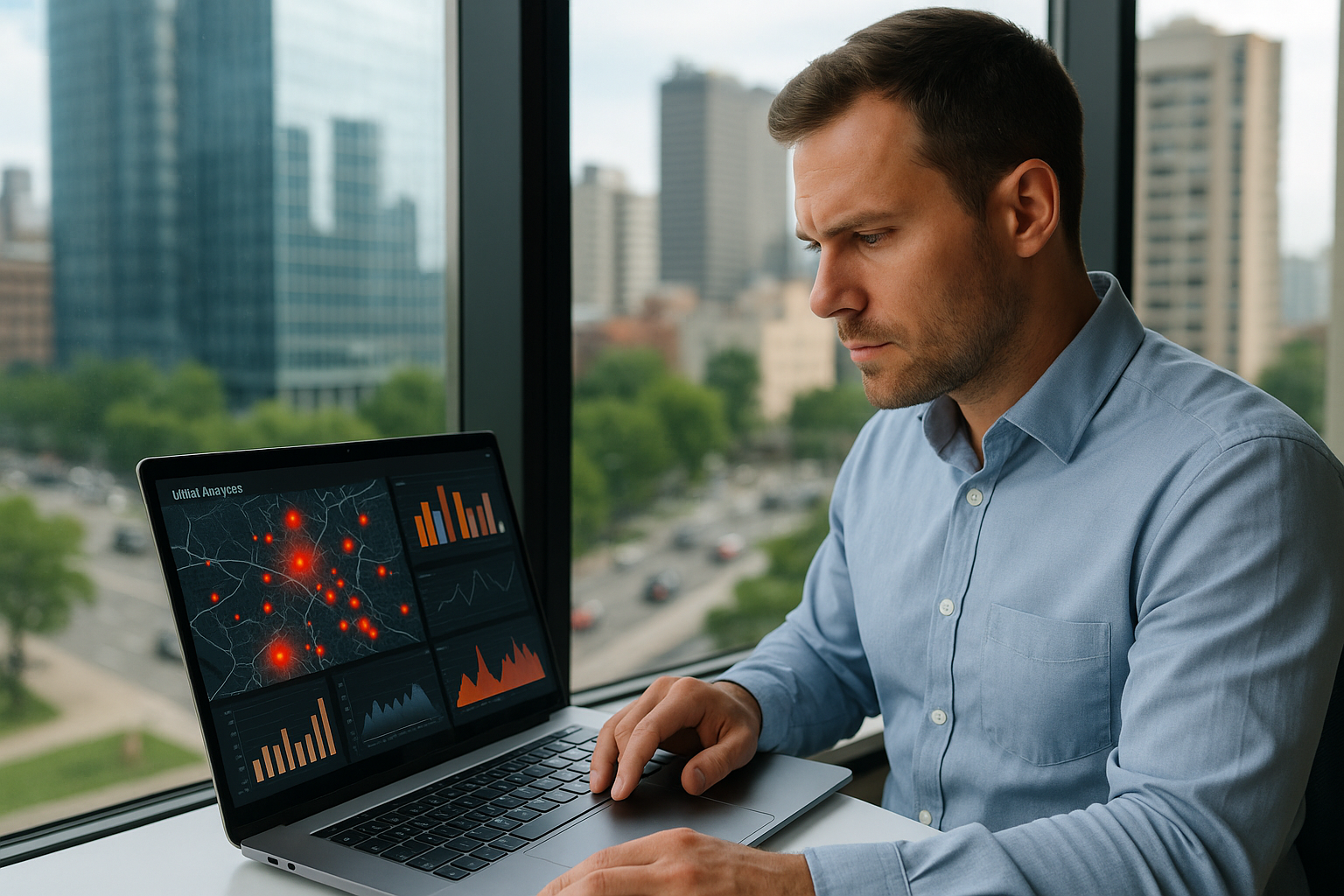
A robust urban risk analytics platform requires several core components working in harmony. Data integration layers aggregate information from diverse sources into unified formats. Data quality management processes ensure accuracy, completeness, and consistency. Analytics engines apply appropriate algorithms to extract insights from complex datasets. Visualization dashboards present findings in accessible formats for decision-makers.
Alert and notification systems automatically inform relevant personnel when analytics detect elevated risks. Integration with operational systems enables automated responses to certain situations, such as traffic signal adjustments or emergency resource deployments. Continuous evaluation frameworks measure system performance and identify opportunities for improvement.
The Future of Intelligent Urban Safety
The evolution of urban risk management through data analytics continues accelerating, with emerging technologies promising even greater capabilities. Digital twins—virtual replicas of physical cities—enable sophisticated simulation and scenario planning. City administrators can test different interventions in virtual environments before implementing them in reality, optimizing outcomes while minimizing disruption.
5G networks and improved IoT devices will dramatically increase the volume, variety, and velocity of urban data streams. Quantum computing may eventually enable analysis of previously incomprehensible complexity, revealing insights invisible to current technologies. Augmented reality systems could provide first responders with real-time risk information overlaid on their physical environment, enhancing situational awareness and decision-making.
🌐 Collaborative Intelligence and Citizen Engagement
Future urban safety systems will increasingly incorporate citizen-generated data and community participation. Mobile applications enable residents to report problems, provide context about local conditions, and receive personalized safety information. Crowdsourcing platforms aggregate observations from thousands of people, creating detailed situational awareness that no sensor network could match.
Participatory governance models allow communities to influence how data analytics systems operate in their neighborhoods, ensuring that safety priorities reflect local values and concerns. Educational initiatives build data literacy among residents, enabling more informed civic engagement and reducing misunderstandings about how analytics technologies function.
Measuring Success and Demonstrating Value
Quantifying the impact of data-driven risk management requires comprehensive metrics that capture both direct and indirect benefits. Primary indicators include reductions in crime rates, accident frequencies, emergency response times, infrastructure failures, and disaster-related casualties. Secondary metrics measure cost savings from preventive interventions, improved resource utilization efficiency, and enhanced public confidence in city services.
Long-term success depends on sustaining political support, securing ongoing funding, and maintaining organizational commitment through leadership changes. Communicating achievements clearly helps build public understanding and support. Regular reporting on outcomes, challenges, and lessons learned demonstrates accountability and continuous improvement.
💡 Creating Resilient Urban Futures
Data analytics represents far more than a technological upgrade for urban management—it fundamentally transforms how cities understand and respond to risk. By harnessing the power of big data, municipalities can transition from reactive crisis management to proactive risk prevention, creating safer environments for all residents.
The most successful implementations recognize that technology alone cannot solve complex urban challenges. Data analytics must be integrated with human expertise, community knowledge, and ethical frameworks to achieve optimal outcomes. As cities continue developing their analytical capabilities, they must remain focused on the ultimate goal: improving the quality of life and safety for every resident.
The journey toward truly data-driven urban safety requires sustained commitment, continuous learning, and adaptive management. Cities that embrace this transformation thoughtfully—balancing innovation with privacy protection, efficiency with equity, and technology with human judgment—will be best positioned to thrive in an increasingly complex and interconnected world.
The future of urban safety lies not in choosing between traditional methods and data analytics, but in intelligently combining both approaches. Human insight, local knowledge, and community engagement remain irreplaceable, while data analytics provides the scale, speed, and precision necessary to manage modern urban complexity. Together, they create resilient cities capable of protecting residents while enabling the vibrant, dynamic urban life that drives human progress.