Urban surveillance drones powered by artificial intelligence are transforming how cities approach public safety, infrastructure monitoring, and emergency response in the modern era.

🚁 The Dawn of Intelligent Aerial Guardians
The integration of artificial intelligence with unmanned aerial vehicles has created a paradigm shift in urban security management. Cities worldwide are increasingly adopting AI-powered surveillance drones to monitor public spaces, detect anomalies, and respond to incidents with unprecedented speed and accuracy. These technological marvels combine advanced computer vision, machine learning algorithms, and real-time data processing to create a comprehensive security ecosystem that operates around the clock.
Traditional surveillance systems have long been limited by fixed camera positions, blind spots, and the need for constant human monitoring. AI-powered drones eliminate these constraints by offering mobile, intelligent observation platforms that can cover vast areas quickly and efficiently. They represent not just an evolution in security technology, but a revolution in how we conceptualize urban safety and management.
Revolutionary Capabilities Transforming Urban Landscapes
The capabilities of modern AI-powered surveillance drones extend far beyond simple video recording. These sophisticated systems employ neural networks trained on millions of images to recognize patterns, identify objects, and detect unusual behavior automatically. When integrated with smart city infrastructure, they become powerful tools for maintaining order and responding to emergencies.
Advanced Recognition Systems 👁️
Facial recognition technology allows drones to identify persons of interest in crowded environments, while license plate recognition assists in tracking vehicles involved in criminal activities. Object detection algorithms can spot abandoned packages, unauthorized gatherings, or potential security threats before they escalate into serious incidents.
Behavioral analysis systems use machine learning to establish baseline patterns of normal activity in specific locations. When deviations occur—such as someone loitering in a restricted area or unusual crowd movements—the system automatically alerts security personnel. This predictive capability represents a significant advancement over reactive security measures.
Real-Time Data Integration and Analysis
Modern surveillance drones don’t operate in isolation. They connect seamlessly with existing security infrastructure, including ground-based cameras, sensors, and emergency response systems. This integration creates a multi-layered security network where information flows continuously between different monitoring points.
Cloud-based processing enables these drones to analyze vast amounts of data instantly. Machine learning algorithms can process video feeds in real-time, identifying relevant incidents while filtering out routine activities that don’t require human attention. This intelligent filtering dramatically reduces the workload on security personnel while ensuring that critical events receive immediate attention.
Enhancing Public Safety Through Proactive Monitoring
The primary objective of deploying AI-powered surveillance drones in urban environments is enhancing public safety. These systems excel at crowd management during large events, traffic monitoring, and emergency response coordination. Their aerial perspective provides situational awareness that ground-based systems simply cannot match.
Emergency Response Optimization 🚨
When emergencies occur, every second counts. AI-powered drones can reach incident locations faster than ground vehicles, providing first responders with critical information about the situation before they arrive. Thermal imaging cameras can locate victims in disaster scenarios, while high-resolution cameras assess structural damage and identify hazards.
During natural disasters like floods or earthquakes, drones equipped with AI systems can quickly survey affected areas, identify people in need of rescue, and map safe evacuation routes. This capability has proven invaluable in reducing response times and saving lives.
Crime Prevention and Investigation Support
The deterrent effect of visible drone surveillance cannot be understated. Studies have shown that areas with active drone monitoring experience reduced crime rates. Criminals are less likely to act when they know intelligent surveillance systems are watching and recording their activities.
For investigations, AI-powered drones provide forensic teams with detailed aerial footage, thermal data, and time-stamped documentation of crime scenes. The ability to revisit recorded footage and apply advanced analytics helps investigators piece together events and identify suspects more effectively.
Operational Efficiency Gains for City Management
Beyond security applications, AI-powered surveillance drones deliver substantial operational efficiencies for urban management. Cities are leveraging these technologies for infrastructure inspection, traffic management, environmental monitoring, and urban planning.
Infrastructure Inspection and Maintenance 🏗️
Regular inspection of bridges, buildings, power lines, and other critical infrastructure is essential but often dangerous and time-consuming when performed manually. Drones equipped with AI-powered visual inspection systems can identify cracks, corrosion, and structural weaknesses automatically, prioritizing repairs based on severity.
These automated inspections reduce costs dramatically while improving safety for inspection personnel. The AI systems can detect problems that human inspectors might miss and track deterioration over time by comparing historical data.
Traffic Flow Optimization
Urban traffic congestion costs billions in lost productivity and increased pollution. AI-powered surveillance drones monitor traffic patterns from above, identifying bottlenecks and accidents quickly. This real-time information feeds into adaptive traffic management systems that adjust signal timing and suggest alternative routes to drivers.
During major events or construction projects, drones provide traffic managers with comprehensive situational awareness, enabling proactive measures to prevent congestion before it develops. The result is smoother traffic flow, reduced emissions, and improved quality of life for residents.
Technical Architecture Behind the Intelligence
Understanding the technical foundation of AI-powered surveillance drones helps appreciate their capabilities and limitations. These systems integrate multiple cutting-edge technologies into cohesive platforms that deliver actionable intelligence.
Computer Vision and Deep Learning Models
At the heart of every AI-powered surveillance drone lies sophisticated computer vision systems built on deep learning neural networks. These models are trained on massive datasets containing millions of labeled images, teaching them to recognize objects, people, vehicles, and activities with remarkable accuracy.
Convolutional neural networks process video frames in real-time, extracting features and making classifications faster than human observers. Object detection models like YOLO (You Only Look Once) and R-CNN can identify and track multiple objects simultaneously across video frames.
Edge Computing and Cloud Integration ☁️
Modern surveillance drones employ edge computing capabilities, processing critical data onboard to reduce latency and enable immediate responses. For tasks requiring extensive computational power, such as complex pattern analysis or historical comparisons, data streams to cloud-based systems.
This hybrid approach balances the need for real-time responsiveness with the advantages of centralized processing and storage. It also ensures that drones can continue operating effectively even when connectivity is limited or interrupted.
Autonomous Flight and Navigation Systems
AI algorithms manage not just surveillance functions but also flight operations. Advanced path planning systems enable drones to navigate complex urban environments autonomously, avoiding obstacles like buildings, power lines, and other aircraft. GPS integration provides precise positioning, while visual odometry helps maintain stability in GPS-denied environments.
Swarm intelligence algorithms allow multiple drones to coordinate their activities, covering larger areas efficiently while avoiding collisions. This cooperative behavior multiplies the effectiveness of drone surveillance systems.
Privacy Considerations and Ethical Frameworks
The deployment of AI-powered surveillance drones raises legitimate privacy concerns that must be addressed through thoughtful policy and technology design. Balancing public safety with individual privacy rights represents one of the most significant challenges facing this technology.
Privacy-Preserving Technologies 🔒
Modern surveillance systems can incorporate privacy-protecting features such as automatic face blurring in public areas, geofencing to prevent surveillance in sensitive locations, and strict data retention policies. Differential privacy techniques allow analysis of crowd behavior without identifying specific individuals.
Transparent policies governing when, where, and how surveillance drones operate help build public trust. Many cities have implemented oversight boards and regular audits to ensure compliance with privacy regulations and ethical guidelines.
Regulatory Compliance and Standards
Government regulations vary significantly across jurisdictions, but most require licensing, operational restrictions, and clear accountability measures for surveillance drone deployment. Compliance with data protection laws like GDPR in Europe or similar regulations elsewhere mandates careful handling of personally identifiable information.
Industry standards for cybersecurity prevent unauthorized access to drone systems and surveillance data. Encryption, secure authentication, and regular security audits protect against hacking and data breaches that could compromise both security operations and individual privacy.
Implementation Strategies for Smart Cities
Successfully deploying AI-powered surveillance drone systems requires careful planning, stakeholder engagement, and phased implementation. Cities that have achieved the best outcomes follow structured approaches that address technical, social, and operational dimensions.
Stakeholder Engagement and Public Acceptance 🤝
Building public support begins with transparent communication about the purposes, capabilities, and limitations of surveillance systems. Community meetings, educational campaigns, and opportunities for public input help address concerns and incorporate diverse perspectives into deployment plans.
Demonstrating clear benefits—such as faster emergency response or reduced crime—helps overcome skepticism. Pilot programs in limited areas allow cities to prove value before expanding to city-wide deployment.
Pilot Programs and Scalable Deployment
Starting with focused pilot programs in high-priority areas enables cities to refine operational procedures, test technology, and demonstrate effectiveness before making larger investments. These pilots provide valuable lessons about integration challenges, training needs, and public response.
Scalable architecture ensures that systems can grow from initial deployments to comprehensive city-wide networks. Modular designs allow cities to add capabilities and coverage incrementally as budgets permit and as they prove value.
Future Horizons: What Lies Ahead for Aerial Surveillance
The trajectory of AI-powered surveillance drone technology points toward increasingly sophisticated capabilities and broader applications. Several emerging trends will shape the next generation of urban aerial monitoring systems.
Enhanced AI Capabilities and Predictive Analytics 🔮
Future AI systems will move beyond reactive monitoring to predictive analytics that anticipate security threats and operational problems before they materialize. Machine learning models trained on historical data can identify patterns that precede incidents, enabling preventive interventions.
Natural language processing will allow drones to respond to verbal commands and provide verbal reports to ground personnel. Emotion detection capabilities might identify distressed individuals who need assistance even when they haven’t called for help.
Integration with Internet of Things Ecosystems
As cities become more connected through IoT sensors and smart infrastructure, surveillance drones will function as mobile nodes in comprehensive sensing networks. They’ll interact with smart streetlights, environmental sensors, autonomous vehicles, and building management systems to create holistic situational awareness.
This deep integration enables emergent capabilities where the whole becomes greater than the sum of its parts. For example, environmental sensors detecting a gas leak could automatically dispatch drones to locate the source and monitor its spread while directing emergency responders.
Expanded Applications Beyond Security
While security remains the primary driver, cities are discovering numerous additional applications for AI-powered drones. These include monitoring air quality, tracking wildlife in urban parks, inspecting city-owned properties, documenting construction progress, and even delivering medical supplies to remote areas during emergencies.
The versatility of these platforms means that investments in surveillance infrastructure deliver returns across multiple city departments and functions, improving the overall value proposition.
Maximizing Return on Investment in Drone Technology 💰
The financial case for AI-powered surveillance drones strengthens as technology costs decline and capabilities expand. Cities must approach procurement strategically to maximize value while avoiding common pitfalls.
Total cost of ownership includes not just hardware acquisition but also training, maintenance, software licensing, data storage, and personnel. Cloud-based solutions can reduce upfront infrastructure investments while providing access to cutting-edge AI capabilities that continuously improve through updates.
Quantifying benefits requires measuring both direct cost savings—such as reduced personnel requirements or faster incident resolution—and indirect benefits like improved public perception, increased property values in safer neighborhoods, and economic development attracted by advanced infrastructure.
Building Capabilities Through Training and Development
Technology alone doesn’t ensure success. Human operators, analysts, and decision-makers need proper training to leverage AI-powered surveillance systems effectively. Comprehensive training programs cover technical operation, data interpretation, privacy compliance, and ethical considerations.
Cross-training between departments ensures that insights from surveillance systems reach all stakeholders who can benefit. Police, fire departments, traffic management, and urban planning all gain value from drone-generated intelligence when proper coordination exists.
Continuous learning programs keep personnel updated on evolving capabilities, new regulations, and best practices emerging from other cities’ experiences. This investment in human capital multiplies the return from technology investments.
Soaring Toward Safer, Smarter Urban Futures 🌆
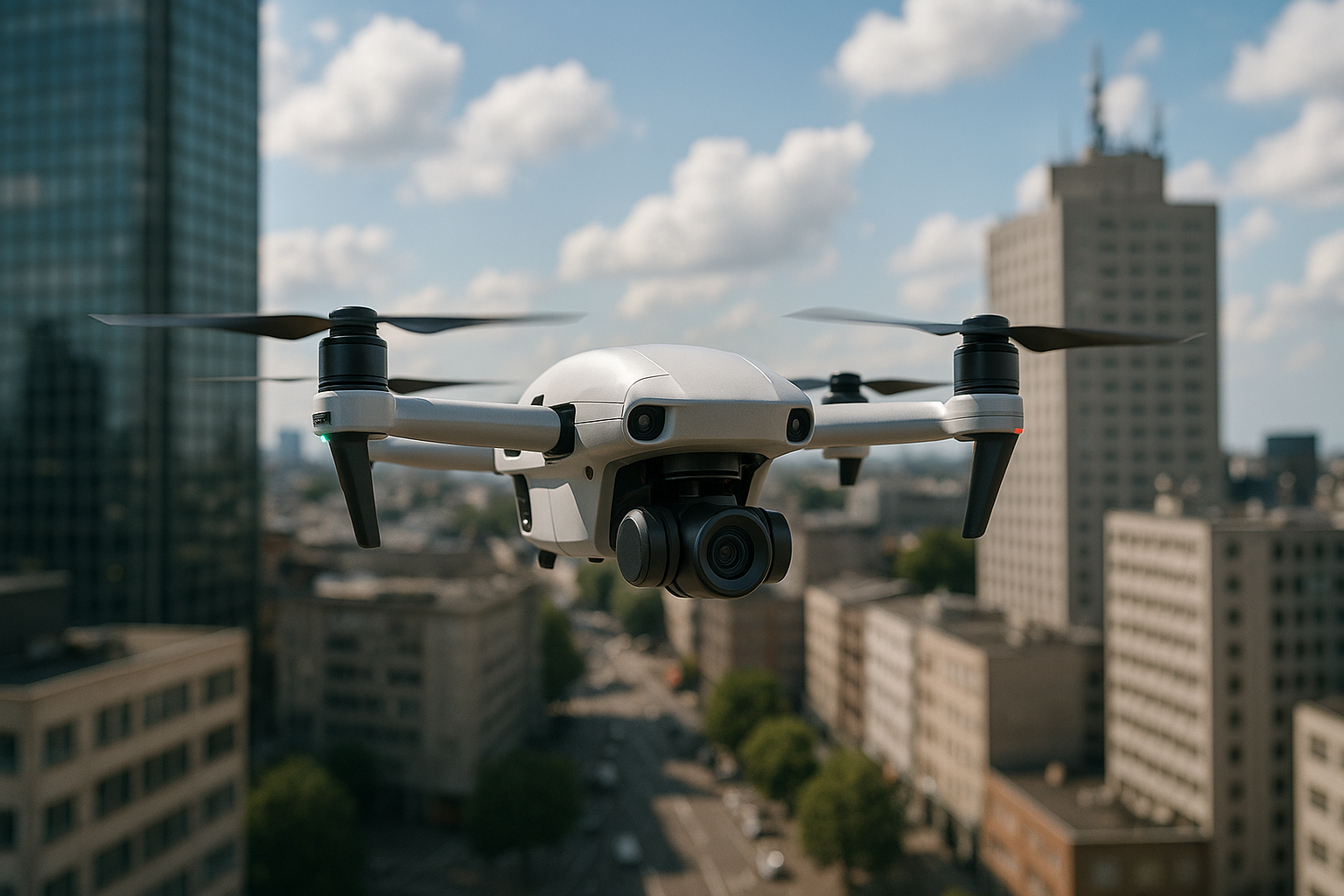
AI-powered surveillance drones represent a transformative technology that addresses critical urban challenges while opening new possibilities for city management and public service. Their ability to provide intelligent, mobile monitoring creates security and operational advantages that static systems cannot match.
Success requires thoughtful implementation that balances technological capabilities with privacy protections, public acceptance, and practical operational needs. Cities that navigate these considerations effectively will reap substantial benefits in safety, efficiency, and quality of life for residents.
The sky truly is the limit for this technology as AI capabilities continue advancing and integration with smart city infrastructure deepens. Forward-thinking cities that embrace these tools while addressing legitimate concerns will lead the way in creating safer, more efficient urban environments for future generations.
The journey from initial pilot programs to mature, city-wide surveillance networks requires vision, investment, and commitment to both technological excellence and ethical operation. As more cities demonstrate success, AI-powered surveillance drones will become standard components of urban infrastructure, fundamentally changing how we protect and manage our increasingly complex urban landscapes.