Modern vehicle safety technology has evolved dramatically, transforming how we protect ourselves and our families on increasingly crowded roads worldwide. 🚗

Every year, millions of traffic accidents occur globally, resulting in countless injuries and fatalities that could potentially be prevented with the right technology. As our roads become more congested and driving conditions more challenging, the automotive industry has responded with innovative solutions designed to keep drivers, passengers, and pedestrians safer than ever before.
The integration of cutting-edge technology into vehicles isn’t just about convenience anymore—it’s literally saving lives every single day. From sensors that detect imminent collisions to systems that can take control of your vehicle in emergency situations, these advancements represent a revolution in automotive safety that’s accessible to more drivers than ever before.
🛡️ Understanding Modern Vehicle Safety Systems
Today’s vehicles come equipped with an impressive array of safety technologies that work together to create multiple layers of protection. These systems use cameras, radar, lidar, and sophisticated algorithms to monitor your surroundings constantly, identifying potential hazards before they become dangerous situations.
The beauty of modern safety technology lies in its proactive nature. Rather than simply protecting you during an accident, these systems work tirelessly to prevent accidents from happening in the first place. This shift from passive to active safety represents one of the most significant advances in automotive history.
Understanding how these technologies work empowers you to make informed decisions when purchasing a vehicle and helps you use these features effectively once you’re behind the wheel. Knowledge of these systems can literally be the difference between a close call and a catastrophic accident.
Collision Avoidance: Your Electronic Guardian Angel
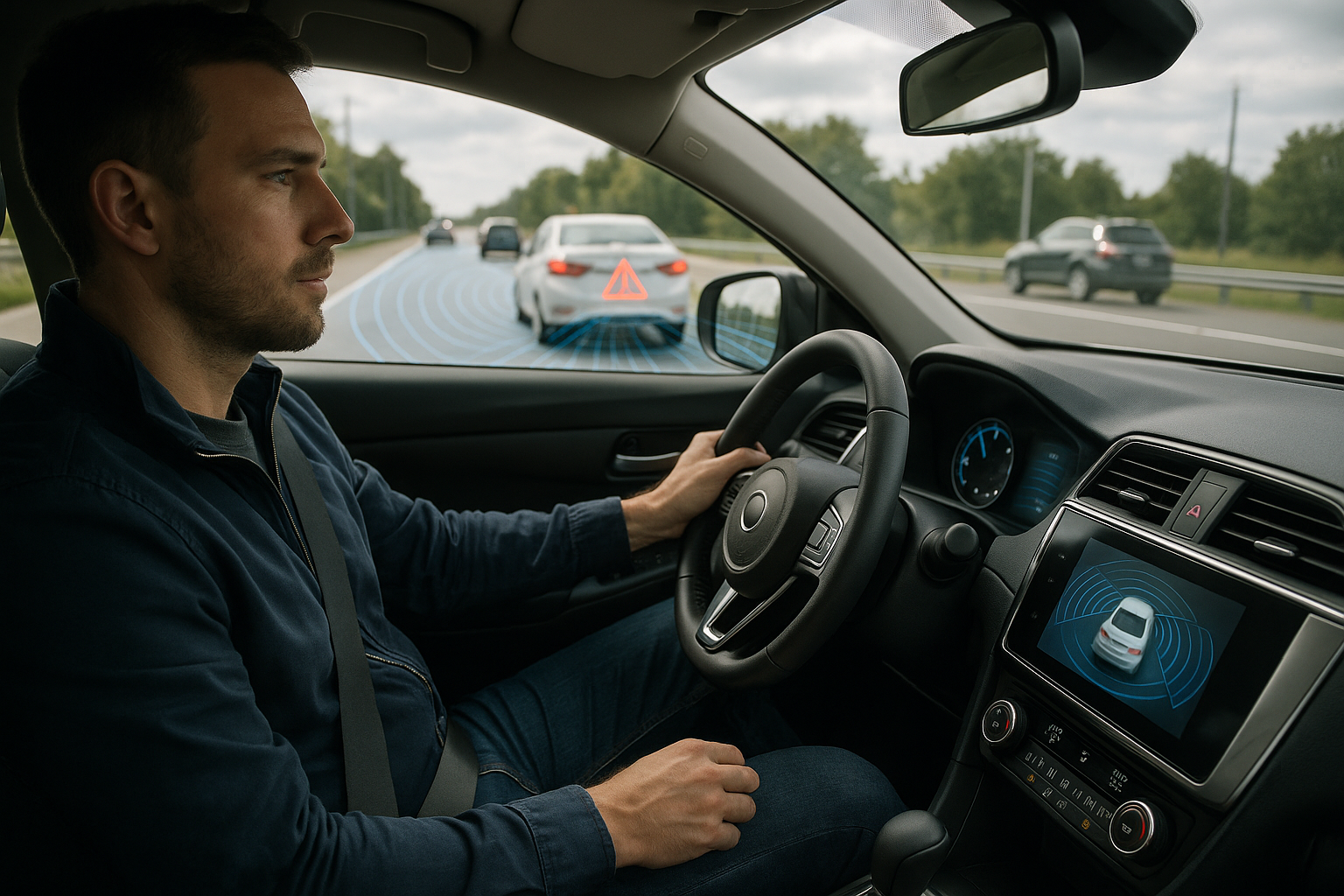
Automatic Emergency Braking (AEB) systems have become one of the most effective accident prevention technologies available today. These systems continuously monitor the road ahead, calculating closing speeds with other vehicles, pedestrians, or obstacles. When a collision appears imminent and the driver hasn’t responded, the system automatically applies the brakes.
Studies have shown that AEB systems can reduce rear-end collisions by up to 50%, making them one of the most impactful safety features ever developed. Many insurance companies now offer discounts for vehicles equipped with this technology, recognizing its proven effectiveness in preventing accidents.
Forward Collision Warning (FCW) works alongside AEB, providing audible and visual alerts when you’re approaching another vehicle too quickly. This gives drivers precious extra seconds to react, often preventing accidents before automatic intervention becomes necessary.
How Collision Avoidance Systems Save Lives Daily
These systems excel in situations where driver distraction or delayed reaction time could prove catastrophic. Whether you’ve glanced at your phone for a split second or the vehicle ahead has suddenly braked hard, collision avoidance technology provides a crucial safety net.
Modern systems can detect not only vehicles but also pedestrians, cyclists, and even large animals. Some advanced versions work effectively in various weather conditions and lighting scenarios, including nighttime operation. This comprehensive detection capability makes these systems valuable protective tools in diverse driving environments.
Lane Departure Prevention: Keeping You Where You Belong
Lane Departure Warning (LDW) and Lane Keeping Assist (LKA) systems use cameras to monitor road markings, alerting you when your vehicle begins drifting out of its lane without signaling. These technologies address one of the most common causes of highway accidents: unintentional lane departure.
Drowsy driving and distraction cause thousands of accidents annually when vehicles drift across lane lines. LDW systems provide immediate alerts through steering wheel vibrations, audible warnings, or visual indicators on your dashboard. More advanced LKA systems can actually provide gentle steering corrections to guide your vehicle back into its lane.
For long-distance drivers and commuters who spend hours on highways, these systems serve as vigilant copilots, monitoring lane position even when fatigue begins to affect driver attention. They’re particularly effective on well-marked highways where lane markings are clear and consistent.
🎯 Blind Spot Detection: Eliminating Dangerous Gaps
Every vehicle has blind spots—areas around your car that aren’t visible through mirrors or peripheral vision. Blind Spot Monitoring (BSM) systems use radar sensors to detect vehicles in these hidden zones, alerting you with visual indicators in your side mirrors or audible warnings.
When you activate your turn signal with a vehicle in your blind spot, many systems provide enhanced warnings to prevent dangerous lane changes. Some advanced systems even include Rear Cross Traffic Alert, which warns you of approaching vehicles when backing out of parking spaces—a situation where visibility is severely limited.
These technologies are especially valuable in heavy traffic conditions where vehicles constantly surround you. They effectively give you eyes where you physically can’t see, dramatically reducing the risk of side-swipe collisions during lane changes.
Adaptive Cruise Control: Intelligent Speed Management
Traditional cruise control maintains a set speed, requiring constant driver intervention in traffic. Adaptive Cruise Control (ACC) revolutionizes this concept by automatically adjusting your speed to maintain a safe following distance from the vehicle ahead.
ACC systems use radar or cameras to monitor traffic ahead, smoothly accelerating and decelerating to match traffic flow. This reduces driver fatigue on long trips and helps maintain safer following distances than many drivers naturally maintain. Some systems can even bring your vehicle to a complete stop in traffic and resume when traffic begins moving.
The technology particularly shines during highway driving and stop-and-go traffic situations. By automating speed adjustments, ACC allows drivers to focus more attention on steering and monitoring their surroundings, reducing mental workload and improving overall safety.
Traffic Jam Assist: Your Commute Companion
Advanced versions of ACC include Traffic Jam Assist, which combines adaptive cruise control with lane-keeping technology. In slow-moving traffic, these systems can handle both acceleration and steering, dramatically reducing the stress and fatigue associated with congested commutes.
While these systems still require driver attention and readiness to take control, they represent significant steps toward fully autonomous driving while providing immediate safety benefits today.
📱 Driver Attention Monitoring: Technology That Watches Over You
Driver fatigue and distraction contribute to a significant percentage of traffic accidents. Driver Attention Monitoring systems use various technologies to assess driver alertness and engagement, providing warnings when they detect signs of drowsiness or distraction.
These systems employ different methods, including monitoring steering input patterns, tracking eye movement and head position through cameras, or analyzing driving behavior for signs of impairment. When the system detects concerning patterns, it alerts the driver with visual and audible warnings, sometimes suggesting a break.
Some advanced systems can even detect when drivers aren’t keeping their hands on the steering wheel in vehicles equipped with semi-autonomous features, ensuring drivers remain engaged and ready to take control when necessary.
Parking Assistance Technologies: Navigating Tight Spaces Safely
Parking-related accidents, while typically less severe than highway collisions, account for a substantial number of vehicle damage incidents and pedestrian injuries. Modern parking assistance technologies address these challenges with multiple innovative solutions.
Parking sensors use ultrasonic technology to detect obstacles around your vehicle, providing audible warnings that increase in frequency as you approach objects. These basic systems have evolved into comprehensive 360-degree camera systems that provide bird’s-eye views of your vehicle’s surroundings.
Automatic Parking Assist takes this further, using sensors and cameras to identify suitable parking spaces and actually steering your vehicle into them while you control the accelerator and brake. Some cutting-edge systems can even park your car remotely using a smartphone app, allowing you to exit before the vehicle parks itself in tight spaces.
🌙 Night Vision and Enhanced Visibility Systems
Darkness significantly increases accident risk, reducing visibility and making hazards harder to detect. Night vision systems address this challenge using infrared cameras to detect heat signatures from people, animals, and vehicles beyond the range of your headlights.
These systems display enhanced images on your dashboard or heads-up display, highlighting potential hazards that would otherwise remain invisible. They’re particularly effective at detecting pedestrians and animals near roadways, providing crucial extra seconds to react and avoid collisions.
Adaptive headlights complement night vision systems by automatically adjusting beam direction based on steering input and vehicle speed. Some systems can even detect oncoming traffic and selectively dim portions of the high beam to avoid blinding other drivers while maintaining maximum illumination elsewhere.
Tire Pressure Monitoring: The Foundation of Safe Driving
While less glamorous than collision avoidance systems, Tire Pressure Monitoring Systems (TPMS) play a crucial role in vehicle safety. Properly inflated tires provide optimal traction, handling, and braking performance, while underinflated tires increase stopping distances and the risk of tire failure.
TPMS continuously monitors tire pressure, alerting you immediately when pressure drops below safe levels. This allows you to address issues before they become dangerous, preventing blowouts and maintaining optimal vehicle control. Many modern systems provide individual tire pressure readings, helping you identify exactly which tire needs attention.
🔄 Electronic Stability Control: Your Digital Safety Net
Electronic Stability Control (ESC) represents one of the most significant safety advances in automotive history. This system continuously monitors vehicle behavior, comparing your intended direction (based on steering input) with your actual direction. When it detects loss of traction or control, ESC selectively applies brakes to individual wheels and adjusts engine power to help you maintain control.
ESC has proven so effective at preventing rollovers and loss-of-control accidents that it’s now mandatory on new vehicles in many countries. The technology is particularly valuable in emergency maneuvers, slippery conditions, or situations where driver inputs might otherwise result in a spin or rollover.
Working seamlessly in the background, ESC intervenes only when necessary, allowing normal driving the rest of the time. Most drivers never notice its operation until it prevents what could have been a serious accident.
Connected Vehicle Technology: The Future Is Here
Vehicle-to-Vehicle (V2V) and Vehicle-to-Infrastructure (V2I) communication represent the next frontier in traffic safety. These technologies allow vehicles to share information about speed, position, braking, and road conditions with other equipped vehicles and traffic management systems.
Imagine receiving warnings about accidents around blind curves, icy road conditions ahead, or vehicles running red lights at intersections before you can see them. Connected vehicle technology makes this possible, creating a network of awareness that extends far beyond what any individual vehicle’s sensors can detect.
While still in relatively early deployment stages, connected vehicle technology promises to dramatically reduce accidents by giving drivers and automated systems information about hazards beyond the line of sight. As more vehicles adopt these technologies, the safety benefits will compound exponentially.
💡 Maximizing the Effectiveness of Safety Technologies
Having advanced safety technology in your vehicle is only beneficial if you understand how to use it properly. Take time to read your vehicle’s manual and familiarize yourself with each safety feature. Many dealerships offer technology tutorials that help owners understand and optimize these systems.
Remember that these technologies are designed to assist, not replace, attentive driving. Maintain focus on the road, keep your hands on the wheel, and treat safety systems as backup protection rather than primary driving tools. Overreliance on technology can create complacency that undermines the very safety these systems provide.
Regularly maintain your vehicle’s sensors and cameras, keeping them clean and unobstructed. Dirt, snow, ice, or damage can impair system effectiveness. Most vehicles will alert you when sensors are blocked, but proactive maintenance ensures optimal performance at all times.
Choosing Vehicles With the Right Safety Features
When shopping for a new or used vehicle, prioritize safety technology alongside traditional considerations like price, fuel economy, and style. Research which safety features are available on models you’re considering, and understand which are standard versus optional.
Organizations like the Insurance Institute for Highway Safety (IIHS) and the National Highway Traffic Safety Administration (NHTSA) provide comprehensive safety ratings and information about which vehicles offer the most advanced safety technologies. These resources help you make informed decisions that could save lives.
Consider your specific driving needs and environment. If you frequently drive in heavy traffic, features like adaptive cruise control and collision avoidance become especially valuable. Rural drivers might prioritize night vision and animal detection capabilities. Choose technologies that address your particular risk factors.
🚀 The Road Ahead: Emerging Safety Technologies
The evolution of traffic accident prevention technology continues accelerating. Artificial intelligence and machine learning enable systems to become smarter and more predictive, anticipating dangerous situations before they develop. Future vehicles will learn from billions of miles of driving data, constantly improving their ability to protect occupants.
Autonomous driving technology, while still developing, promises to eventually eliminate the human error responsible for the vast majority of accidents. The transition will be gradual, with increasing levels of automation providing safety benefits long before fully self-driving vehicles become commonplace.
Advanced materials and vehicle design continue evolving alongside electronic safety systems, creating vehicles that protect occupants better during unavoidable collisions while simultaneously preventing more accidents from occurring. The combination of active and passive safety creates unprecedented protection levels.
Taking Action Today for a Safer Tomorrow
You don’t need to wait for tomorrow’s technology to improve your safety today. If you’re driving an older vehicle, consider upgrading to a model with modern safety features. The investment in advanced safety technology pays dividends in protection and peace of mind.
If purchasing a new vehicle isn’t immediately feasible, aftermarket options exist for some safety technologies. Backup cameras, parking sensors, and blind spot monitoring systems can be professionally installed on many vehicles. While not as integrated as factory systems, they still provide valuable additional protection.
Most importantly, remember that technology complements but doesn’t replace safe driving practices. Stay focused, avoid distractions, obey traffic laws, and maintain your vehicle properly. Combined with advanced safety technology, these fundamental practices create the strongest possible protection for you and your loved ones.
The road ahead is safer than ever before, thanks to remarkable technological advances that transform vehicles from simple transportation into sophisticated safety systems. By understanding, choosing, and properly using these cutting-edge accident prevention technologies, you’re taking control of your safety and protecting what matters most—the precious lives of your family and yourself. Every journey deserves the confidence that comes from knowing you’re protected by the most advanced safety technology available. 🛣️✨