Drones are revolutionizing emergency response worldwide, transforming how firefighters battle blazes and rescue teams save lives in dangerous situations.

🚁 The Dawn of Aerial Emergency Response
The integration of unmanned aerial vehicles into firefighting and rescue operations marks a pivotal moment in emergency services history. What once seemed like science fiction has become operational reality across fire departments and rescue organizations globally. These sophisticated flying machines equipped with advanced sensors, cameras, and specialized equipment are providing first responders with unprecedented situational awareness and capabilities that were unimaginable just a decade ago.
Traditional firefighting and rescue methods, while proven effective over centuries, come with inherent limitations and significant risks to personnel. Ground-based operations often struggle with visibility challenges, especially in smoke-filled environments or during large-scale disasters. The introduction of drone technology addresses these critical gaps, offering a bird’s-eye perspective that enhances decision-making and operational efficiency while simultaneously reducing risk to human responders.
Transforming Fire Suppression Operations 🔥
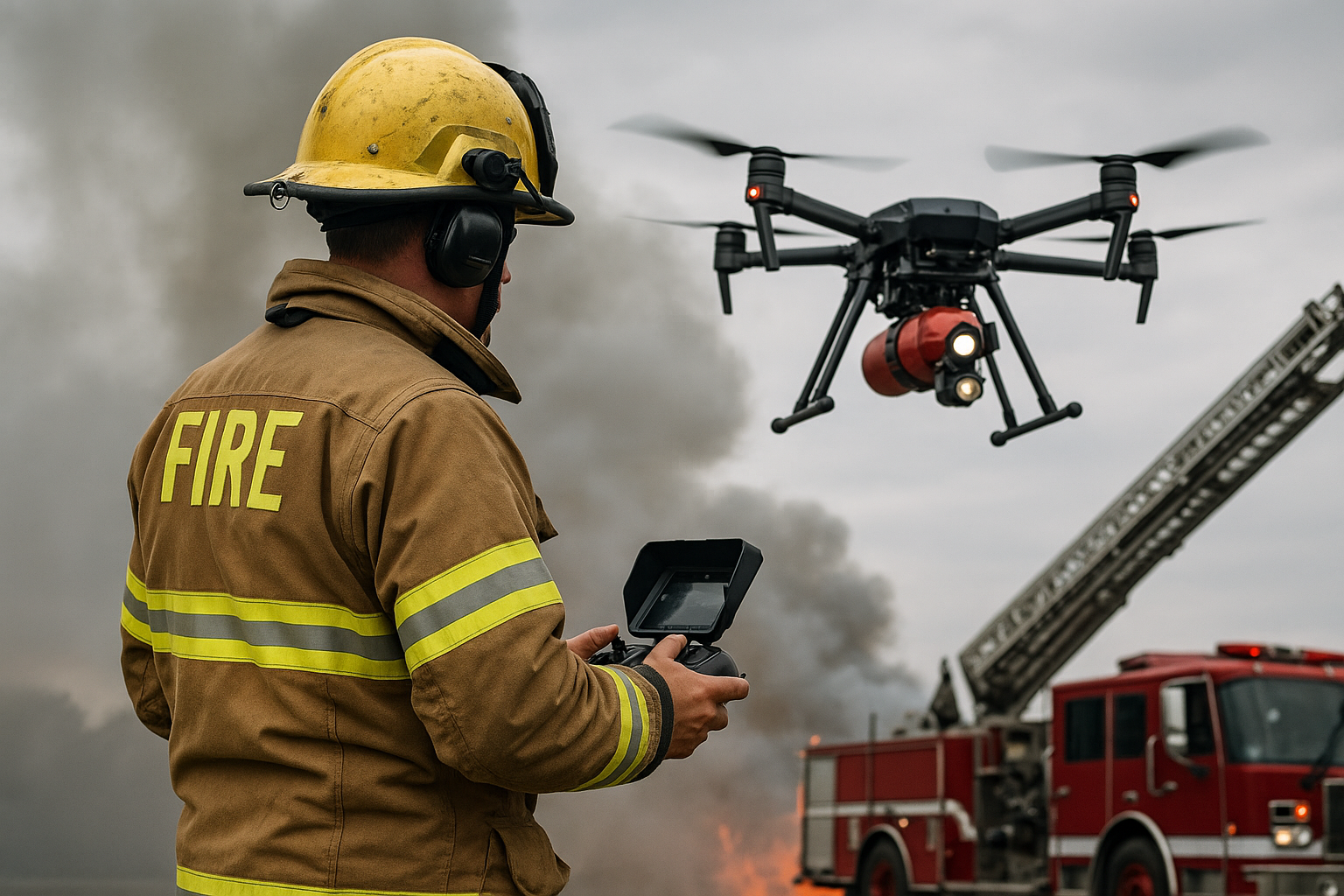
Modern firefighting drones have evolved far beyond simple observation platforms. Today’s advanced systems feature thermal imaging capabilities that penetrate dense smoke, identifying heat signatures that reveal fire origins, intensity patterns, and potential spread trajectories. This real-time intelligence allows incident commanders to deploy resources more strategically, targeting the most critical areas first and preventing wasteful allocation of personnel and equipment.
Fire departments in California, Australia, and Europe have deployed specialized drones capable of carrying fire-retardant payloads or water delivery systems. These aerial assets can access locations too dangerous for ground crews or where traditional aerial firefighting aircraft cannot safely operate. In urban environments with tall buildings, drones equipped with high-pressure water nozzles can reach upper floors faster than ladder trucks, potentially containing fires before they spread.
Wildfire Management Revolution
Wildfire response has particularly benefited from drone integration. These unmanned systems conduct reconnaissance missions over vast wilderness areas, mapping fire perimeters with remarkable accuracy. The data collected feeds directly into fire behavior prediction models, helping authorities issue timely evacuation orders and coordinate containment strategies across multiple agencies.
Night operations, traditionally extremely hazardous for pilots of manned aircraft, have become significantly safer with drone deployment. Equipped with infrared cameras and GPS tracking, drones patrol fire lines throughout darkness, detecting flare-ups and hotspots that might otherwise go unnoticed until morning, when they’ve grown into major threats.
Search and Rescue Excellence 🆘
When individuals go missing in wilderness areas, dense forests, or disaster zones, time becomes the most critical factor determining survival outcomes. Drones have dramatically accelerated search operations, covering extensive terrain in fractions of the time required by ground teams. Advanced models equipped with facial recognition software, heat-seeking sensors, and high-resolution cameras can identify human signatures even in challenging environments.
Mountain rescue teams across the Alps and Rocky Mountains have integrated drones into standard operating procedures. These devices scout avalanche zones, assess terrain stability, and locate buried victims using specialized sensors that detect breathing patterns and body heat beneath snow. This capability has increased survival rates while reducing exposure risks for rescue personnel who would otherwise need to enter unstable areas.
Urban Disaster Response
Following earthquakes, building collapses, or industrial accidents, drones penetrate rubble fields and unstable structures where sending human rescuers would be unconscionably dangerous. Miniature drones navigate tight spaces, transmitting video feeds that reveal survivor locations and structural conditions. This intelligence guides rescue teams to victims via the safest routes, minimizing secondary collapse risks.
Flood rescue operations have similarly transformed with drone assistance. When rising waters trap people on rooftops or in vehicles, drones survey affected areas, prioritize rescue sequences based on immediate danger levels, and even deliver flotation devices or emergency supplies to stranded individuals while helicopter or boat rescue teams navigate to their positions.
Technical Capabilities Driving Innovation 🔧
The technological sophistication behind modern emergency response drones continues advancing at remarkable pace. Current systems integrate multiple sensor arrays including thermal imaging, LiDAR mapping, multispectral cameras, and gas detection equipment. This comprehensive data collection provides incident commanders with multidimensional situational awareness impossible through traditional methods.
Battery technology improvements have extended operational durations, with some professional models achieving flight times exceeding 45 minutes. Rapid battery exchange systems and mobile charging stations deployed at incident scenes enable continuous aerial coverage throughout extended operations. Solar-powered variants are emerging for sustained monitoring missions in remote locations.
Artificial Intelligence Integration
Machine learning algorithms now analyze drone-captured imagery in real-time, identifying patterns and anomalies that human operators might miss. AI systems trained on thousands of fire scenarios can predict spread patterns, recommend tactical approaches, and highlight structural vulnerabilities before they become catastrophic failures. This predictive capability represents a fundamental shift from reactive to proactive emergency response.
Autonomous flight capabilities are reducing operator workload while increasing mission effectiveness. Pre-programmed search patterns optimize coverage efficiency, ensuring no areas are overlooked during rescue operations. Obstacle avoidance systems navigate complex environments without constant human guidance, allowing operators to focus on data interpretation rather than flight control.
Regulatory Framework and Operational Standards 📋
As drone usage in emergency services expands, regulatory bodies worldwide have developed frameworks balancing operational flexibility with public safety considerations. Many jurisdictions grant emergency services exemptions from standard aviation restrictions, recognizing the life-saving potential these technologies offer when properly deployed.
The Federal Aviation Administration in the United States, the European Union Aviation Safety Agency, and similar organizations globally have established certification programs for emergency service drone operations. These standards address pilot training requirements, equipment specifications, maintenance protocols, and operational procedures ensuring consistent safety levels across departments.
Inter-Agency Coordination
Effective drone deployment during major incidents requires seamless coordination between multiple responding agencies. Standardized communication protocols and airspace management systems prevent conflicts between various aerial assets operating simultaneously. Command structures clearly delineate responsibilities for drone operations, data management, and tactical implementation of aerial intelligence.
Cost-Effectiveness and Resource Optimization 💰
Budget-conscious fire departments and rescue organizations have discovered that drone programs deliver exceptional return on investment. While traditional aerial support requires expensive helicopter operations costing thousands per flight hour, drone operations incur minimal ongoing expenses. Even sophisticated professional-grade systems represent one-time capital investments equivalent to a few helicopter flight hours.
Smaller departments that could never afford dedicated aviation programs now access aerial capabilities previously exclusive to large metropolitan services. Regional cooperation models where multiple departments share drone resources and trained operators have further reduced individual organizational costs while maintaining robust response capabilities.
Reduced Insurance and Liability Costs
Insurance providers have recognized the safety improvements drones bring to emergency operations. Departments demonstrating sophisticated drone programs with comprehensive training and operational protocols have negotiated reduced liability premiums. The documentation capabilities drones provide also strengthen legal positions in post-incident reviews and litigation scenarios.
Training and Professional Development 👨🚒
Integrating drones into emergency services requires comprehensive training programs addressing both technical piloting skills and tactical application within incident command structures. Progressive departments have established multi-tiered certification systems progressing from basic operators to advanced mission specialists and program coordinators.
Simulation technologies allow trainees to practice complex scenarios without consuming actual flight time or risking equipment damage. Virtual environments replicate challenging conditions including high winds, smoke-obscured visibility, and equipment malfunctions, preparing operators for real-world complications. These training systems track performance metrics, identifying areas requiring additional instruction.
Continuous Skill Development
Rapid technological advancement necessitates ongoing education programs keeping operators current with evolving capabilities and best practices. Professional organizations now offer specialized certifications in emergency services drone operations, thermal imaging interpretation, and data analysis. These credentials establish professional standards while promoting excellence across the emergency response community.
Environmental Monitoring and Hazmat Applications ☣️
Beyond immediate firefighting and rescue functions, drones provide crucial environmental monitoring during hazardous materials incidents. Equipped with specialized sensors, they detect chemical concentrations, radiation levels, and toxic gas dispersal patterns without exposing personnel to dangerous substances. This capability proves invaluable during industrial accidents, transportation incidents, or terrorist attacks involving chemical or radiological agents.
Post-incident environmental assessment has similarly benefited from drone deployment. Following major fires or chemical releases, drones map contamination spread, document environmental damage, and monitor remediation progress. This data supports cleanup operations while providing documentation for insurance claims and environmental compliance reporting.
Future Innovations on the Horizon 🚀
Research laboratories and technology companies are developing next-generation capabilities that will further revolutionize emergency response. Swarm technology enabling coordinated operations of multiple autonomous drones promises comprehensive coverage of large incident scenes. These networked systems will communicate amongst themselves, dynamically adjusting search patterns and resource allocation without human intervention.
Advanced payload delivery systems under development include defibrillators for cardiac emergency response, bleeding control supplies for trauma situations, and even flotation devices for water rescue operations. These capabilities will enable drones to provide immediate life-saving interventions during the critical minutes before traditional responders arrive.
Materials Science Breakthroughs
New materials resistant to extreme heat are enabling drones to operate closer to active fire zones, collecting higher-quality thermal data and potentially deploying fire suppression agents with unprecedented precision. Carbon fiber composites and ceramic coatings protect sensitive electronics while maintaining lightweight flight characteristics essential for extended operations.
Extended range capabilities through improved energy storage and hybrid propulsion systems will enable drones to operate from centralized bases covering wider response areas. This consolidation reduces equipment redundancy costs while maintaining rapid response capabilities across extensive geographic regions.
Global Success Stories and Case Studies 🌍
Real-world implementations demonstrate the transformative impact of drone technology in emergency services. Dubai’s Civil Defense has integrated a comprehensive drone program including models capable of autonomous fire detection across the city’s skyline. Their system has reduced response times by identifying incidents before traditional detection systems trigger alarms.
Australian rural fire services credit drones with saving numerous properties during recent devastating bushfire seasons. Thermal mapping identified defensive opportunities ground crews couldn’t see, enabling tactical victories against fires that satellite imagery suggested were unstoppable.
Swiss mountain rescue services have documented dozens of successful alpine rescues where drone-gathered intelligence proved decisive in locating victims and determining safe approach routes. In several cases, survivors were found in locations ground searchers had already passed, highlighting how aerial perspectives reveal what remains hidden at ground level.
Overcoming Implementation Challenges 🛠️
Despite obvious advantages, drone program implementation faces legitimate obstacles requiring thoughtful solutions. Privacy concerns arise when surveillance-capable equipment operates in residential areas, necessitating clear policies governing data collection, retention, and usage. Transparent community engagement addressing these concerns builds public trust essential for program success.
Technical reliability in extreme conditions remains an ongoing concern. Smoke, heat, high winds, and precipitation challenge drone operations, requiring robust equipment design and operational protocols defining safe operating limits. Redundant systems and conservative safety margins prevent equipment loss while protecting ground personnel from falling drones.
Cultural resistance within traditional emergency services occasionally surfaces as veteran personnel question whether technology can truly improve proven methods. Successful programs address this through inclusive training emphasizing how drones complement rather than replace human expertise, enhancing capabilities while respecting institutional knowledge.
Building Comprehensive Drone Programs 📊
Establishing effective emergency services drone operations requires strategic planning beyond simply purchasing equipment. Successful departments begin with needs assessments identifying specific operational requirements, geographic challenges, and budget parameters. This analysis guides equipment selection ensuring capabilities match actual mission profiles rather than pursuing impressive specifications that don’t address real needs.
Comprehensive programs include maintenance protocols, spare parts inventories, and equipment replacement schedules ensuring operational readiness. Data management systems archive collected intelligence, supporting after-action reviews, training programs, and legal documentation requirements. Quality assurance processes validate equipment performance and operator proficiency through regular testing.
The Path Forward: Integrating Innovation with Tradition 🎯
The future of firefighting and rescue operations lies not in choosing between traditional methods and technological innovation, but in thoughtfully integrating both approaches. Drones amplify human capabilities, providing information and access that enhance decision-making without replacing the courage, judgment, and compassion that define emergency services.
As technology continues advancing, departments that embrace these tools while maintaining core values of service and sacrifice will deliver superior outcomes for the communities they protect. The sky heroes of tomorrow’s emergency response won’t replace the ground-based heroes we’ve always relied upon—they’ll provide these brave individuals with unprecedented capabilities to save more lives while returning home safely to their own families.
Investment in drone programs represents investment in community safety, operational efficiency, and responder protection. Organizations hesitating to adopt these technologies risk falling behind in their fundamental mission to protect life and property. The question facing emergency services leadership is no longer whether to implement drone programs, but how quickly comprehensive integration can be achieved while maintaining operational excellence throughout the transition.