Artificial intelligence is transforming public safety by enabling law enforcement agencies to anticipate criminal activity before it occurs, fundamentally changing how communities approach security.

🔮 The Dawn of Predictive Policing
The landscape of crime prevention has undergone a dramatic transformation over the past decade. Traditional reactive approaches—where police respond to incidents after they occur—are gradually being supplemented and, in some cases, replaced by proactive strategies powered by artificial intelligence. This shift represents not just a technological upgrade, but a fundamental reimagining of how societies can protect their citizens.
AI surveillance systems are now capable of processing massive amounts of data from multiple sources simultaneously. These systems analyze patterns in criminal behavior, environmental factors, social media activity, and historical crime data to generate predictions about where and when crimes are most likely to occur. The technology has moved beyond science fiction into practical application across major cities worldwide.
Law enforcement agencies from Chicago to Singapore are implementing these systems with varying degrees of success and controversy. The promise is compelling: fewer crimes, more efficient resource allocation, and safer communities. However, the reality involves complex ethical considerations, technological limitations, and ongoing debates about privacy and civil liberties.
📊 How AI Surveillance Systems Actually Work
Understanding the mechanics behind AI-powered crime prevention requires examining several interconnected technologies. At the foundation lies machine learning, specifically deep learning algorithms that can identify patterns humans might miss in vast datasets.
Data Collection and Integration
Modern AI surveillance systems aggregate information from diverse sources. Security cameras equipped with computer vision technology monitor public spaces continuously, detecting unusual behavior patterns or recognizing individuals flagged by law enforcement. License plate readers track vehicle movements across cities, creating detailed maps of traffic patterns that can reveal anomalies.
Social media monitoring tools scan public posts for language indicating potential threats or criminal planning. Historical crime databases provide the foundation for pattern recognition, while environmental sensors measure factors like lighting, weather conditions, and crowd density that might influence criminal activity.
Pattern Recognition and Predictive Analytics
Once collected, this data feeds into sophisticated neural networks trained to identify correlations. The AI doesn’t simply look for obvious patterns; it discovers subtle relationships between variables that human analysts would never detect. For instance, a system might learn that certain combinations of weather conditions, local events, and time of day correlate with increased theft in specific neighborhoods.
These algorithms generate risk scores for different locations and time periods, allowing police departments to deploy resources strategically. Some systems also produce individual risk assessments, though these applications remain highly controversial due to concerns about bias and fairness.
🌍 Real-World Applications and Success Stories
Several cities have reported significant reductions in crime rates after implementing AI surveillance systems. Los Angeles’s operation LASER (Los Angeles Strategic Extraction and Restoration) used predictive analytics to reduce crime in target areas by up to 20% before being discontinued due to privacy concerns. The technology itself proved effective, though its implementation raised important questions about appropriate use.
In the United Kingdom, the West Midlands Police partnered with technology companies to develop a national data analytics solution that helps identify individuals at risk of becoming involved in violent crime. This intervention-focused approach aims to provide support services before crimes occur, representing a more rehabilitative application of predictive technology.
Facial Recognition in Action
Facial recognition technology represents one of the most visible and controversial applications of AI surveillance. China has deployed extensive facial recognition networks across major cities, claiming dramatic improvements in solving crimes and locating missing persons. The system can identify individuals in crowds within seconds, cross-referencing them against databases of wanted criminals.
While the effectiveness for crime solving is undeniable, the technology has sparked global debate about surveillance states and personal freedom. Democratic societies implementing similar systems face intense scrutiny and have often scaled back deployment in response to public concern.
⚖️ The Ethical Minefield of Predictive Policing
For every success story, AI surveillance raises profound ethical questions. The most pressing concern involves algorithmic bias. Machine learning systems trained on historical crime data may perpetuate existing biases in law enforcement practices. If police have historically over-policed minority neighborhoods, AI systems trained on that data will recommend continuing the same patterns.
Privacy vs. Security Balance
Citizens in democratic societies expect both safety and privacy, but AI surveillance creates tension between these values. Continuous monitoring of public spaces may deter crime, but it also means ordinary citizens cannot move through their communities without being tracked, analyzed, and potentially flagged by automated systems.
The question becomes: how much privacy should society sacrifice for increased security? Different cultures answer this question differently. Authoritarian regimes embrace comprehensive surveillance with minimal public input, while democracies struggle to find acceptable balances through legislation and public debate.
Accountability and Transparency Challenges
When AI systems influence decisions about resource deployment or individual risk assessment, who bears responsibility for errors? If a predictive algorithm incorrectly flags an innocent person as high-risk, leading to unwarranted police attention or harassment, how can that person seek redress?
Many AI systems operate as “black boxes,” making decisions through processes so complex that even their creators cannot fully explain specific outputs. This opacity conflicts with principles of transparency and due process that underpin democratic legal systems. Law enforcement agencies using these tools must develop frameworks for accountability that protect both public safety and individual rights.
🛡️ Technology Behind the Curtain
Several specific technologies enable AI surveillance systems to function effectively. Understanding these components helps clarify both capabilities and limitations.
Computer Vision and Video Analytics
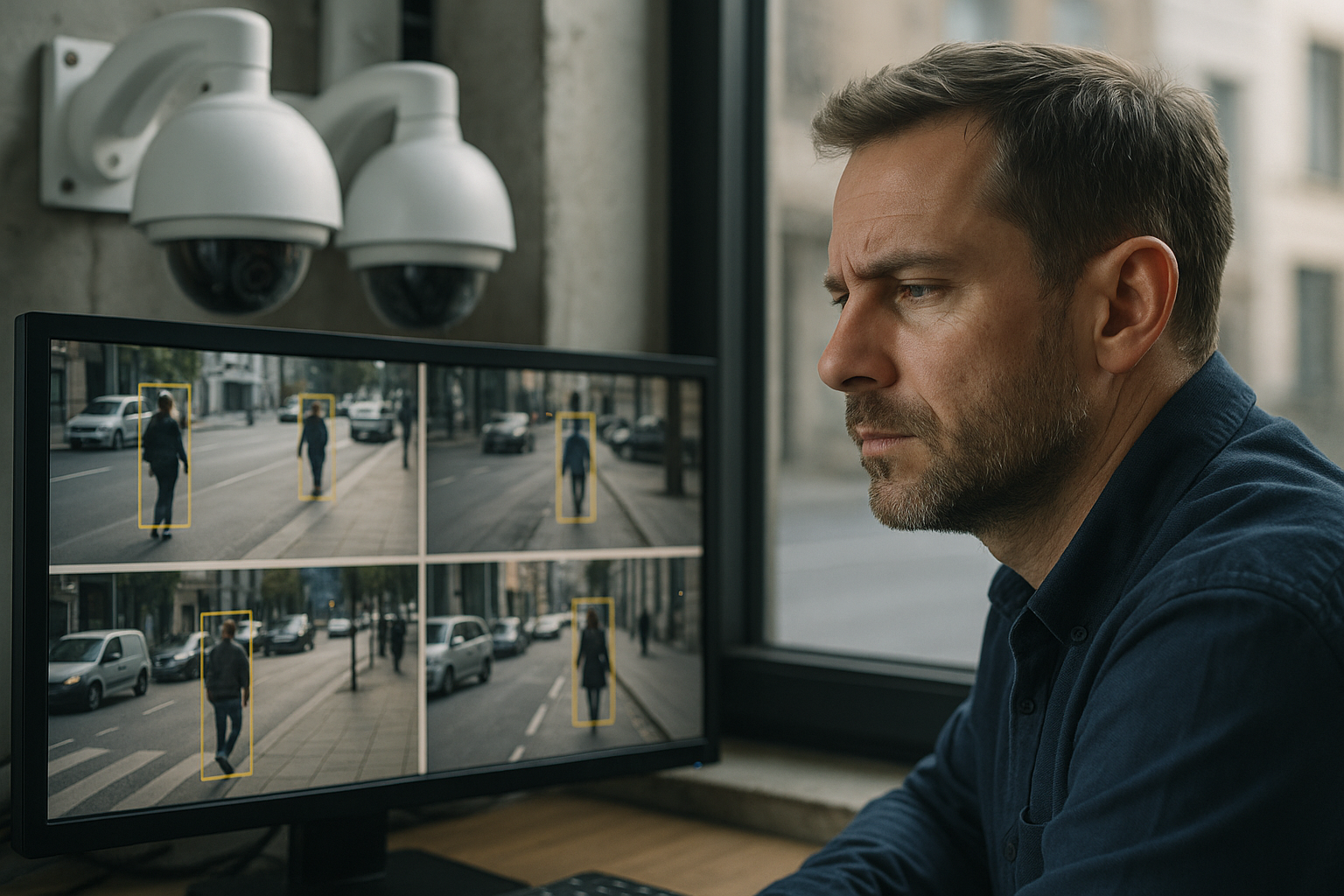
Modern computer vision algorithms can analyze video feeds in real-time, identifying objects, people, vehicles, and behaviors. These systems detect abandoned packages, recognize license plates, track individual movements across multiple cameras, and flag unusual activity patterns like someone loitering in a restricted area or running from a location.
The technology has advanced remarkably. Current systems can function effectively in poor lighting, identify partially obscured faces, and distinguish between genuinely suspicious behavior and innocent activities that might appear unusual to simple algorithms.
Natural Language Processing for Threat Detection
AI systems now scan text communications, social media posts, and online forums for indicators of planned criminal activity. Natural language processing algorithms can detect threatening language, identify discussions of illegal activity, and even assess the credibility of threats based on linguistic patterns.
These tools have proven valuable in preventing planned attacks, particularly when combined with human analyst review. However, they also raise significant privacy concerns about monitoring citizens’ communications and the potential for false positives that could unjustly implicate innocent people.
📱 Mobile Integration and Citizen Participation
The future of AI-powered crime prevention increasingly involves smartphone technology. Mobile applications allow citizens to report suspicious activity, receive real-time safety alerts, and access crime statistics for their neighborhoods. These apps create bidirectional information flows, with citizens contributing data that enhances AI predictions while receiving personalized safety information.
Some jurisdictions have developed citizen reporting apps that feed directly into predictive policing systems. When multiple residents report unusual activity in an area, AI systems can cross-reference this information with other data sources to assess potential threats and prioritize police response.
🔬 Limitations and Technical Challenges
Despite impressive capabilities, AI surveillance systems face significant technical limitations. Predictive accuracy remains imperfect, with false positives and false negatives occurring regularly. Crimes are fundamentally human behaviors influenced by complex social, economic, and psychological factors that may not follow predictable patterns.
The Data Quality Problem
AI systems are only as good as the data they’re trained on. Incomplete, biased, or inaccurate historical data produces unreliable predictions. Many police departments lack comprehensive digital records, have inconsistent reporting standards, or maintain databases with significant errors. Building effective AI systems requires substantial investment in data infrastructure before algorithm development even begins.
Adversarial Adaptation
Criminals aren’t static targets. As they become aware of predictive policing patterns, sophisticated criminal organizations adapt their behavior to avoid detection. This creates an ongoing arms race between AI surveillance capabilities and criminal countermeasures, similar to dynamics in cybersecurity.
🌟 The Future Landscape of AI Crime Prevention
Looking forward, several emerging technologies will likely enhance AI surveillance capabilities. Quantum computing may enable real-time analysis of exponentially larger datasets, improving prediction accuracy. Improved sensor networks will provide richer environmental data, while advances in behavioral psychology inform more sophisticated algorithms.
Integration with other smart city infrastructure represents another frontier. AI systems could coordinate with traffic management, emergency services, and public health systems to create comprehensive urban safety networks. Streetlights might brighten automatically in areas where the system detects elevated risk, while emergency responders receive alerts before situations escalate into violence.
Regulatory Frameworks in Development
Governments worldwide are developing regulations to govern AI surveillance deployment. The European Union’s proposed AI Act would classify predictive policing as “high-risk,” requiring strict transparency, testing, and oversight requirements. Similar legislative efforts are underway in North America and Asia, though approaches vary significantly based on cultural values and political systems.
These frameworks aim to preserve the benefits of AI crime prevention while establishing safeguards against abuse. Key provisions typically include requirements for algorithmic audits, mechanisms for challenging AI decisions, limitations on data collection and retention, and oversight by independent bodies.
🤝 Building Public Trust and Community Engagement
For AI surveillance systems to achieve their potential, they require public acceptance. Communities understandably resist technologies that feel invasive or discriminatory. Law enforcement agencies implementing these systems must prioritize transparency, community engagement, and demonstrable fairness.
Successful programs involve community members in governance decisions about surveillance deployment. They publish regular reports on system performance, including accuracy metrics and demographic impact analyses. They establish clear complaint procedures and independent oversight mechanisms. Most importantly, they demonstrate that predictive policing serves community safety rather than enabling oppressive control.
🎯 Striking the Right Balance Moving Forward
AI surveillance for crime prevention represents powerful technology with genuine potential to improve public safety. The systems already deployed have demonstrated effectiveness in reducing certain types of crime and enabling more efficient resource allocation. As the technology continues advancing, these capabilities will only increase.
However, effectiveness alone cannot justify unrestricted deployment. Democratic societies must carefully balance security benefits against privacy rights, algorithmic fairness, and individual liberty. This requires ongoing dialogue between technologists, law enforcement, policymakers, civil liberties advocates, and community members.
The future of crime prevention will undoubtedly involve AI, but the specifics remain contested and evolving. By learning from early implementations, addressing legitimate concerns about bias and privacy, and maintaining human judgment as the ultimate decision-maker, societies can harness these powerful tools while preserving the values that make communities worth protecting in the first place.
Technology should serve humanity, not the reverse. As AI surveillance systems grow more sophisticated, maintaining this principle becomes both more challenging and more essential. The revolution in crime prevention is underway, but its ultimate character will be determined by the choices we make today about how to deploy these transformative capabilities responsibly.