# Revolutionize Your Waste Management: Harnessing the Power of Smart Sensors for Efficient Recycling

Smart sensors are transforming how we handle waste, making recycling more efficient, cost-effective, and environmentally sustainable than ever before.
The global waste crisis continues to escalate, with cities worldwide struggling to manage the overwhelming volume of garbage generated daily. Traditional waste management systems are proving inadequate, leading to overflowing bins, inefficient collection routes, and contaminated recycling streams. However, a technological revolution is underway that promises to fundamentally change how we approach waste disposal and recycling.
Smart sensor technology represents a paradigm shift in waste management, offering real-time monitoring, data-driven decision-making, and automated processes that significantly improve recycling rates while reducing operational costs. These innovative solutions are already being deployed in smart cities across the globe, demonstrating remarkable results in waste reduction and resource recovery.
🔍 Understanding Smart Sensor Technology in Waste Management
Smart sensors are sophisticated devices equipped with various detection capabilities that monitor waste containers in real-time. These sensors utilize ultrasonic technology, infrared detection, weight measurements, and even AI-powered image recognition to gather critical data about waste levels, composition, and collection needs.
The technology works by installing sensors inside or on waste bins, dumpsters, and recycling containers. These devices continuously collect information about fill levels, temperature, location, and sometimes even the type of materials being deposited. This data is then transmitted wirelessly to a central management platform where it can be analyzed and used to optimize collection schedules and routes.
Modern smart sensors can differentiate between recyclable materials, organic waste, and general trash, helping to reduce contamination in recycling streams—one of the most significant challenges facing the recycling industry today. Some advanced systems even use machine learning algorithms to improve their accuracy over time, becoming more effective at identifying different waste types.
The Components of a Smart Waste Ecosystem
A comprehensive smart waste management system consists of several integrated components working together seamlessly. The sensors themselves are just one part of this interconnected ecosystem that includes cloud-based software platforms, mobile applications for collection crews, analytics dashboards, and sometimes even robotic sorting equipment at processing facilities.
IoT connectivity enables these components to communicate effectively, creating a network of intelligence that spans from individual households to municipal waste processing centers. This connectivity allows for unprecedented visibility into waste generation patterns and recycling behaviors across entire communities.
💡 Transforming Collection Efficiency with Data-Driven Routes
One of the most immediate benefits of smart sensors is the optimization of waste collection routes. Traditional collection schedules follow fixed routes regardless of actual need, meaning trucks often collect from half-empty containers while others overflow between scheduled pickups.
Smart sensors eliminate this inefficiency by reporting exact fill levels in real-time. Collection companies can prioritize bins that are actually full, creating dynamic routes that adapt to actual waste generation patterns. This approach can reduce collection frequency by up to 50% in some areas, dramatically cutting fuel consumption, vehicle emissions, and labor costs.
The environmental impact of optimized collection routes is substantial. Fewer collection trips mean reduced carbon emissions, less traffic congestion, and decreased wear on road infrastructure. Studies have shown that cities implementing smart sensor systems have reduced their waste collection vehicle mileage by 30-40%, translating to significant greenhouse gas reductions.
Real-Time Monitoring Prevents Overflow Emergencies
Overflowing waste containers create multiple problems: they attract pests, produce unpleasant odors, create unsanitary conditions, and often lead to littering as people deposit waste around full bins. Smart sensors provide early warning alerts when containers reach predetermined capacity thresholds, allowing collection teams to respond before overflow occurs.
This proactive approach improves public health outcomes and maintains neighborhood aesthetics. Municipal authorities can also identify locations that consistently fill faster than others, enabling them to right-size their container infrastructure or adjust collection frequencies for specific areas based on actual demand rather than estimates.
♻️ Enhancing Recycling Rates Through Contamination Prevention
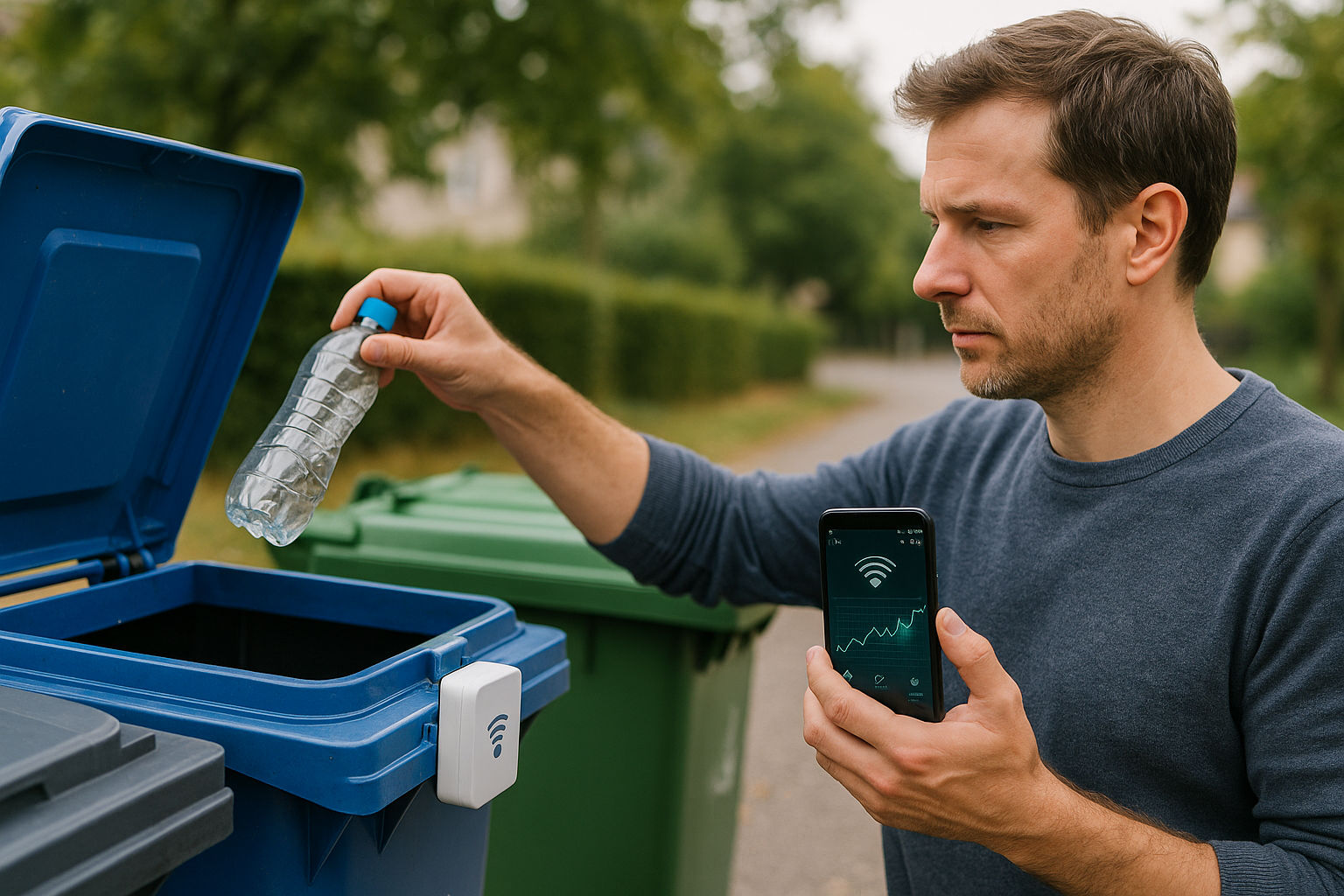
Contamination remains the biggest threat to effective recycling programs worldwide. When non-recyclable materials mix with recyclables, entire batches can be rejected by processing facilities and sent to landfills instead. Smart sensors equipped with image recognition capabilities can identify contamination at the source, alerting users when they’ve placed incorrect items in recycling bins.
Some advanced systems provide immediate feedback through LED indicators or mobile notifications, educating users in real-time about proper sorting practices. This instant feedback loop is far more effective than traditional education campaigns, as it corrects behavior at the moment when habits are formed.
Cities implementing contamination detection sensors have reported recycling purity improvements of 20-35%, significantly increasing the value of recovered materials and reducing rejection rates at sorting facilities. This translates directly into higher revenues from recycled materials and lower processing costs.
Behavioral Insights Drive Community Engagement
The data collected by smart sensors reveals fascinating patterns about community recycling behavior. Analytics platforms can identify which neighborhoods excel at recycling and which need additional education or infrastructure support. This intelligence allows municipalities to target their outreach efforts effectively, investing resources where they’ll have the greatest impact.
Some cities have gamified recycling using sensor data, creating friendly competitions between neighborhoods or apartment buildings to see who can achieve the highest recycling rates. These engagement initiatives leverage the behavioral insights provided by smart sensors to motivate positive environmental actions.
📊 The Economic Case for Smart Sensor Investment
While implementing smart sensor technology requires upfront investment, the return on investment typically materializes within 18-36 months for most municipalities and commercial operations. The cost savings come from multiple sources that compound over time.
| Cost Reduction Area | Typical Savings | Timeframe |
|---|---|---|
| Fuel and vehicle maintenance | 30-40% | Immediate |
| Labor optimization | 25-35% | 3-6 months |
| Landfill disposal fees | 15-25% | 6-12 months |
| Equipment longevity | 20-30% | Long-term |
| Increased recycling revenue | Variable | 6-12 months |
Beyond direct operational savings, smart sensor systems provide valuable data assets that can inform broader urban planning decisions. Understanding waste generation patterns helps city planners make better decisions about infrastructure placement, service area boundaries, and resource allocation.
Scaling Challenges and Solutions
Implementing smart sensor technology across large geographical areas presents logistical and financial challenges. However, modular deployment strategies allow organizations to start small, prove the concept, and expand gradually as budgets allow and ROI is demonstrated.
Many cities begin by installing sensors in high-traffic public spaces or problem areas prone to overflow issues. Once the benefits are documented, they expand to residential neighborhoods and eventually achieve comprehensive coverage. This phased approach minimizes risk while building internal expertise and stakeholder buy-in.
🌍 Environmental Impact and Sustainability Goals
The environmental benefits of smart sensor-enabled waste management extend far beyond reduced vehicle emissions. By improving recycling rates and reducing contamination, these systems keep valuable materials in circulation longer, supporting the transition to a circular economy.
Higher quality recycled materials mean manufacturers can rely more confidently on recycled feedstocks, reducing demand for virgin resources. This ripple effect touches industries ranging from packaging to construction, amplifying the environmental benefits of improved municipal recycling programs.
Smart sensors also enable more accurate measurement of waste diversion rates, helping cities and organizations track progress toward sustainability commitments. This data transparency is increasingly important as stakeholders demand verifiable evidence of environmental performance.
Meeting Global Sustainability Targets
The United Nations Sustainable Development Goals include specific targets for waste reduction and resource efficiency. Smart sensor technology provides the measurement and optimization tools necessary to achieve these ambitious goals, transforming them from aspirational statements into measurable, achievable outcomes.
Countries and cities that have embraced smart waste management are consistently outperforming their peers in achieving waste diversion targets. The data-driven approach removes guesswork and enables continuous improvement based on actual performance metrics rather than estimates.
🚀 Innovation Frontiers in Smart Waste Technology
The field of smart waste management continues to evolve rapidly, with new innovations emerging regularly. Artificial intelligence is being applied to predict waste generation patterns with increasing accuracy, allowing even more proactive management strategies.
Some experimental systems now incorporate blockchain technology to create transparent, verifiable records of waste handling from generation through final processing. This transparency helps combat illegal dumping and ensures accountability throughout the waste management chain.
Robotics integration represents another frontier, with AI-guided sorting robots at recycling facilities using sensor data to optimize their operations. These systems can process materials faster and more accurately than human sorters, further improving recycling economics and effectiveness.
Integration with Broader Smart City Initiatives
Smart waste management doesn’t exist in isolation—it’s increasingly integrated with other smart city systems. Waste sensor data can inform urban planning decisions, identify areas needing additional services, and even contribute to public health monitoring by detecting unusual patterns that might indicate problems.
This integration creates synergies that multiply the value of sensor investments. For example, waste collection vehicles equipped with sensors can also collect data on road conditions, air quality, or infrastructure needs, serving multiple municipal functions simultaneously.
🔧 Practical Implementation Strategies for Organizations
Organizations considering smart sensor adoption should begin with a thorough assessment of their current waste management processes and pain points. Understanding existing inefficiencies helps identify where sensor technology will deliver the greatest value.
Successful implementations typically follow these steps:
- Conduct a waste audit to establish baseline metrics for comparison
- Identify high-priority areas where sensors will address specific problems
- Select technology partners with proven track records and compatible systems
- Develop a phased deployment plan that allows for learning and adjustment
- Train staff on new systems and workflows before widespread deployment
- Establish clear KPIs and monitoring protocols to measure success
- Communicate changes to stakeholders and educate end users
- Continuously analyze data and refine operations based on insights
Stakeholder engagement is critical throughout the implementation process. Collection crews, facility operators, and end users all need to understand how the new systems work and how they benefit from the changes. Resistance to change can undermine even the best technology if people aren’t brought along on the journey.
🎯 Measuring Success and Continuous Improvement
The true power of smart sensor systems lies not in the technology itself but in the continuous improvement cycles it enables. Organizations should establish regular review processes to analyze sensor data, identify trends, and adjust operations accordingly.
Key performance indicators might include collection route efficiency, recycling contamination rates, waste diversion percentages, operational costs per ton, customer satisfaction scores, and environmental impact metrics. Tracking these indicators over time reveals the system’s impact and highlights opportunities for further optimization.
Advanced analytics platforms can automatically generate insights and recommendations, but human expertise remains essential for interpreting data in context and making strategic decisions. The most successful organizations combine technological capabilities with experienced waste management professionals who understand both the data and the real-world operations.
🌟 The Future of Waste Management is Here
Smart sensor technology has matured from an experimental concept to a proven, reliable solution that’s reshaping waste management worldwide. The benefits—reduced costs, improved environmental performance, better service quality, and data-driven decision-making—are too significant to ignore.
As sensor costs continue to decline and capabilities expand, adoption will accelerate across municipalities, commercial properties, educational institutions, and residential communities. The question is no longer whether to implement smart sensors but how quickly organizations can deploy them to capture competitive and environmental advantages.
The transformation of waste management through smart sensors represents more than technological progress—it’s a fundamental reimagining of how society handles resources. By treating waste as data and optimizing every aspect of collection, sorting, and processing, we move closer to a truly circular economy where materials circulate indefinitely rather than flowing linearly from extraction to disposal.
For organizations ready to revolutionize their waste management, the technology is available, the business case is proven, and the environmental imperative is clear. Smart sensors aren’t just making waste management more efficient—they’re making sustainable practices economically inevitable, aligning environmental responsibility with financial performance in ways that benefit everyone.
The revolution in waste management is underway, powered by sensors, data, and the commitment to building more sustainable communities. Organizations that embrace this transformation today will lead their industries tomorrow, demonstrating that environmental stewardship and operational excellence aren’t competing priorities but complementary goals achieved through intelligent technology deployment.