
Predictive analytics is transforming how engineers and transportation authorities manage infrastructure safety, preventing catastrophic failures before they occur through data-driven insights.

🌉 The Critical Need for Smarter Infrastructure Management
Our roads and bridges form the backbone of modern civilization, carrying millions of people and billions of dollars in goods daily. Yet many of these structures are aging, deteriorating, and operating beyond their intended lifespan. According to recent infrastructure reports, nearly 40% of bridges in developed nations are over 50 years old, with many showing signs of structural weakness that traditional inspection methods struggle to detect early enough.
The consequences of infrastructure failure extend far beyond inconvenience. Bridge collapses and road failures result in tragic loss of life, economic disruption, and erosion of public trust. Traditional maintenance approaches—primarily reactive or based on fixed schedules—often miss critical warning signs until it’s too late. This is where predictive analytics emerges as a game-changing solution, offering the ability to forecast problems before they become disasters.
Understanding Predictive Analytics in Transportation Infrastructure
Predictive analytics applies advanced statistical algorithms, machine learning models, and artificial intelligence to historical and real-time data to forecast future conditions. In the context of bridge and road safety management, this technology analyzes multiple data streams to identify patterns that indicate deterioration, structural stress, or impending failure.
The foundation of predictive analytics rests on collecting comprehensive data from various sources: structural sensors, weather stations, traffic monitoring systems, historical maintenance records, and visual inspection reports. This data feeds sophisticated algorithms that can recognize subtle correlations between environmental conditions, usage patterns, and structural degradation that human analysts might overlook.
Core Components of Predictive Infrastructure Systems
Modern predictive analytics platforms for transportation infrastructure integrate several essential elements working in harmony. Internet of Things (IoT) sensors embedded within structures continuously monitor stress, vibration, temperature, moisture, and other critical parameters. These sensors create a constant stream of real-time data that provides unprecedented visibility into structural health.
Machine learning algorithms process this sensor data alongside historical information to establish baseline performance metrics and identify anomalies. As these systems accumulate more data over time, their predictions become increasingly accurate, learning to distinguish between normal structural behavior and potentially dangerous deviations.
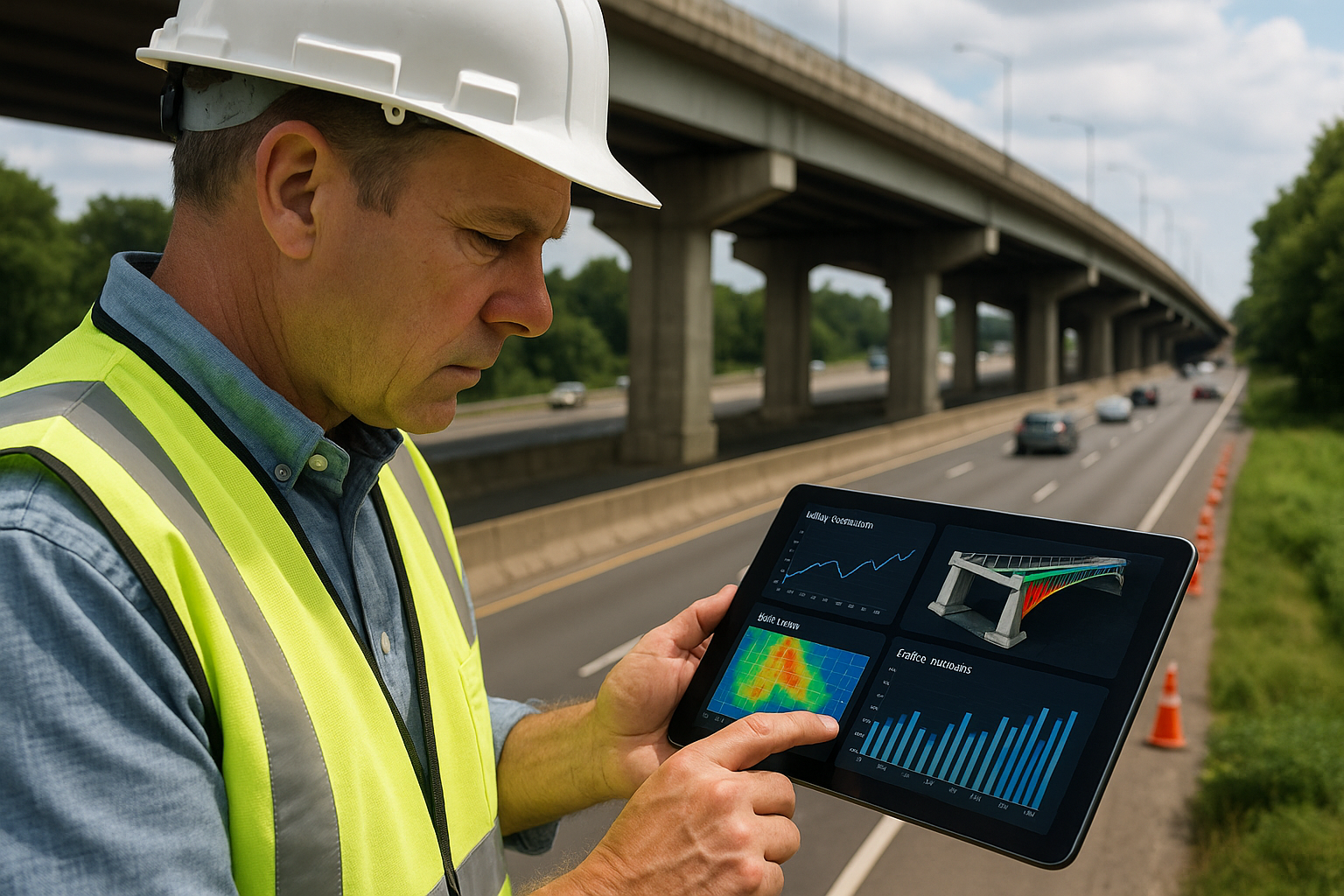
Cloud computing infrastructure enables the storage and processing of massive datasets that predictive models require. Advanced visualization dashboards transform complex analytical outputs into actionable insights that maintenance teams and decision-makers can quickly understand and act upon.
🔍 How Predictive Models Identify Safety Risks
The power of predictive analytics lies in its ability to detect subtle warning signs that precede structural problems. Rather than waiting for visible cracks or obvious deterioration, these systems identify risk factors months or even years in advance.
For bridges, predictive models analyze factors such as load distribution patterns, material fatigue cycles, corrosion rates, and environmental exposure. By comparing current structural behavior against historical norms and failure patterns from similar structures worldwide, the algorithms calculate probability scores for different types of potential failures.
Road surface management benefits similarly from predictive approaches. Models assess pavement condition indicators including rutting depth, cracking patterns, roughness indices, and subsurface moisture levels. These inputs feed algorithms that forecast deterioration curves, enabling maintenance teams to intervene at optimal times—before minor issues escalate into expensive failures but after the repair investment provides maximum value.
Environmental and Usage Pattern Integration
One of predictive analytics’ most valuable capabilities is correlating environmental conditions with structural deterioration. Weather patterns, particularly freeze-thaw cycles, heavy precipitation, and extreme temperatures, dramatically affect infrastructure longevity. Predictive systems incorporate meteorological data to assess how specific weather events impact particular structures based on their materials, design, and current condition.
Traffic volume and composition also significantly influence structural stress. Predictive models factor in not just vehicle counts but weight distribution, speed variations, and loading patterns. A bridge carrying primarily passenger vehicles experiences very different stresses than one frequently used by heavy commercial trucks, and predictive analytics accounts for these nuances in forecasting maintenance needs.
Real-World Applications Saving Lives and Resources
Transportation agencies worldwide are already witnessing tangible benefits from implementing predictive analytics programs. These success stories demonstrate the technology’s practical value beyond theoretical promise.
In the United States, several state departments of transportation have deployed predictive systems that reduced bridge maintenance costs by 20-30% while simultaneously improving safety scores. By identifying deterioration early, these agencies perform smaller, preventive repairs rather than expensive emergency reconstructions. More importantly, they’ve eliminated unexpected closures that previously disrupted commerce and endangered motorists.
European transportation authorities have pioneered the integration of predictive analytics with digital twin technology—creating virtual replicas of physical infrastructure that simulate future conditions under different scenarios. These digital twins enable engineers to test maintenance strategies virtually before implementing them, optimizing resource allocation and minimizing disruption to traffic flow.
Case Study: Preventing Bridge Failures Through Data
A notable example comes from a major metropolitan area where predictive analytics identified concerning vibration patterns in a heavily trafficked bridge. Traditional visual inspections had not revealed any issues, but sensor data analyzed through machine learning algorithms detected abnormal oscillation frequencies consistent with early-stage connection failures.
Engineers performed targeted ultrasonic testing on specific connection points flagged by the system, discovering microscopic cracks that would have progressed to structural failure within 18-24 months. The repairs cost approximately $2 million—a fraction of the $50+ million replacement cost and immeasurable value of preventing potential casualties. This single intervention justified the entire predictive analytics system investment.
💡 The Technology Stack Behind Predictive Safety Systems
Understanding the technological foundation of predictive analytics helps appreciate its capabilities and implementation requirements. These systems comprise multiple integrated layers, each performing specialized functions.
The sensor layer includes strain gauges, accelerometers, corrosion sensors, displacement monitors, and environmental detectors strategically placed throughout structures. Modern sensors are increasingly wireless, solar-powered, and capable of operating for years without maintenance, reducing deployment costs and expanding monitoring coverage.
The data transmission layer ensures reliable communication between sensors and central processing systems. This typically involves cellular networks, dedicated radio frequencies, or mesh networking protocols that create redundant communication pathways ensuring data reaches analytical platforms even if individual connections fail.
The analytics layer is where the predictive magic happens. Machine learning models—including neural networks, random forests, and gradient boosting algorithms—process incoming data streams, identify patterns, and generate predictions. These models continuously refine themselves, improving accuracy as they process more information.
Integration with Existing Management Systems
Successful predictive analytics implementations don’t exist in isolation but integrate seamlessly with existing asset management, work order, and budgeting systems. This integration ensures predictions translate directly into maintenance schedules, procurement orders, and resource allocation decisions without requiring manual data transfer or interpretation.
Modern platforms offer open APIs and standard data formats that facilitate connection with Geographic Information Systems (GIS), Bridge Management Systems (BMS), and Pavement Management Systems (PMS). This interoperability maximizes the value of both legacy systems and new predictive capabilities.
🚧 Overcoming Implementation Challenges
Despite compelling benefits, predictive analytics adoption faces several obstacles that transportation agencies must address. Understanding these challenges and their solutions is crucial for successful implementation.
Data quality represents the most fundamental challenge. Predictive models are only as good as the data they process. Many agencies possess decades of maintenance records, but this historical data often exists in inconsistent formats, contains gaps, or lacks sufficient detail for robust modeling. Successful implementations typically include data cleansing and standardization phases before deploying predictive algorithms.
Initial investment costs can appear daunting, particularly for agencies with constrained budgets. However, financial analysis consistently demonstrates that predictive approaches deliver substantial return on investment through reduced emergency repairs, extended asset lifespans, and optimized maintenance spending. Many agencies adopt phased implementation strategies, starting with high-priority structures and expanding coverage as they demonstrate value and build internal expertise.
Workforce Skills and Organizational Change
Predictive analytics requires new skill sets that traditional infrastructure maintenance teams may lack. Data scientists, machine learning engineers, and IoT specialists join traditional civil engineers and inspectors in modern transportation departments. This workforce evolution necessitates training programs, recruitment strategies, and sometimes partnerships with technology vendors or academic institutions.
Organizational culture shifts present equally significant challenges. Maintenance teams accustomed to reactive approaches or fixed schedules must embrace data-driven decision-making. Leadership commitment and clear communication about the technology’s benefits help overcome resistance and ensure successful adoption throughout the organization.
The Future of Predictive Infrastructure Management
Emerging technologies promise to enhance predictive analytics capabilities even further. Artificial intelligence continues advancing, with deep learning models demonstrating remarkable ability to identify complex failure patterns from visual imagery, potentially automating aspects of traditional inspection processes.
Drone technology equipped with high-resolution cameras, thermal imaging, and LiDAR sensors enables comprehensive structural surveys at a fraction of traditional inspection costs. When combined with computer vision algorithms, drones can detect surface anomalies, document deterioration progression, and feed valuable data into predictive models without requiring lane closures or specialized access equipment.
5G networks will dramatically improve real-time data transmission from remote sensors, enabling more responsive systems that detect and alert authorities to sudden changes immediately. This near-instantaneous communication could prove critical for identifying acute threats like unexpected structural damage from vehicle impacts or seismic events.
Autonomous Maintenance and Repair Systems
Looking further ahead, some researchers envision autonomous systems that not only predict maintenance needs but execute repairs. Robotic systems could perform routine tasks like crack sealing, surface treatments, or minor concrete repairs based on predictive analytics directives, reducing labor costs and improving worker safety by minimizing exposure to traffic hazards.
These autonomous capabilities remain largely experimental but represent the logical evolution of increasingly sophisticated predictive and robotic technologies. Early prototypes are already demonstrating feasibility for specific maintenance tasks, suggesting broader applications may emerge within the next decade.
📊 Measuring Success and Continuous Improvement
Effective predictive analytics programs establish clear metrics to evaluate performance and guide continuous improvement. These key performance indicators typically span several categories, providing comprehensive assessment of system value.
Safety metrics track incident reductions, structural condition improvements, and proactive intervention rates. The ultimate measure of success is preventing failures and improving overall infrastructure safety scores while reducing emergency responses and unexpected closures.
Economic metrics quantify cost savings through optimized maintenance timing, extended asset lifespans, and reduced emergency repair expenses. Sophisticated analyses calculate total cost of ownership under predictive versus traditional approaches, consistently demonstrating substantial financial advantages for data-driven strategies.
Operational metrics assess system reliability, prediction accuracy, false positive rates, and maintenance schedule optimization. These indicators help refine algorithms and improve operational processes, ensuring predictive systems deliver increasingly valuable insights over time.
Building the Business Case for Investment
Transportation authorities considering predictive analytics adoption should develop comprehensive business cases that quantify both tangible and intangible benefits. Direct cost savings from reduced emergency repairs and optimized maintenance provide compelling financial justification, but equally important are safety improvements, public confidence, economic continuity, and environmental benefits from extending infrastructure lifespans.
Successful business cases also address risk mitigation. The potential cost of catastrophic failure—measured in lives lost, legal liability, and economic disruption—far exceeds predictive system investments. This risk perspective often resonates strongly with decision-makers and funding authorities.
🌐 Global Adoption and Knowledge Sharing
Predictive analytics for infrastructure safety represents a global movement with international collaboration accelerating progress. Transportation agencies worldwide share lessons learned, algorithm improvements, and implementation best practices through professional organizations and research partnerships.
Standardization efforts aim to create common data formats, interoperable systems, and shared performance benchmarks that enable agencies to leverage collective knowledge. These standards reduce implementation costs and complexity while improving system effectiveness through broader data sharing and collaborative algorithm development.
Developing nations stand to benefit tremendously from predictive technologies, potentially leapfrogging traditional infrastructure management approaches. With limited budgets and rapidly expanding transportation networks, these countries can deploy modern predictive systems from the outset, avoiding the legacy system challenges that complicate adoption in established markets.
Transforming Safety Through Intelligence and Innovation
Predictive analytics represents far more than incremental improvement in infrastructure management—it fundamentally transforms how societies protect critical transportation assets and the people who depend on them. By shifting from reactive responses to proactive prevention, this technology saves lives, conserves resources, and ensures the reliable infrastructure that modern economies require.
The journey toward fully predictive infrastructure management continues, with new capabilities emerging regularly and adoption expanding globally. Transportation authorities that embrace these technologies position themselves at the forefront of public safety innovation, demonstrating commitment to stewarding infrastructure assets responsibly and protecting the communities they serve.
As sensors become cheaper, algorithms grow smarter, and implementation knowledge spreads, predictive analytics will transition from cutting-edge innovation to standard practice. The question for transportation agencies is not whether to adopt these approaches but how quickly they can implement systems that maximize safety while optimizing limited resources. The technology exists today to prevent tomorrow’s infrastructure failures—implementing it is an imperative that forward-thinking agencies cannot ignore.