Public transport serves as the backbone of modern cities, yet millions face daily barriers accessing these essential services. Creating truly inclusive transit systems isn’t just about compliance—it’s about recognizing every person’s right to mobility and independence.

🚊 The Current State of Transport Accessibility Worldwide
Transport accessibility remains a critical challenge across both developed and developing nations. According to recent studies, approximately 15% of the global population lives with some form of disability, yet only a fraction of public transport systems adequately accommodate their needs. This gap extends beyond physical disabilities to encompass elderly passengers, parents with strollers, temporary injury sufferers, and communities facing socioeconomic barriers.
Urban centers in Europe and North America have made significant strides, with legislation like the Americans with Disabilities Act and the European Accessibility Act setting benchmarks. However, implementation varies dramatically. Many stations still lack elevators, audio announcements remain inconsistent, and visual information systems are often inadequate for those with sensory impairments.
Developing nations face compounded challenges. Limited budgets, aging infrastructure, and rapid urbanization create environments where accessibility often takes a backseat to basic service provision. Yet these are precisely the communities where public transport accessibility matters most, as private vehicle ownership remains economically out of reach for many residents.
🌍 Understanding Diverse Accessibility Needs
Accessibility encompasses far more than wheelchair ramps. A truly inclusive transport system must address multiple dimensions of human diversity and need. Physical accessibility involves step-free access, adequate space for mobility devices, and appropriate seating arrangements. Sensory accessibility requires clear visual signage, audio announcements, tactile guidance systems, and braille information.
Cognitive accessibility is often overlooked but equally vital. Simple wayfinding, consistent layouts, clear color coding, and straightforward ticketing systems benefit passengers with cognitive disabilities, but also assist tourists, children traveling independently, and elderly users navigating increasingly complex transit networks.
Economic accessibility deserves equal attention. Fare structures, payment methods, and discount programs must ensure that low-income communities aren’t excluded from mobility opportunities. Socioeconomic barriers can be as restrictive as physical ones, limiting access to employment, education, healthcare, and social participation.
Breaking Down Communication Barriers
Language diversity presents another accessibility dimension. Multilingual signage, announcements, and digital information systems help immigrant communities, refugees, and tourists navigate unfamiliar transport networks. Real-time translation apps integrated with transport information systems can bridge communication gaps effectively.
Cultural sensitivity also plays a role. Gender-segregated spaces in some regions, prayer facilities, and respect for religious practices during design and operation can enhance inclusion for diverse cultural communities. Transport accessibility must reflect the communities it serves, not impose a one-size-fits-all solution.
💡 Innovative Technologies Transforming Accessibility
Technology offers unprecedented opportunities to enhance transport accessibility. Smartphone applications now provide real-time information about accessible routes, elevator functionality, and crowding levels. These digital tools empower passengers with disabilities to plan journeys confidently, knowing which facilities will meet their needs.
Voice-activated assistance and AI-powered navigation help visually impaired passengers navigate complex station environments. Haptic feedback devices and smart canes with connectivity features provide tactile guidance through transit hubs. Meanwhile, augmented reality applications can overlay simplified wayfinding information for passengers with cognitive disabilities.
Autonomous vehicles present exciting accessibility possibilities. Self-driving buses and shuttles could provide door-to-door service for passengers unable to access fixed-route systems. Voice commands and simplified interfaces make these vehicles inherently more accessible than traditional transport options.
Real-Time Information Systems
Digital displays showing real-time arrivals, delays, and platform changes have become standard in many systems. However, accessibility requires these systems to be multimodal—combining visual, audio, and mobile notifications. Passengers should receive information through their preferred sensory channel, whether that’s seeing a screen, hearing an announcement, or feeling a vibration on their smartphone.
Beacon technology enables precise indoor positioning, helping passengers with visual impairments navigate stations independently. These small devices transmit signals that smartphones interpret, providing audio directions like “elevator ten meters ahead on your right.” Combined with tactile paving and traditional orientation aids, beacon systems create layered accessibility solutions.
🏗️ Designing Inclusive Infrastructure From the Ground Up
New transit projects offer opportunities to embed accessibility from initial planning stages rather than retrofitting later. Universal design principles should guide every decision, from station architecture to vehicle procurement. This approach benefits everyone—parents with strollers, travelers with luggage, and injured passengers all appreciate step-free access and intuitive layouts.
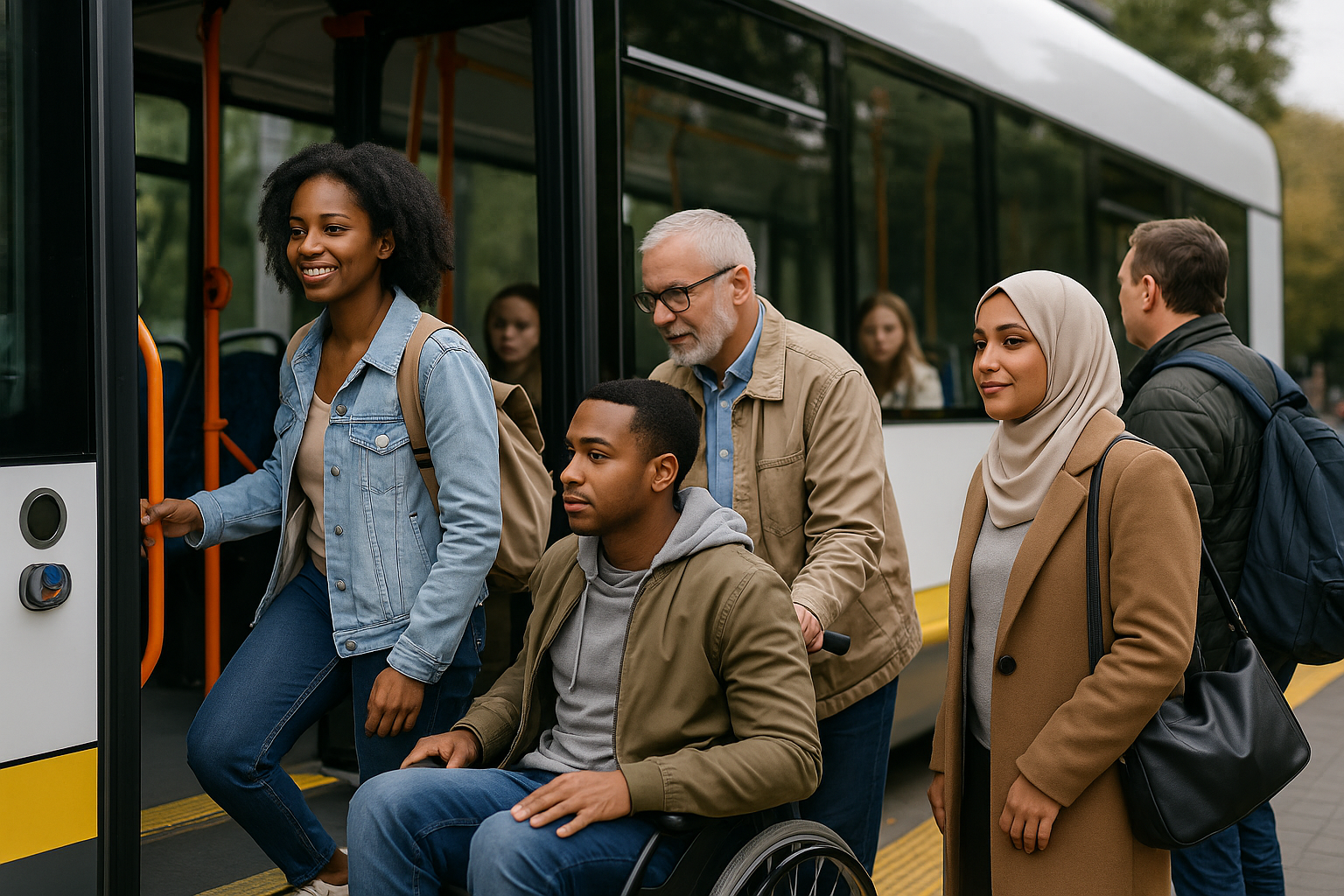
Platform-vehicle interfaces present critical accessibility considerations. Level boarding eliminates gaps and steps, enabling independent access for wheelchair users while speeding boarding for all passengers. Wider doors, lower floors, and clearly marked priority seating areas enhance inclusion without compromising capacity or efficiency.
Lighting design impacts accessibility significantly. Adequate illumination helps passengers with low vision, while avoiding glare protects those with light sensitivity. Color contrast between floors, walls, and warning strips aids navigation for everyone, particularly those with visual impairments.
Sensory-Friendly Environments
Many passengers experience sensory processing challenges that make transport environments overwhelming. Loud announcements, crowded spaces, unpredictable noises, and bright fluorescent lighting can trigger anxiety or distress. Designating quiet cars, providing sensory maps showing low-stimulation routes, and training staff to recognize and accommodate sensory needs creates more inclusive transit experiences.
Dedicated quiet zones at major stations offer refuge for passengers who need respite from sensory overload. These spaces feature dimmed lighting, minimal audio announcements, and calming visual environments. While designed for passengers with autism or sensory processing disorders, they benefit anyone seeking momentary calm in hectic transit hubs.
👥 Training Staff for True Inclusion
Infrastructure alone cannot guarantee accessibility—human factors are equally critical. Transit staff require comprehensive training in disability awareness, communication techniques, and practical assistance methods. Understanding invisible disabilities, respecting passenger autonomy, and offering help appropriately without being patronizing requires thoughtful preparation.
Customer service representatives should receive training in communicating with deaf passengers, whether through basic sign language, written communication, or digital tools. They should understand cognitive disability considerations and know how to provide clear, simple directions without condescension.
Security personnel need sensitivity training to avoid discriminatory practices that disproportionately affect passengers with disabilities, particularly those with mental health conditions or cognitive differences. Profiling and unnecessary confrontations undermine inclusion efforts and create hostile environments for vulnerable passengers.
Building Community Partnerships
Effective accessibility training comes from lived experience. Partnering with disability organizations, inviting disabled consultants to train staff, and creating advisory boards that include diverse community representatives ensures training reflects actual passenger needs rather than assumptions.
Some transit agencies employ “mystery shoppers” with disabilities who test services and provide feedback on accessibility performance. This approach identifies real-world barriers that might not be apparent during standard assessments, driving continuous improvement in service delivery.
📊 Measuring and Monitoring Accessibility Progress
What gets measured gets managed. Transit agencies need comprehensive accessibility metrics that extend beyond basic compliance checklists. Tracking elevator uptime, response times to accessibility-related complaints, and passenger satisfaction among disabled users provides actionable data for improvement.
| Accessibility Metric | Why It Matters | Target Standard |
|---|---|---|
| Elevator Availability | Critical for vertical circulation | 99%+ uptime |
| Accessible Vehicle Proportion | Ensures consistent service access | 100% of fleet |
| Staff Training Completion | Improves human service factors | 100% annually |
| Accessible Information Availability | Enables independent journey planning | All formats, all channels |
| User Satisfaction (Disabled Passengers) | Reflects lived experience quality | Equal to general population |
Regular accessibility audits conducted with disabled passengers reveal barriers that technical inspections miss. These audits should assess the complete journey experience—from planning trips at home to reaching final destinations—not just isolated infrastructure elements.
Complaint data offers valuable insights when properly analyzed. Patterns in accessibility-related complaints highlight systemic issues requiring strategic intervention rather than isolated fixes. Transparent reporting of these metrics demonstrates accountability and commitment to continuous improvement.
🌟 Community Engagement as an Accessibility Strategy
Nothing about us without us—this disability rights principle must guide transport accessibility initiatives. Meaningful community engagement means involving disabled people in planning, design, implementation, and evaluation processes, not simply consulting them after decisions are made.
Participatory design workshops where disabled community members test prototypes, provide feedback on proposed changes, and contribute ideas ensure solutions address actual needs. These workshops should be accessible themselves, offering transportation assistance, interpretation services, and accessible venues.
Youth engagement programs introduce young disabled people to transport planning careers while providing agencies with fresh perspectives. These programs benefit both participants and organizations, creating pipeline opportunities while ensuring future transport leaders understand accessibility from personal experience.
Celebrating Accessibility Champions
Recognizing individuals and organizations driving accessibility innovation encourages continued progress. Awards programs, media campaigns showcasing accessibility leaders, and public acknowledgment of milestone achievements build momentum and inspire others to prioritize inclusion.
Peer learning networks allow transit agencies to share best practices, learn from failures, and collaborate on common challenges. International conferences, study tours, and online forums facilitate knowledge exchange that accelerates accessibility improvements worldwide.
💰 Financing Accessibility: Investment Not Expense
Accessibility is often perceived as costly, but this framing misses the broader economic picture. Accessible transport expands labor force participation, reduces healthcare transportation barriers, and enables independent living—all generating significant economic returns that far exceed infrastructure investments.
Cost-benefit analyses rarely capture accessibility’s full value. Quantifying dignity, independence, and social participation proves difficult, yet these outcomes matter profoundly. Reframing accessibility as economic development rather than compliance obligation helps secure necessary funding.
Phased implementation strategies make accessibility improvements manageable even with budget constraints. Prioritizing high-traffic stations, addressing critical barriers first, and pursuing incremental enhancements demonstrate commitment while building toward comprehensive accessibility.
Innovative Funding Mechanisms
Public-private partnerships can accelerate accessibility improvements. Technology companies developing accessibility solutions benefit from transit agency partnerships that provide testing environments and real-world implementation opportunities. These collaborations can reduce procurement costs while advancing innovation.
Dedicated accessibility taxes or fees, when properly structured and transparently administered, can generate sustainable funding streams. Some jurisdictions apply small surcharges to parking or vehicle registration, directing revenue specifically toward transport accessibility improvements.
🚀 Creating Momentum for Systemic Change
Transforming public transport accessibility requires sustained commitment extending beyond individual projects or political cycles. Embedding accessibility in organizational culture, procurement standards, and performance evaluation systems ensures it remains central to operations rather than an afterthought.
Legislative frameworks establishing enforceable accessibility standards create accountability mechanisms that voluntary commitments lack. However, effective legislation requires adequate funding, reasonable implementation timelines, and meaningful penalties for non-compliance.
Public awareness campaigns help build social pressure for accessibility improvements. When entire communities—not just disabled people—expect and demand accessible transport, political will for investment strengthens. Highlighting how accessibility benefits everyone broadens support beyond disability advocacy organizations.
🔮 The Future of Accessible Transport
Emerging technologies promise revolutionary accessibility improvements. Brain-computer interfaces may eventually enable passengers with severe motor impairments to control assistive devices through thought alone. Virtual reality training could help passengers with anxiety disorders practice using transport systems in safe environments before attempting real journeys.
Hyperloop systems, flying taxis, and other futuristic transport modes offer opportunities to embed accessibility from inception rather than retrofitting later. Learning from past mistakes and applying universal design principles to emerging technologies can create inherently inclusive mobility systems.
Climate change mitigation efforts emphasizing public transport over private vehicles make accessibility even more critical. If societies expect people to abandon cars for environmental reasons, public transport must serve everyone equally. Green transitions cannot succeed without inclusive accessibility.
Ultimately, accessible public transport reflects societal values. Systems designed for all abilities demonstrate communities that recognize every person’s fundamental right to mobility, participation, and independence. The journey toward truly inclusive transport continues, requiring sustained effort, resources, and commitment. Yet the destination—a world where transportation barriers don’t limit anyone’s potential—makes every investment worthwhile. By empowering all through accessible public transport, we build stronger, more equitable, and more connected communities where everyone can thrive.