Urban logistics is undergoing a dramatic transformation as drone technology emerges as a game-changing solution for last-mile delivery challenges in congested cities worldwide.

🚁 The Dawn of Aerial Delivery Networks
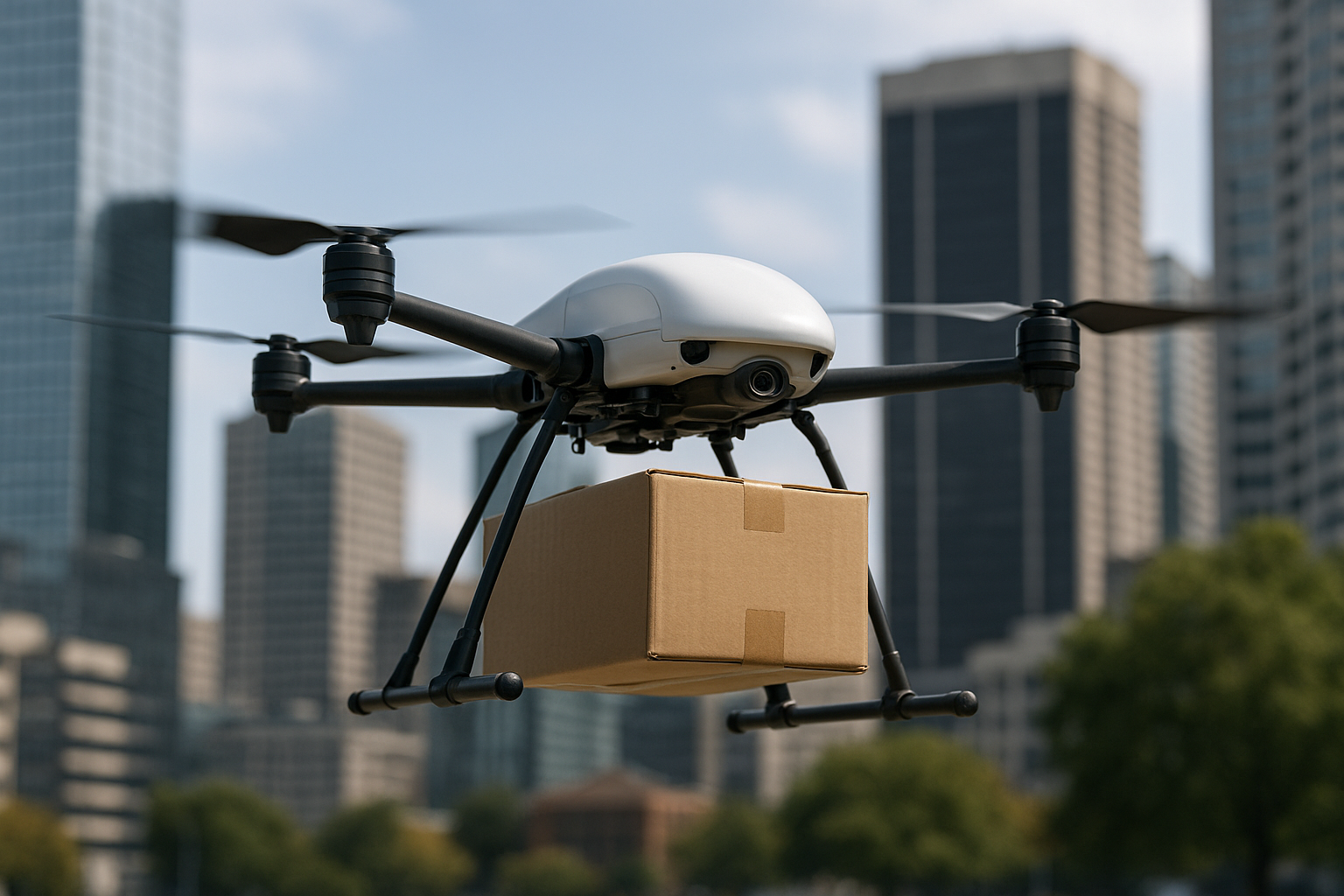
The concept of packages descending from the sky once seemed like pure science fiction, but today’s urban landscapes are rapidly preparing for a reality where drones become as common as delivery trucks. Major technology companies, startups, and traditional logistics providers are investing billions of dollars into developing sophisticated drone delivery systems that promise to revolutionize how goods move through metropolitan areas.
Current urban logistics face mounting pressures from increasing e-commerce demand, traffic congestion, environmental concerns, and the need for faster delivery times. Traditional ground-based delivery methods struggle to keep pace with consumer expectations while dealing with rising fuel costs and carbon emission regulations. Drone delivery systems offer a compelling alternative that addresses many of these challenges simultaneously.
The technology has evolved considerably from early experimental flights. Modern delivery drones feature advanced navigation systems, obstacle avoidance capabilities, weather resistance, and payload capacities suitable for a wide range of products. Companies like Amazon, UPS, Wing (Alphabet’s subsidiary), and Zipline have conducted thousands of successful test deliveries, demonstrating the viability of the technology in real-world conditions.
Breaking Through Regulatory Barriers 📋
The path toward widespread drone delivery adoption has been significantly shaped by regulatory frameworks. Aviation authorities worldwide have been working diligently to create rules that balance innovation with safety, privacy, and airspace management concerns. The Federal Aviation Administration (FAA) in the United States, the European Union Aviation Safety Agency (EASA), and similar bodies globally have established certification programs specifically for commercial drone operations.
Recent regulatory developments have been particularly encouraging. The FAA’s Part 107 rules and subsequent waivers for beyond-visual-line-of-sight (BVLOS) operations have opened new possibilities for scaled drone delivery services. Several companies have received approval to operate commercial delivery routes in select cities, marking a transition from experimental phases to actual service deployment.
These regulations address critical aspects including flight altitude restrictions, no-fly zones, operator certification requirements, aircraft specifications, and operational procedures. Most frameworks require drones to operate within specific altitude bands—typically between 200 and 400 feet—to avoid conflicts with manned aircraft while remaining safely above ground-level obstacles.
Navigating Airspace Integration Challenges
One of the most complex aspects of scaling drone delivery involves integrating unmanned aircraft into existing airspace systems. Unlike traditional aviation with established flight paths and air traffic control protocols, drone operations require new approaches to traffic management. The concept of Unmanned Aircraft System Traffic Management (UTM) has emerged as a solution framework.
UTM systems function as digital air traffic control networks specifically designed for low-altitude drone operations. These platforms use real-time data, geofencing technology, automated flight planning, and collision avoidance algorithms to coordinate multiple drone operators sharing the same airspace. NASA, along with private sector partners, has been developing UTM prototypes that demonstrate how hundreds of drones could operate simultaneously in urban environments without conflicts.
🔧 Technological Innovations Driving the Revolution
The rapid advancement of several key technologies has made commercial drone delivery increasingly practical and economically viable. Battery technology improvements have extended flight ranges and payload capacities, while miniaturized sensors and processors enable sophisticated autonomous navigation capabilities previously impossible in small aircraft.
Modern delivery drones employ multiple redundant systems for safety and reliability. Advanced GPS combined with visual positioning systems allows precise navigation even in challenging urban environments with tall buildings and signal interference. LiDAR sensors, cameras, and radar systems work together to detect and avoid obstacles dynamically during flight.
Artificial intelligence plays a crucial role in autonomous flight operations. Machine learning algorithms process sensor data in real-time to make split-second navigation decisions, optimize flight paths based on weather conditions and air traffic, and even predict maintenance needs before failures occur. These systems continuously improve through accumulated flight experience data.
Payload and Package Handling Innovations
Effective drone delivery requires more than just flying capability—the systems must safely secure, transport, and deliver packages. Engineers have developed various solutions including secure locking mechanisms, climate-controlled compartments for temperature-sensitive items, and gentle descent systems that prevent package damage during delivery.
Different approaches to the final delivery moment have emerged. Some systems lower packages on tethers from hovering drones, others land briefly to deposit items, and certain designs feature detachable package containers that remain on the ground while the drone returns to base. Each method has advantages depending on the delivery location characteristics and package requirements.
Economic Impact and Business Models 💼
The economics of drone delivery present compelling advantages over traditional methods for certain use cases. Analysis suggests that drone delivery costs per package can be significantly lower than conventional delivery for lightweight items over short to medium distances. The elimination of driver labor costs, reduced fuel expenses, and faster delivery times contribute to favorable unit economics.
Several business models are emerging in the drone delivery space. Direct-to-consumer services allow retailers to deliver purchases from stores or fulfillment centers directly to customer homes. Medical delivery services transport pharmaceuticals, blood samples, and emergency supplies between healthcare facilities. Restaurant delivery extends quick-service food offerings, while industrial services move parts and materials within large facilities or between nearby locations.
The potential market size is substantial. Industry analysts project the drone delivery market could reach tens of billions of dollars annually within the next decade as technology matures and regulations expand operational permissions. Early movers are positioning themselves to capture market share in what many view as the future standard for urban logistics.
Environmental Sustainability Benefits 🌱
Environmental considerations increasingly influence logistics decisions, and drone delivery offers significant sustainability advantages. Electric-powered drones produce zero direct emissions during operation, contrasting sharply with traditional delivery vehicles. Studies indicate that drone delivery can reduce carbon emissions per package by 50-90% compared to diesel delivery trucks for appropriate delivery scenarios.
Beyond emissions, drones contribute to reduced traffic congestion, which itself decreases overall urban pollution levels. Fewer delivery trucks on roads mean less wear on infrastructure, reduced noise pollution in residential areas, and improved air quality in cities struggling with pollution challenges.
Real-World Implementation Case Studies 📦
Several pioneering programs worldwide demonstrate the practical application of drone delivery systems. Zipline’s operations in Rwanda and Ghana have delivered over 400,000 medical products including blood, vaccines, and medications to remote healthcare facilities. Their system achieves delivery times of 30 minutes or less compared to hours or days via ground transportation, directly saving lives in emergency situations.
Wing’s commercial service in suburban areas of Australia and the United States delivers items from local businesses including pharmacies, restaurants, and retail stores. Their operations have completed over 300,000 deliveries, providing valuable data about consumer acceptance, operational reliability, and integration with existing community infrastructure.
Amazon Prime Air continues extensive testing toward commercial launch, having received FAA approval for expanded operations. Their hybrid design drones can fly like helicopters for vertical takeoff and landing, then transition to airplane mode for efficient forward flight. UPS Flight Forward has established medical delivery routes serving hospital campuses and retirement communities.
Lessons Learned From Early Adopters
Early implementations have revealed important insights about successful drone delivery deployment. Community engagement proves essential—residents need education about safety measures, noise levels, and privacy protections to build acceptance. Operational flexibility matters because weather conditions, temporary airspace restrictions, and equipment maintenance require backup delivery options.
The most successful programs focus initially on specific high-value use cases rather than attempting to replace all ground delivery immediately. Medical deliveries, urgent items, and lightweight products to areas with difficult ground access represent ideal starting applications that demonstrate clear value propositions.
🏙️ Urban Infrastructure Adaptation
Cities are beginning to adapt their infrastructure to accommodate drone delivery systems. Dedicated landing pads on building rooftops, designated drone ports in parks and public spaces, and integrated delivery lockers accessible from the air are emerging as standard features in forward-thinking urban planning.
Architectural firms are incorporating drone delivery considerations into new building designs. High-rise residential and commercial buildings now feature rooftop delivery zones, specialized windows or hatches for package receipt, and charging infrastructure for delivery drones. These adaptations make dense urban environments more accessible to aerial delivery systems.
Smart city initiatives increasingly include drone integration planning. Digital infrastructure that supports UTM systems, weather monitoring networks that provide hyperlocal flight condition data, and communication systems that coordinate drone operations with other urban services all contribute to creating drone-ready cities.
Addressing Safety and Privacy Concerns 🔒
Public acceptance of drone delivery depends significantly on addressing legitimate safety and privacy concerns. The aviation industry’s exemplary safety record sets high expectations for commercial drone operations. Multiple redundant safety systems, geofencing that prevents flights over restricted areas, and automatic return-to-base capabilities in case of system failures all contribute to safe operations.
Privacy protections require careful consideration as drones equipped with cameras navigate residential neighborhoods. Industry standards limit camera functionality to operational necessities, implement data minimization principles, and establish clear policies about image capture and retention. Regulatory frameworks increasingly mandate privacy impact assessments before operational approval.
Noise pollution represents another community concern. While delivery drones are generally quieter than helicopters or motorcycles, they do produce audible sound. Manufacturers are developing quieter propeller designs, optimizing flight paths to minimize disturbance, and restricting operational hours in residential areas to address these concerns.
Security Measures and System Integrity
Securing drone delivery systems against potential threats requires comprehensive approaches. Cybersecurity measures protect control systems from hacking attempts that could compromise flight operations. Physical security prevents theft or tampering with drones and packages. Authentication systems verify recipient identity for valuable deliveries.
Blockchain technology is being explored for creating tamper-proof delivery verification records, particularly important for pharmaceutical and high-value shipments. Encrypted communication channels between drones and control centers prevent signal interception or spoofing that could misdirect aircraft.
The Integration Challenge: Drones and Traditional Logistics 🔄
Successful drone delivery doesn’t replace traditional logistics entirely but rather complements existing systems. The most effective approaches integrate drones into multi-modal delivery networks that utilize the optimal transportation method for each package based on size, weight, destination, urgency, and other factors.
Fulfillment center designs are evolving to accommodate hybrid operations. Facilities now include drone launch and recovery systems alongside traditional loading docks. Automated sorting systems route appropriate packages to drone delivery while directing others to conventional vehicles. This integration maximizes the strengths of each delivery method.
Last-mile delivery has traditionally been the most expensive and time-consuming segment of the logistics chain. Drones excel at this specific challenge, potentially handling 20-30% of last-mile deliveries in suitable markets according to industry projections. This allows ground vehicles to focus on larger, heavier shipments while drones handle small urgent items more efficiently.
🚀 Future Developments on the Horizon
The drone delivery industry continues rapid evolution with several promising developments approaching commercialization. Increased payload capacities will expand the range of deliverable items, with next-generation drones capable of carrying 10-20 pounds becoming standard. Extended range through improved battery technology and potential hydrogen fuel cells could enable deliveries up to 50-100 miles from distribution centers.
Autonomous charging systems would allow drones to operate continuously with minimal human intervention. Wireless charging pads at delivery hubs and strategically located charging stations would enable drones to automatically recharge between deliveries, dramatically increasing operational efficiency.
Swarm technology represents an exciting frontier where multiple drones coordinate complex operations autonomously. A group of drones could work together to deliver larger items, conduct simultaneous deliveries to multiple locations in the same area, or provide redundancy for critical shipments.
Artificial Intelligence and Predictive Logistics
Advanced AI systems will increasingly predict delivery demand patterns, pre-position inventory at strategic locations, and optimize entire logistics networks in real-time. Machine learning algorithms analyzing purchasing patterns, weather forecasts, event schedules, and countless other data points could enable predictive delivery where items ship before customers even order them, arriving within minutes of purchase.
Global Perspectives and Market Variations 🌍
Drone delivery adoption varies significantly across global markets based on regulatory environments, infrastructure development, population density, and economic factors. Developing nations with limited road infrastructure often demonstrate greater enthusiasm for leapfrogging directly to drone delivery, similar to how many skipped landline phones in favor of mobile technology.
Asian markets, particularly China, are aggressively pursuing drone delivery with significant government support and investment. European countries balance innovation with strict privacy and safety regulations. Middle Eastern nations are investing in drone infrastructure as part of broader smart city initiatives. Each region’s unique characteristics shape implementation approaches and timelines.
Transforming the Urban Experience ✨
Beyond logistical efficiency, drone delivery promises to fundamentally transform urban life. Imagine ordering medication and receiving it via drone within 15 minutes, or having groceries delivered to your apartment balcony while you’re cooking. Emergency deliveries of defibrillators, EpiPens, or other life-saving equipment could reach locations faster than ambulances in congested cities.
The reduced need for personal shopping trips could decrease urban traffic, freeing road space for other uses. Commercial districts might evolve with less emphasis on parking and loading zones, creating opportunities for green spaces and pedestrian areas. The very rhythm of urban commerce could shift toward instant gratification supported by on-demand aerial logistics.
The revolution in urban logistics through drone delivery systems is not a distant possibility but an emerging reality. As technology matures, regulations adapt, infrastructure develops, and public acceptance grows, drones will become an increasingly common sight in city skies. The transformation promises more efficient, sustainable, and responsive urban logistics networks that better serve the needs of modern consumers while addressing environmental challenges. The cities that embrace this technology thoughtfully, balancing innovation with legitimate concerns, will lead the way into this new era of urban mobility and commerce.