Artificial intelligence is transforming urban landscapes worldwide, bringing smarter solutions to one of modern society’s most persistent challenges: traffic congestion and inefficient transportation systems.

🚦 The Growing Traffic Crisis in Modern Cities
Traffic congestion has become more than just an inconvenience—it’s a significant economic and environmental burden. According to recent studies, drivers in major metropolitan areas lose an average of 99 hours annually sitting in traffic. This translates to billions of dollars in lost productivity, wasted fuel, and increased carbon emissions that contribute to climate change.
Traditional traffic management systems relied heavily on fixed timing patterns and manual adjustments by traffic control centers. These outdated methods couldn’t adapt to real-time conditions, leading to inefficiencies during rush hours, accidents, or special events. The limitations of conventional approaches have become increasingly apparent as urban populations continue to grow exponentially.
The economic impact extends far beyond individual frustration. Businesses face delayed deliveries, emergency services struggle to reach destinations promptly, and entire cities experience reduced quality of life. The environmental consequences are equally concerning, with idling vehicles pumping unnecessary pollutants into the atmosphere while burning precious fossil fuels.
🤖 How AI is Revolutionizing Traffic Flow Management
Artificial intelligence has emerged as the game-changing solution that traffic engineers and urban planners have been seeking. Machine learning algorithms can process massive amounts of data from multiple sources simultaneously, identifying patterns and making predictions that human operators simply cannot match in speed or accuracy.
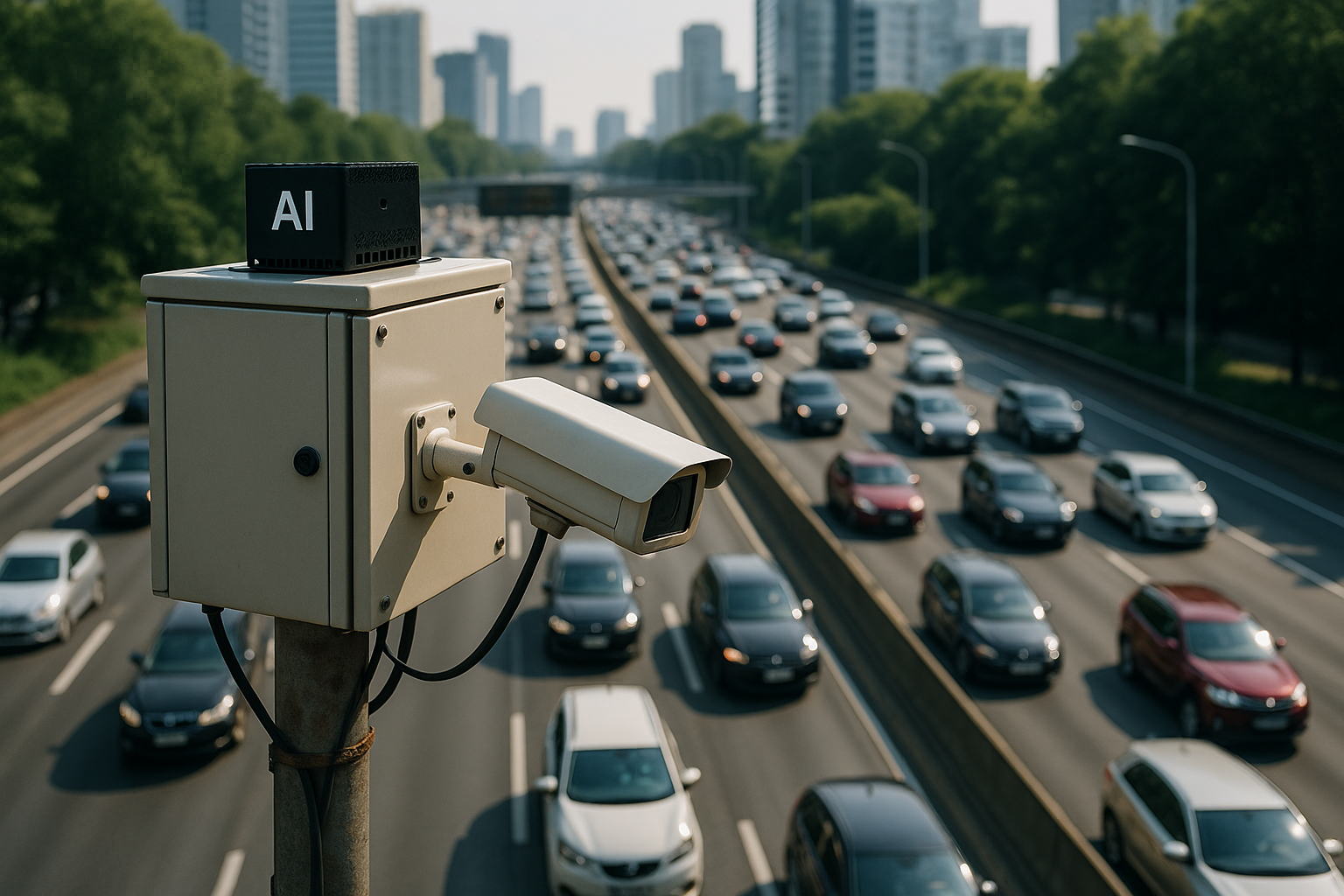
AI-powered traffic management systems utilize neural networks trained on years of historical traffic data combined with real-time information from various sensors, cameras, and connected devices. These systems learn from every traffic pattern, accident, weather condition, and special event, continuously improving their predictive capabilities and decision-making processes.
The technology works by analyzing traffic flow at intersections, highways, and throughout entire transportation networks. When the AI detects congestion building in one area, it can preemptively adjust signal timing, suggest alternate routes to drivers, and coordinate with other infrastructure elements to redistribute traffic more efficiently.
Real-Time Adaptive Signal Control
One of the most impactful applications of AI in traffic management is adaptive signal control. Unlike traditional traffic lights that operate on fixed schedules, AI-driven systems adjust signal timing based on actual traffic conditions. These smart signals can extend green lights when sensors detect heavy traffic in one direction while reducing wait times when roads are clear.
Cities implementing adaptive signal control have reported congestion reductions of 25-40% during peak hours. The system prioritizes not just vehicle flow but also pedestrian safety, public transportation efficiency, and emergency vehicle access. The AI continuously balances these competing needs in milliseconds, something impossible for human operators to achieve manually.
📊 Predictive Analytics and Traffic Forecasting
Perhaps the most powerful aspect of AI in traffic management is its ability to predict future conditions before they occur. By analyzing historical patterns, weather forecasts, event schedules, and countless other variables, AI systems can anticipate congestion hotspots hours or even days in advance.
This predictive capability allows transportation authorities to implement proactive measures rather than reactive solutions. Variable message signs can warn drivers about upcoming congestion, suggesting alternative routes before gridlock develops. Public transit agencies can add extra capacity during predicted surge periods, and maintenance work can be scheduled to minimize disruption.
The forecasting models become more accurate over time as they consume more data and learn from their predictions. Some advanced systems now achieve prediction accuracy rates exceeding 90% for traffic conditions up to an hour in advance, giving both authorities and commuters valuable time to adjust their plans.
Integration with Navigation Applications
AI traffic management systems increasingly integrate with popular navigation applications used by millions of drivers daily. This creates a symbiotic relationship where the apps provide crowdsourced traffic data while receiving optimized routing information from the centralized AI system.
When navigation apps like Google Maps or Waze detect unusual congestion patterns, their users’ anonymized location data feeds into the broader traffic management network. The AI processes this information alongside data from traditional sensors, creating a comprehensive picture of traffic conditions across entire metropolitan areas.
🌐 Smart City Infrastructure and Connected Vehicles
The true potential of AI-driven traffic management emerges when combined with broader smart city infrastructure and connected vehicle technology. Vehicle-to-infrastructure (V2I) communication allows cars to directly exchange information with traffic management systems, creating unprecedented opportunities for coordination and efficiency.
Connected vehicles can receive real-time instructions about optimal speeds to maintain green light synchronization, known as “green wave” progression. The AI calculates the perfect velocity for each vehicle to minimize stops, reducing both travel time and fuel consumption. Early implementations have demonstrated fuel savings of 15-20% along optimized corridors.
Autonomous vehicles will further amplify these benefits. Self-driving cars communicating with AI traffic management systems can coordinate their movements with split-second precision, potentially eliminating traffic jams caused by human driving behaviors like sudden braking, aggressive lane changes, and following too closely.
Emergency Vehicle Priority Systems
AI traffic management delivers life-saving benefits through intelligent emergency vehicle priority systems. When an ambulance, fire truck, or police car activates its emergency signals, the AI immediately creates a “green corridor” by adjusting traffic signals along the optimal route to the destination.
These systems reduce emergency response times by an average of 20-30%, which can mean the difference between life and death in critical situations. The AI doesn’t just change lights blindly—it calculates the fastest route considering current traffic conditions and coordinates signals to clear the path while minimizing disruption to regular traffic flow.
💡 Machine Learning from Traffic Patterns
The continuous learning capability of AI systems represents their most significant advantage over traditional traffic management approaches. Every day, the algorithms process millions of data points, identifying subtle patterns that reveal insights into traffic behavior and system performance.
Machine learning models discover correlations that human analysts might never notice. For instance, AI might identify that minor traffic slowdowns at one intersection on Monday mornings consistently lead to major congestion elsewhere 30 minutes later. Armed with this knowledge, the system can implement preventive measures at the source intersection to avoid downstream problems.
Deep learning techniques allow these systems to understand context beyond simple traffic volumes. The AI considers weather conditions, local events, school schedules, construction projects, and seasonal patterns. A rainy Friday afternoon during school pickup time requires entirely different signal timing than a sunny Tuesday morning, and the AI adapts accordingly.
🌍 Environmental Benefits and Sustainability
The environmental advantages of AI-optimized traffic management extend far beyond reducing individual commute times. Smoother traffic flow means less time spent idling at red lights and fewer acceleration-deceleration cycles, both major contributors to vehicle emissions and fuel consumption.
Studies conducted in cities with comprehensive AI traffic management systems show reductions in transportation-related carbon emissions ranging from 10% to 25%. These improvements contribute significantly to urban air quality, particularly benefiting populations living near major roadways who disproportionately suffer from traffic-related pollution.
The sustainability benefits multiply when AI traffic management integrates with public transportation optimization. By prioritizing buses and trains through coordinated signal timing, cities encourage modal shift from private vehicles to more efficient mass transit options, further reducing overall emissions and congestion.
Reducing Urban Heat Island Effects
An often-overlooked environmental benefit involves reducing the urban heat island effect. Vehicles stuck in traffic generate substantial heat through engine operation and tire friction. By keeping traffic flowing smoothly, AI systems help moderate urban temperatures, particularly during summer months when heat-related health issues pose serious concerns.
🚧 Challenges and Implementation Considerations
Despite the tremendous potential, implementing AI-driven traffic management systems presents several challenges that cities must address. The initial infrastructure investment can be substantial, requiring installation of sensors, cameras, communication networks, and computational hardware to support the AI algorithms.
Data privacy concerns also require careful consideration. Traffic management systems collect vast amounts of information about vehicle movements, and while individual privacy must be protected, the system needs sufficient data to function effectively. Cities must implement robust anonymization protocols and transparent data governance policies to maintain public trust.
Integration with legacy infrastructure presents another hurdle. Many cities operate traffic systems installed decades ago that weren’t designed for AI integration. Retrofitting these systems or replacing them entirely requires significant planning, funding, and coordination across multiple government departments and jurisdictions.
Cybersecurity and System Resilience
As traffic management becomes increasingly dependent on AI and network connectivity, cybersecurity emerges as a critical concern. A compromised traffic management system could cause chaos throughout a city, making robust security protocols essential. Systems must include redundancy and failsafe mechanisms to maintain basic traffic control even if the AI components experience failures or attacks.
🔮 Future Innovations on the Horizon
The evolution of AI traffic management continues accelerating as new technologies and approaches emerge. Quantum computing promises to dramatically increase the processing power available for traffic optimization, potentially enabling real-time simulation of entire metropolitan transportation networks with unprecedented detail.
Edge computing deployment will allow more processing to occur locally at intersections and roadway sensors, reducing latency and improving system responsiveness. This distributed intelligence approach creates more resilient networks that can continue functioning even if central servers experience disruptions.
Advanced AI models incorporating reinforcement learning show promise for discovering traffic management strategies that human engineers might never conceive. These systems essentially “play” traffic scenarios millions of times, learning unconventional but effective approaches to managing complex transportation networks.
Integration with Multimodal Transportation
Future AI traffic management systems will seamlessly coordinate all transportation modes—cars, buses, trains, bicycles, scooters, and pedestrians—into unified mobility ecosystems. The AI will optimize not just vehicle flow but the entire urban transportation experience, helping people choose the fastest, most efficient, or most sustainable option for each journey.
Mobility-as-a-Service (MaaS) platforms will integrate with AI traffic management, allowing users to plan, book, and pay for multimodal trips through single applications. The underlying AI coordinates vehicle availability, route optimization, and pricing to efficiently distribute demand across the transportation network.
🏙️ Real-World Success Stories
Cities worldwide are already experiencing transformative results from AI traffic management implementation. Pittsburgh, Pennsylvania reduced travel times by 25% and vehicle emissions by 20% after deploying an adaptive signal control system. The city’s success inspired similar projects across North America and globally.
In Asia, cities like Singapore and Seoul have implemented comprehensive AI traffic management covering entire metropolitan areas. These systems coordinate thousands of intersections, achieving remarkable efficiency improvements while handling some of the world’s highest traffic densities.
European cities including Barcelona, Stockholm, and Copenhagen have integrated AI traffic management with broader smart city initiatives, creating interconnected systems that optimize energy use, public services, and environmental sustainability alongside transportation efficiency.
🎯 Maximizing the Impact of AI Traffic Solutions
Successful AI traffic management implementation requires more than just deploying technology. Cities must take holistic approaches that include public education, stakeholder engagement, and continuous system refinement based on performance data and user feedback.
Transportation authorities should communicate clearly about how AI systems work, what data they collect, and what benefits citizens can expect. Building public understanding and support proves essential for long-term success and helps overcome resistance to new approaches.
Ongoing collaboration between city governments, technology providers, academic researchers, and community organizations ensures that AI traffic management systems serve genuine public needs rather than pursuing technological sophistication for its own sake. The goal should always remain improving quality of life for all residents while advancing environmental sustainability.
The revolution in traffic management through artificial intelligence represents one of the most impactful applications of AI technology in daily life. As systems continue evolving and expanding, the vision of cities where traffic flows smoothly, commutes are predictable, and transportation contributes positively to urban life becomes increasingly achievable. The combination of powerful algorithms, comprehensive data, and thoughtful implementation is fundamentally transforming how we move through our cities, creating smarter, cleaner, and more livable urban environments for current and future generations.