Urban landscapes are undergoing a transformative shift as cities worldwide embrace the integration of natural elements with modern architecture, creating sustainable and livable environments for future generations.

🌿 The Evolution of Urban Green Spaces
The concept of green cityscapes has evolved dramatically over the past century. What began as simple public parks and tree-lined streets has transformed into a sophisticated approach to urban planning that considers ecological balance, climate resilience, and human well-being as fundamental design principles.
Modern cities face unprecedented challenges, including population density, air pollution, urban heat islands, and diminishing biodiversity. These pressing issues have catalyzed a paradigm shift in how architects, urban planners, and policymakers approach city development. The integration of nature into urban environments is no longer viewed as a luxury but as a necessity for creating sustainable, healthy cities.
Historical precedents like Frederick Law Olmsted’s Central Park in New York or the garden city movement of the early 20th century laid the groundwork for today’s green urbanism. However, contemporary approaches go far beyond traditional parks, incorporating vegetation into building facades, rooftops, and even structural elements of architecture itself.
Biophilic Design: Connecting Humans with Nature
Biophilic design represents a fundamental principle in creating green cityscapes. This approach recognizes the innate human need to connect with nature and incorporates natural elements, patterns, and processes into the built environment. Research consistently demonstrates that exposure to natural environments reduces stress, improves cognitive function, and enhances overall well-being.
Architects are implementing biophilic principles through various strategies. Natural lighting, views of greenery, the use of natural materials, and the incorporation of water features all contribute to creating spaces that resonate with our evolutionary connection to nature. Buildings designed with these principles report higher occupant satisfaction, improved productivity, and better mental health outcomes.
The psychological benefits extend beyond individual buildings to entire neighborhoods. Streets designed with abundant vegetation, accessible green spaces, and visual connections to nature create communities where residents experience lower stress levels and stronger social bonds. This human-centric approach to urban design recognizes that cities must serve not just economic functions but also support human flourishing.
🏙️ Vertical Forests and Living Walls
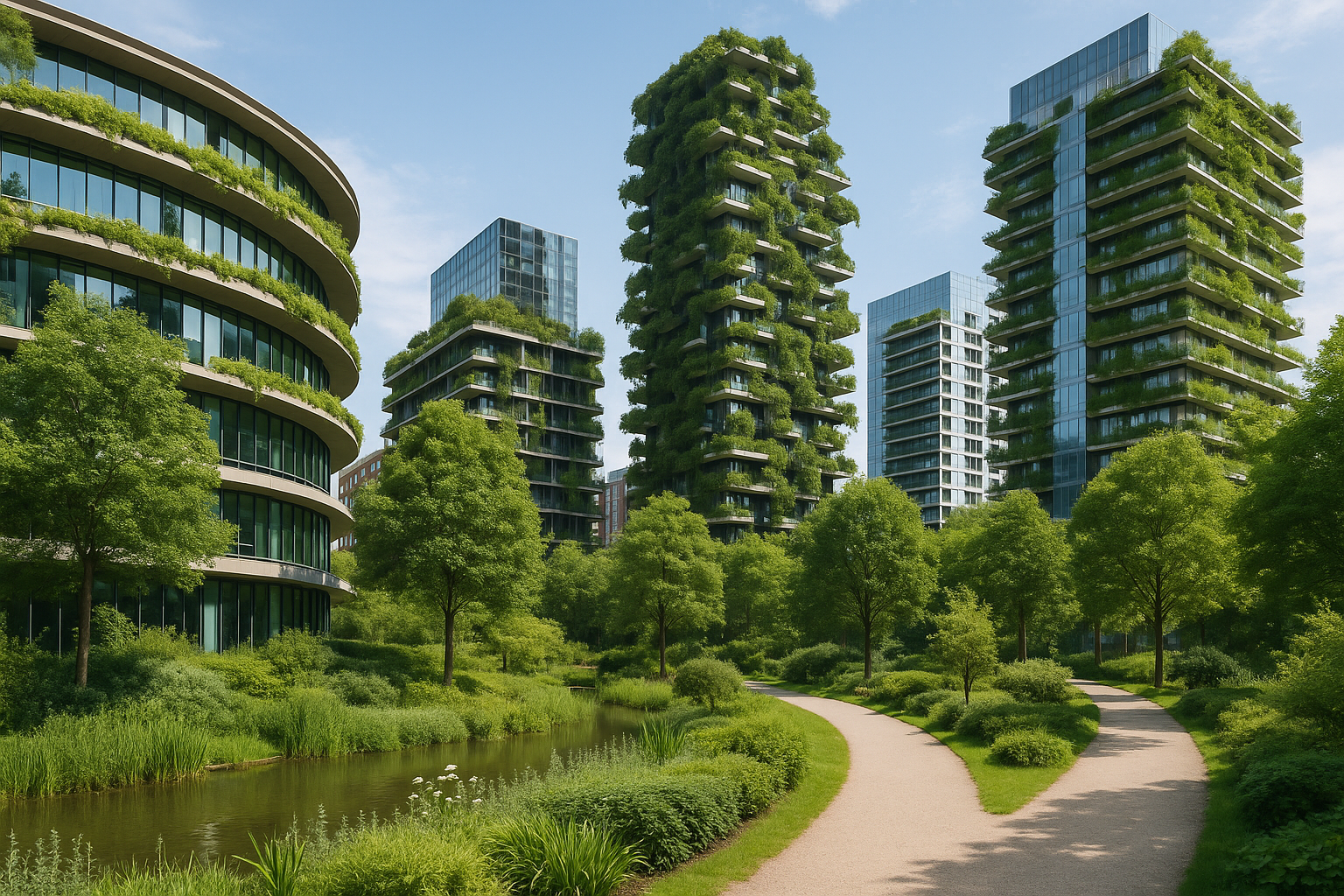
One of the most striking manifestations of green architecture is the vertical forest concept. Pioneered by architect Stefano Boeri with his Bosco Verticale towers in Milan, these buildings incorporate hundreds of trees and thousands of plants into their facades. Each vertical forest serves as a living ecosystem, providing habitat for birds and insects while purifying air and producing oxygen.
The benefits of vertical forests extend beyond aesthetics. These structures actively combat air pollution, with vegetation filtering particulate matter and absorbing carbon dioxide. They also provide natural insulation, reducing energy consumption for heating and cooling. Studies of the Milan towers show they absorb approximately 30 tons of carbon dioxide annually while producing oxygen.
Living walls, or green walls, offer another approach to integrating vegetation into building surfaces. These systems range from simple climbing plants to sophisticated hydroponic installations. They can be installed on both exterior and interior surfaces, bringing nature into office buildings, shopping centers, and residential complexes. Beyond their environmental benefits, living walls serve as acoustic barriers, reducing urban noise pollution.
Rooftop Gardens and Sky Parks
Urban rooftops represent a vast, underutilized resource for greening cities. Transforming these spaces into gardens, parks, or even small farms addresses multiple urban challenges simultaneously. Green roofs absorb rainwater, reducing stormwater runoff and the burden on drainage systems. They also mitigate the urban heat island effect by replacing heat-absorbing surfaces with vegetation.
Cities like Singapore have elevated rooftop greening to an art form. The city-state’s SkyVille development features sky gardens every few floors, creating vertical neighborhoods with communal green spaces. These elevated parks provide residents with outdoor recreation areas while contributing to biodiversity and climate regulation.
The agricultural potential of rooftop spaces shouldn’t be overlooked. Urban farming initiatives on building tops provide fresh produce to local communities, reduce food transportation emissions, and create green jobs. Projects like Brooklyn Grange in New York demonstrate that rooftop farms can be both economically viable and environmentally beneficial.
🌳 Street-Level Integration: Parklets and Green Infrastructure
The greening of cities must extend to street level, where people interact most directly with their environment. Progressive cities are reimagining streets as multifunctional spaces that serve pedestrians, cyclists, and nature alongside vehicular traffic. This approach transforms streets from mere transportation corridors into community assets.
Parklets—small public spaces created by converting parking spots into miniature parks—exemplify this transformation. Equipped with seating, plants, and sometimes bike parking, these installations activate neighborhoods and provide accessible green space. Cities from San Francisco to Melbourne have embraced parklets as tools for community building and urban greening.
Bioswales and rain gardens represent functional green infrastructure that manages stormwater while adding beauty to streetscapes. These vegetated channels collect and filter rainwater runoff, preventing pollution from entering waterways. They also support pollinators and other urban wildlife, contributing to biodiversity in dense urban areas.
Sustainable Materials and Construction Methods
Creating truly green cityscapes requires consideration of materials and construction methods. The building sector accounts for a significant portion of global carbon emissions, making sustainable construction practices essential. Architects and builders are increasingly turning to materials with lower environmental footprints.
Timber construction is experiencing a renaissance, with engineered wood products enabling the construction of tall buildings. Cross-laminated timber (CLT) and other mass timber technologies sequester carbon while providing structural strength comparable to concrete and steel. Buildings like the Mjøstårnet tower in Norway, standing 85.4 meters tall, demonstrate timber’s potential in high-rise construction.
Recycled and locally sourced materials reduce transportation emissions and support circular economy principles. Some innovative projects incorporate recycled plastic, reclaimed wood, and even mycelium-based materials. These choices minimize environmental impact while often creating unique aesthetic qualities that distinguish green buildings.
🌍 Climate Resilience Through Green Design
As climate change intensifies, cities must adapt to extreme weather events, rising temperatures, and shifting precipitation patterns. Green infrastructure provides essential climate resilience, helping cities withstand and recover from environmental stresses.
Urban forests and extensive tree canopy coverage reduce temperatures in heat waves, which are becoming more frequent and severe. Trees provide shade, release moisture through transpiration, and create microclimates that can be several degrees cooler than surrounding areas. This natural cooling reduces energy demands and protects vulnerable populations during extreme heat events.
Green infrastructure also addresses flooding risks. Permeable surfaces, wetlands, and vegetated areas absorb rainfall that would otherwise overwhelm drainage systems. Copenhagen’s climate adaptation plan exemplifies this approach, incorporating green spaces designed to temporarily hold water during extreme rainfall, then slowly release it as conditions normalize.
Biodiversity Corridors in Urban Environments
Cities don’t have to be biodiversity deserts. Thoughtful urban design can create corridors that allow wildlife to move through urban areas, supporting healthy ecosystems despite human development. These corridors connect parks, gardens, and natural areas, enabling species migration and genetic diversity.
Green roofs, vertical gardens, and street trees can serve as stepping stones for urban wildlife. Native plant species provide food and habitat for pollinators, birds, and beneficial insects. Some cities are creating bee highways—continuous chains of flowering plants that support declining pollinator populations.
Water features, from naturalized streams to constructed wetlands, support aquatic life and provide drinking water for urban wildlife. Seoul’s Cheonggyecheon restoration project transformed a covered highway into a vibrant stream corridor, revitalizing biodiversity while creating a beloved public space. This project demonstrates how ecological restoration and urban renewal can advance together.
📊 Measuring Success: Metrics for Green Urbanism
Quantifying the success of green cityscape initiatives requires comprehensive metrics that capture environmental, social, and economic benefits. These measurements help cities track progress, justify investments, and refine strategies.
| Metric Category | Key Indicators | Benefits Measured |
|---|---|---|
| Environmental | Air quality, carbon sequestration, biodiversity index | Pollution reduction, climate mitigation, ecosystem health |
| Social | Green space accessibility, usage rates, health outcomes | Equity, well-being, community engagement |
| Economic | Property values, energy savings, job creation | Financial viability, economic development |
| Climate | Temperature reduction, stormwater management, resilience | Adaptation capacity, disaster mitigation |
Cities like Singapore use comprehensive green building indices that assess developments across multiple sustainability dimensions. These frameworks encourage holistic approaches that maximize multiple benefits simultaneously. When developers understand how green features contribute to measurable outcomes, they’re more likely to prioritize sustainable design.
🏗️ Policy Frameworks Enabling Green Development
Government policies play a crucial role in accelerating the adoption of green urbanism. Regulations, incentives, and planning requirements can either facilitate or hinder the integration of nature into cities. Progressive jurisdictions are implementing policies that make green development the path of least resistance.
Green building codes establish minimum standards for environmental performance. Requirements for green roofs, minimum tree coverage, or permeable surfaces ensure that new developments contribute to urban greening. Cities like Stuttgart, Germany, have required green roofs on new flat-roofed buildings since the 1990s, creating a comprehensive green rooftop landscape.
Incentive programs can offset the initial costs of green infrastructure. Tax credits, expedited permitting, or density bonuses encourage developers to exceed minimum requirements. These programs recognize that while green features may have higher upfront costs, they generate long-term savings and community benefits.
Comprehensive urban plans that prioritize green networks ensure that individual projects contribute to larger ecological systems. Master plans that identify biodiversity corridors, green spaces, and ecological restoration areas guide development toward integrated outcomes rather than isolated green buildings.
Community Engagement and Social Equity
The most successful green cityscape projects involve communities in planning and implementation. Participatory design processes ensure that green spaces meet local needs and reflect community values. When residents feel ownership over green infrastructure, they become stewards who maintain and protect these assets.
Social equity must be central to green urbanism. Historically, environmental amenities have been unequally distributed, with affluent neighborhoods enjoying more and better green spaces. Contemporary approaches must actively address these disparities, ensuring that all residents benefit from urban greening regardless of income or neighborhood.
Community gardens represent a powerful tool for both greening and social equity. These spaces provide fresh food, recreation, and community gathering places. They’re particularly valuable in food deserts or neighborhoods with limited park access. Supporting community-led greening initiatives empowers residents and builds social capital.
🌱 Innovative Technologies Supporting Green Cities
Technology is expanding the possibilities for integrating nature into urban environments. Smart systems optimize irrigation, monitor plant health, and maximize the benefits of green infrastructure. These technologies make ambitious greening projects more feasible and sustainable.
Sensor networks can monitor soil moisture, automatically adjusting irrigation to minimize water waste while ensuring plant health. This is particularly important for vertical gardens and green roofs where irrigation is challenging. Smart systems can also detect problems early, enabling preventive maintenance that keeps vegetation thriving.
Modular and prefabricated green infrastructure systems reduce installation time and costs. Pre-grown green wall panels or modular bioswale units can be quickly installed, accelerating urban greening. These systems also typically include built-in irrigation and drainage, simplifying maintenance.
Digital tools help planners visualize and analyze green infrastructure scenarios. GIS mapping, 3D modeling, and climate simulation software enable evidence-based decisions about where and how to implement green features. These tools can predict cooling effects, stormwater management capacity, and other benefits before construction begins.
Learning from Global Leaders
Cities worldwide are pioneering different approaches to green urbanism, offering valuable lessons for others. Singapore’s comprehensive greening strategy integrates nature at every scale, from individual buildings to citywide park networks. The city’s “City in a Garden” vision demonstrates how top-down planning can create extensive green infrastructure.
Copenhagen takes a climate-first approach, using green infrastructure primarily for adaptation and resilience. The city’s climate plan integrates green spaces, water management, and urban design to prepare for changing conditions. This focused strategy shows how environmental imperatives can drive comprehensive urban transformation.
Portland, Oregon, demonstrates how grassroots initiatives can complement municipal programs. The city’s extensive network of community gardens, green streets, and urban forestry reflects both official policy and citizen action. This hybrid approach leverages resources and creativity from multiple sources.
💚 Future Visions: The Cities of Tomorrow
Looking forward, the integration of nature and architecture will deepen and evolve. Emerging concepts like forest cities—entire developments designed as three-dimensional forests with buildings integrated into vegetation—push boundaries of what’s possible. Projects like Liuzhou Forest City in China envision urban environments where nature is the dominant feature and buildings serve as armature for ecosystems.
Biomimetic architecture that emulates natural systems represents another frontier. Buildings that function like trees, processing water and air while generating energy, could transform urban metabolism. Technologies like photosynthetic building facades or structures that grow and adapt over time may transition from research to reality.
The future of green cityscapes lies not in choosing between nature and architecture but in creating hybrid environments where both flourish. These cities will be healthier, more resilient, and more beautiful—places where human creativity and natural processes combine to create truly sustainable urban environments. As climate change and urbanization accelerate, harmonizing nature and architecture isn’t just an aesthetic choice but a fundamental necessity for urban survival and flourishing.
The transformation toward green cityscapes requires collaboration across disciplines, sectors, and communities. Architects must work with ecologists, engineers with landscape designers, policymakers with residents. This collaborative approach, guided by evidence and inspired by nature, will create the resilient, livable cities that future generations deserve.