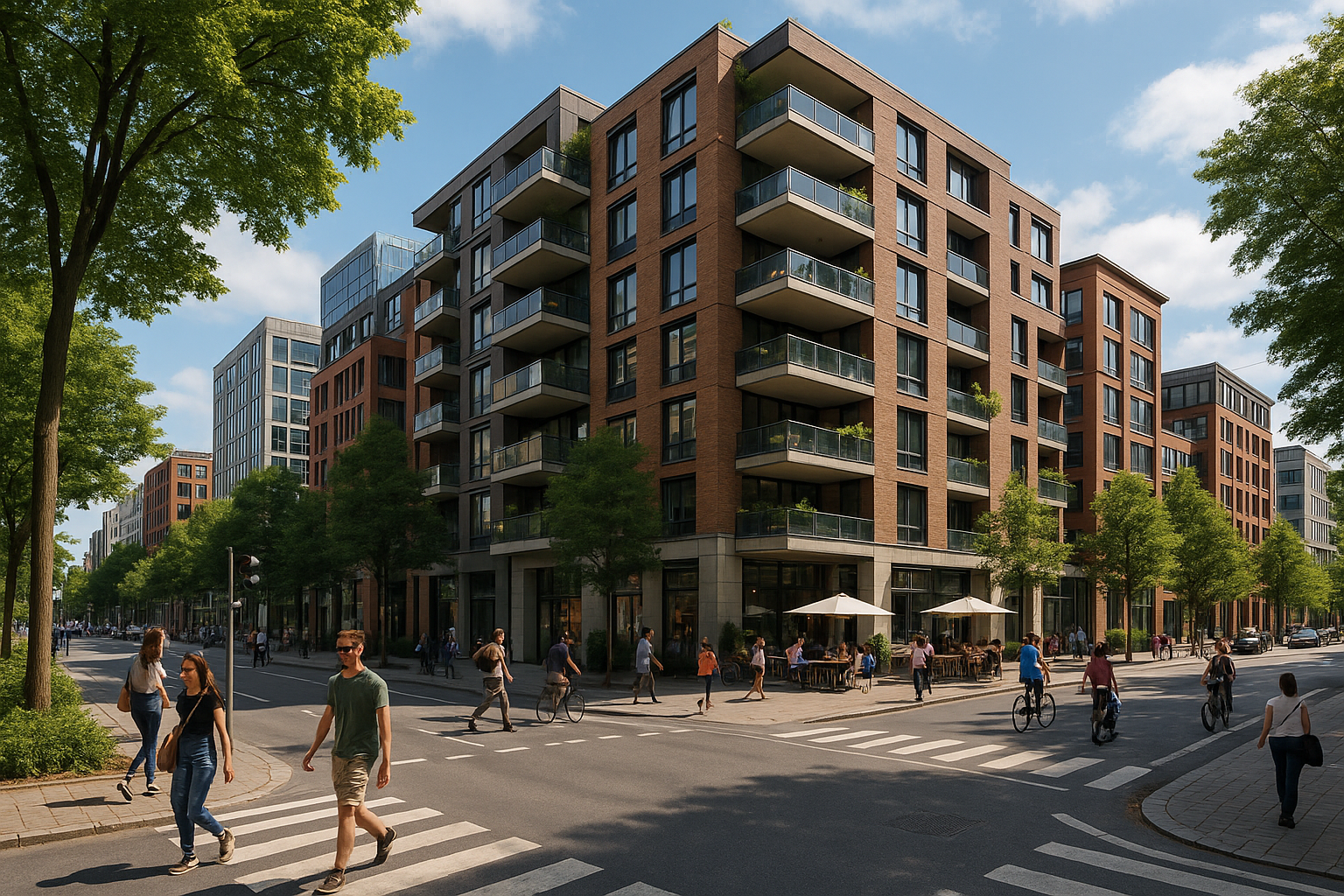
Cities around the world are reimagining urban spaces through mixed-use development and walkability, creating vibrant communities that prioritize people over cars. 🏙️

The transformation of urban landscapes has become one of the most significant movements in contemporary city planning. As populations continue to migrate toward metropolitan areas, the need for sustainable, livable, and economically vibrant cities has never been more pressing. Mixed-use developments and walkable neighborhoods represent a fundamental shift from the car-centric sprawl that dominated twentieth-century planning, offering instead a vision of urban life that is simultaneously more human-scaled and environmentally responsible.
This urban renaissance isn’t merely about aesthetics or following architectural trends. It’s a comprehensive response to some of the most challenging problems facing modern society: climate change, social isolation, public health crises, housing affordability, and economic inequality. By integrating residential, commercial, and recreational spaces into cohesive neighborhoods, cities are rediscovering principles that made historic urban centers thriving hubs of human activity for centuries.
🌆 Understanding Mixed-Use Development: More Than Just Buildings
Mixed-use development refers to urban planning that blends residential, commercial, cultural, institutional, and entertainment functions within a single building or neighborhood. Rather than segregating these activities into separate zones requiring automobile travel between them, mixed-use design creates integrated environments where people can live, work, shop, and play within comfortable walking distance.
This approach stands in stark contrast to single-use zoning that characterized much of twentieth-century urban planning, particularly in North America. The traditional suburban model separated homes from workplaces, shopping centers from schools, and entertainment from daily life, creating car dependency and contributing to traffic congestion, air pollution, and social fragmentation.
Modern mixed-use developments come in various forms. Vertical mixed-use buildings might feature retail on ground floors, offices on middle levels, and residential apartments above. Horizontal mixed-use neighborhoods integrate different building types within walkable blocks. Some developments focus on live-work arrangements, while others emphasize entertainment and cultural amenities alongside housing.
The Economic Logic Behind Integration
The financial benefits of mixed-use development extend to multiple stakeholders. Property developers often achieve higher returns per square foot by diversifying tenant types and creating environments that command premium prices. Retail businesses benefit from built-in foot traffic from residents and office workers. Homeowners and renters enjoy convenience and access to amenities without traveling long distances.
Cities themselves see increased tax revenues from higher property values and more efficient infrastructure use. Services like public transit, utilities, and emergency response become more cost-effective when serving denser, mixed-use areas rather than sprawling single-use zones. The economic vitality created by these developments also generates employment opportunities and attracts investment.
🚶 The Walkability Revolution: Reclaiming Streets for People
Walkability has emerged as a crucial metric for urban quality of life. A walkable neighborhood allows residents to accomplish most daily tasks on foot, with safe, pleasant pedestrian infrastructure connecting homes to destinations. This simple concept has profound implications for health, environment, social cohesion, and economic vitality.
Several key elements define truly walkable communities. Wide, well-maintained sidewalks provide safe passage separated from vehicle traffic. Frequent pedestrian crossings with proper signals allow people to navigate easily. Street-level retail and services create interesting streetscapes that encourage walking rather than monotonous residential or commercial facades.
Urban design details matter significantly for walkability. Street trees provide shade and psychological comfort. Adequate lighting ensures safety after dark. Benches and public seating allow rest and social interaction. Building facades with windows and entrances oriented toward the street create “eyes on the street” that enhance security and social vitality.
Measuring What Makes Communities Walkable
Urban planners use various tools to assess and quantify walkability. Walk Score, a widely recognized metric, rates locations based on proximity to amenities, pedestrian friendliness, and population density. Neighborhoods scoring 90-100 are considered “Walker’s Paradise” where daily errands don’t require a car, while scores below 50 indicate car-dependent areas.
Other assessment frameworks consider additional factors: street connectivity (more intersections and route options increase walkability), block length (shorter blocks with more corners create pedestrian-friendly environments), and pedestrian safety statistics. Some systems incorporate subjective measures like aesthetic appeal, cleanliness, and sense of security that influence whether people actually choose to walk.
🌱 Environmental Benefits: Building Sustainable Urban Futures
The environmental case for mixed-use, walkable development is compelling. Transportation accounts for a significant portion of greenhouse gas emissions globally, with personal vehicles representing a major contributor. By reducing vehicle miles traveled through proximity and walkability, these developments directly address climate change.
Dense, mixed-use neighborhoods use land more efficiently, preserving green space and agricultural land outside urban boundaries. They reduce the infrastructure footprint needed for roads, parking, utilities, and services. This efficiency translates to lower per-capita energy consumption for heating, cooling, and transportation compared to suburban sprawl.
Water management improves in walkable cities. Less pavement and parking means more permeable surfaces, reducing stormwater runoff and urban flooding. Many mixed-use developments incorporate green infrastructure like rain gardens, green roofs, and bioswales that naturally manage water while providing environmental and aesthetic benefits.
The Urban Heat Island Effect and Green Solutions
Walkable, well-designed urban neighborhoods can mitigate the urban heat island effect, where cities become significantly warmer than surrounding rural areas due to heat-absorbing surfaces. Strategic tree planting along pedestrian routes provides cooling shade. Green spaces and parks integrated into mixed-use developments help regulate temperature and improve air quality.
Building design in these neighborhoods increasingly incorporates sustainable features: passive solar orientation, high-efficiency systems, green roofs, and local renewable energy generation. When combined with reduced transportation emissions, these developments can achieve dramatically lower carbon footprints than conventional suburban alternatives.
💪 Health and Social Dividends of Walkable Communities
Public health researchers have documented numerous benefits associated with walkable neighborhoods. The most obvious is increased physical activity. Residents of walkable communities walk more for transportation, accumulating health-promoting exercise as part of daily routines rather than requiring dedicated gym time or exercise programs.
This incidental physical activity contributes to lower rates of obesity, cardiovascular disease, diabetes, and other chronic conditions associated with sedentary lifestyles. Mental health benefits also emerge from walkable environments: reduced stress from avoiding traffic, increased social interaction, connection with nature through street trees and parks, and the psychological benefits of physical activity.
Air quality improvements in less car-dependent neighborhoods provide respiratory health benefits, particularly important for children, elderly residents, and those with asthma or other respiratory conditions. Reduced traffic also means fewer accidents and injuries, making streets safer for all users, especially vulnerable pedestrians and cyclists.
Social Capital and Community Connection
Beyond physical health, walkable mixed-use neighborhoods foster social capital—the networks, relationships, and trust that bind communities together. When people walk through their neighborhoods regularly, they encounter neighbors and local business owners, creating opportunities for casual social interaction that builds community bonds.
These “weak ties” between acquaintances may seem insignificant, but research shows they contribute substantially to well-being, civic engagement, and community resilience. Walkable neighborhoods with diverse uses bring together people of different ages, backgrounds, and socioeconomic status, promoting social mixing that segregated suburban environments discourage.
🏗️ Design Principles: Creating Places That Work
Successful mixed-use, walkable developments don’t happen by accident. They require thoughtful application of urban design principles that have been refined through both traditional city-building practices and contemporary research.
- Human Scale: Buildings and spaces sized appropriately for pedestrian perception and comfort, typically 3-6 stories in walkable areas
- Active Ground Floors: Retail, restaurants, and services at street level creating visual interest and activity
- Connected Street Networks: Grid or modified grid patterns providing multiple routes and shorter blocks
- Transit Integration: Proximity to public transportation expanding accessibility beyond walking distance
- Public Space Quality: Plazas, parks, and gathering spaces designed as amenities rather than leftover areas
- Parking Management: Structured or hidden parking that doesn’t dominate streetscapes or create dead zones
- Architectural Diversity: Varied building styles, materials, and scales creating visual richness
The transition zone between buildings and streets deserves special attention. Successful designs create permeable edges with multiple entrances, windows providing visual connection, and features like stoops, patios, or landscaping that mediate between public and private realms.
Learning from Traditional Urbanism
Many principles of successful mixed-use development draw inspiration from historic urban neighborhoods built before automobile dominance. Traditional main streets, European city centers, and pre-war American neighborhoods demonstrate time-tested patterns that continue attracting residents and visitors today.
These precedents show that mixed-use walkability isn’t a radical experiment but a return to proven urbanism principles. What’s new is applying these principles with contemporary building technologies, sustainability standards, and accessibility requirements while adapting them to diverse cultural contexts and climatic conditions.
🌍 Global Examples: Cities Leading the Transformation
Around the world, cities are embracing mixed-use development and walkability with remarkable results. Copenhagen, Denmark, has systematically prioritized pedestrians and cyclists for decades, creating one of the world’s most livable cities. Its integrated neighborhoods combine housing, workplaces, and amenities with extensive pedestrian zones and cycling infrastructure.
Barcelona’s superblock model redesigns neighborhood streets to reduce through traffic, creating pedestrian-priority zones within traditional urban fabric. This intervention improves air quality, reduces noise, and reclaims street space for community use without requiring wholesale redevelopment.
Portland, Oregon, pioneered mixed-use zoning in North America, particularly in its Pearl District transformation from industrial area to thriving mixed-use neighborhood. The city’s urban growth boundary, transit investment, and design guidelines have created numerous walkable districts that serve as models for other American cities.
Singapore demonstrates how vertical mixed-use development can create density with livability in land-constrained contexts. Its integrated developments combine housing, retail, offices, and transit connections in compact, efficiently designed complexes connected by extensive pedestrian networks.
Transformation Stories: From Parking Lots to Places
Many successful projects have transformed underutilized urban land into vibrant mixed-use neighborhoods. Former industrial areas, obsolete shopping malls, and surface parking lots are being reimagined as walkable districts. These transformations often catalyze broader neighborhood revitalization, demonstrating the potential for positive change even in car-oriented contexts.
⚖️ Addressing Challenges: Equity and Affordability
The success of mixed-use, walkable neighborhoods has created a significant challenge: gentrification and affordability. As these areas become desirable, property values and rents often increase, potentially displacing existing residents and businesses. This raises fundamental questions about who benefits from improved urbanism.
Progressive cities are implementing strategies to ensure mixed-use development promotes rather than undermines equity. Inclusionary zoning requires new developments to include affordable housing units. Community land trusts preserve affordability by removing land from speculative markets. Rent stabilization and tenant protections help existing residents remain in improving neighborhoods.
Some approaches focus on creating walkable, mixed-use affordability from the start. Reducing parking requirements lowers development costs. Streamlining approval processes for small-scale, incremental development allows more diverse developers to participate. Allowing accessory dwelling units and “missing middle” housing types increases options at moderate price points.
The Right to the Walkable City
Equity concerns extend beyond housing affordability. Historically marginalized communities often lack safe, walkable infrastructure despite potentially benefiting most from car-free transportation options. Investment in pedestrian infrastructure, parks, and mixed-use amenities in underserved neighborhoods addresses environmental justice while improving quality of life.
Community engagement in planning processes helps ensure developments serve existing residents rather than replacing them. When done thoughtfully, mixed-use development can provide economic opportunities for local entrepreneurs, preserve cultural character, and improve conditions without displacement.
🚀 The Path Forward: Policy and Practice
Realizing the potential of mixed-use, walkable urbanism requires coordinated action across multiple domains. Zoning reform is fundamental—eliminating or modifying single-use regulations that prohibit mixed-use development and reducing parking requirements that inflate costs and consume valuable land.
Transportation investment priorities must shift toward pedestrians, cyclists, and transit rather than primarily serving automobile traffic. Complete streets policies ensure new infrastructure accommodates all users safely. Transit-oriented development concentrates mixed-use density around stations, maximizing accessibility and ridership.
Financial and regulatory barriers often hinder mixed-use development even where allowed. Conventional lending practices may favor single-use projects with established formulas. Building codes written for single uses may complicate mixed-use designs. Addressing these systemic barriers requires education and advocacy with financial institutions, insurance companies, and regulatory agencies.
From Pilots to Mainstream Practice
As mixed-use, walkable development moves from innovative exception to standard practice, professional education must evolve. Architecture, planning, engineering, and real estate programs increasingly emphasize sustainable urbanism principles. Professional organizations are developing best practice guidelines and case study resources.
Public awareness and demand continue growing as people experience the benefits of walkable neighborhoods firsthand or through travel. This cultural shift creates political support for policy changes and market demand that makes projects financially viable.
✨ Envisioning Tomorrow’s Urban Landscape
The rise of mixed-use development and walkable cities represents more than a planning trend—it’s a fundamental reimagining of how we inhabit urban space. These approaches offer pathways to address climate change, improve public health, strengthen communities, and create economically vibrant cities that enhance rather than diminish quality of life.
The transformation won’t happen overnight or uniformly. Different cities face unique contexts, constraints, and opportunities. Some will retrofit existing suburbs with walkable town centers. Others will intensify already-urban areas with infill development. New growth areas can be designed as walkable, mixed-use communities from the start.
What unites these diverse approaches is a commitment to putting people at the center of urban planning. By creating neighborhoods where daily needs are accessible on foot, where streets serve as social spaces rather than just traffic conduits, and where diverse activities and people interact naturally, we build cities that are not just more sustainable but more fundamentally human.
The urban utopia of walkable, mixed-use cities isn’t a distant fantasy—it’s emerging today in neighborhoods around the world. Each pedestrian-friendly street, each mixed-use building, each reclaimed plaza contributes to a more vibrant and sustainable urban future. The question isn’t whether this transformation will continue, but how quickly we can accelerate it and how equitably we can ensure its benefits reach all communities. The path forward is clear: by designing cities for people rather than cars, we create not just better places to live, but better lives within them. 🌟