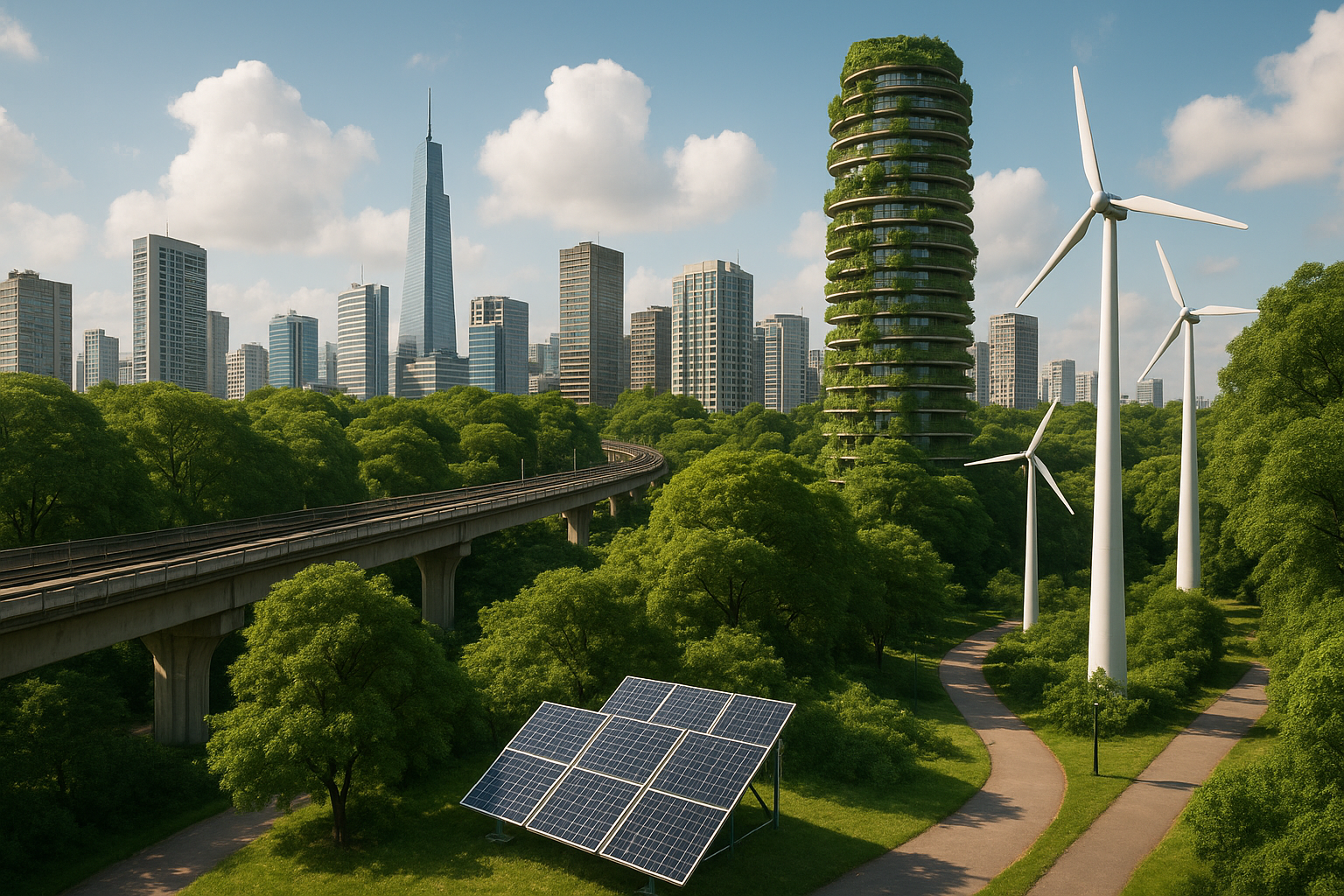
Cities around the world are transforming urban living through innovative sustainability practices, proving that environmental responsibility and modern development can coexist harmoniously.

🌍 The Urban Sustainability Revolution Reshaping Our Future
As climate change accelerates and urban populations swell, cities have become the frontline battleground for environmental sustainability. Today’s metropolitan areas consume over 75% of global energy and produce more than 70% of worldwide carbon emissions. However, a growing number of progressive cities are flipping this narrative, demonstrating that urban centers can be part of the solution rather than the problem.
The concept of sustainable cities extends far beyond recycling programs and green spaces. These urban environments integrate renewable energy infrastructure, circular economy principles, green transportation networks, sustainable architecture, and community engagement to create living ecosystems that minimize environmental impact while maximizing quality of life for residents.
From Scandinavian capitals pioneering carbon neutrality to Asian megacities revolutionizing public transportation, these green success stories offer blueprints for sustainable urban development that cities worldwide can adapt and implement. Their achievements prove that environmental stewardship doesn’t require sacrificing economic growth or urban convenience.
Copenhagen: The Carbon-Neutral Capital Leading by Example 🚴
Denmark’s capital has established itself as the gold standard for sustainable urban living, with ambitious plans to become the world’s first carbon-neutral capital by 2025. Copenhagen’s success stems from decades of consistent policy implementation and cultural commitment to environmental values.
The city’s transportation infrastructure prioritizes bicycles over cars, with over 385 kilometers of designated bike lanes serving more than 62% of residents who cycle to work or school daily. This cycling culture reduces carbon emissions while promoting public health and reducing traffic congestion.
Copenhagen’s district heating system represents another groundbreaking achievement. The network captures waste heat from electricity production and industrial processes, redistributing it to heat 98% of the city’s buildings. This innovative approach dramatically reduces energy waste while providing cost-effective heating solutions.
Green architecture dominates Copenhagen’s skyline, with buildings featuring living roofs, solar panels, and smart energy management systems. The city’s ambitious green roof initiative requires all new buildings with roof slopes under 30 degrees to incorporate vegetation, creating urban habitats for wildlife while improving insulation and stormwater management.
Key Sustainability Metrics in Copenhagen
- Carbon emissions reduced by 80% since 2005
- Over 50% of electricity generated from wind power
- 99% of organic waste converted to biogas and fertilizer
- Zero waste sent to landfills through advanced recycling systems
- Green spaces accessible within 15 minutes for all residents
Singapore: The Garden City Perfecting Vertical Sustainability 🏙️
This Southeast Asian city-state has transformed from an industrial hub into a lush “Garden City,” demonstrating that dense urban development and nature can coexist beautifully. Singapore’s approach combines technological innovation with biophilic design principles to create a sustainable tropical metropolis.
The city’s iconic supertrees at Gardens by the Bay exemplify this vision—vertical gardens that collect rainwater, generate solar power, and function as ventilation ducts for conservatories. These structures symbolize Singapore’s commitment to integrating nature into urban infrastructure.
Singapore pioneered the concept of vertical greenery, mandating green plot ratios that require developments to replace greenery lost to construction with vertical gardens, rooftop parks, and sky terraces. This policy has resulted in over 170 hectares of rooftop gardens and vertical greenery throughout the city.
Water sustainability remains a priority for Singapore, which has transformed from water scarcity to self-sufficiency through NEWater recycling facilities that purify wastewater to potable standards, comprehensive rainwater harvesting systems, and desalination plants. The city now meets up to 30% of its water needs through recycled water.
Singapore’s Green Building Leadership
Over 95% of new buildings achieve green certification under the Building and Construction Authority’s Green Mark scheme. The Khoo Teck Puat Hospital exemplifies this commitment, featuring gardens on every level, natural ventilation systems, and integrated water features that reduce temperatures while supporting biodiversity.
Stockholm: Where Innovation Meets Environmental Excellence ♻️
Sweden’s capital combines Scandinavian design sensibilities with cutting-edge environmental technology, creating one of Europe’s greenest cities. Stockholm became the first European Green Capital in 2010, recognition for its comprehensive sustainability achievements.
The city’s waste management system has virtually eliminated landfill usage, with 99% of household waste recycled, composted, or converted to energy. Stockholm’s waste-to-energy plants provide heating and electricity for hundreds of thousands of homes while maintaining some of Europe’s strictest emission standards.
Stockholm’s Hammarby Sjöstad eco-district showcases integrated sustainable urban planning. This former industrial area was transformed into a residential neighborhood where buildings generate their own energy, organic waste fuels biogas plants, and stormwater gets purified through natural systems before returning to the lake.
Public transportation excellence defines Stockholm’s approach to mobility. The city’s extensive metro, bus, and commuter rail network runs primarily on renewable energy, with nearly 80% of residents using public transit, cycling, or walking for daily commutes. The congestion pricing system implemented in 2006 reduced traffic by 20% while funding transit improvements.
Portland: America’s Pioneering Green Urban Oasis 🌲
Portland, Oregon, has earned its reputation as America’s sustainability leader through grassroots environmental activism combined with progressive city planning. The city established the first sustainability office in any U.S. city and continues pushing boundaries in urban environmentalism.
Portland’s urban growth boundary protects surrounding natural areas from sprawl while encouraging dense, walkable neighborhoods. This policy has preserved over 24,000 acres of parks, forests, and natural areas within city limits, providing residents with exceptional access to nature.
The city’s commitment to alternative transportation is evident in its 385 miles of bikeways, comprehensive light rail system, and streetcar network. Over 7% of Portland residents commute by bicycle—the highest percentage of any major American city—supported by bike-friendly infrastructure and culture.
Green building practices permeate Portland’s development landscape. The city requires all new municipal buildings to achieve LEED Gold certification minimum, while offering incentives for private developers to exceed standard green building requirements. The result is a skyline dotted with energy-efficient structures that minimize environmental impact.
Portland’s Food System Sustainability
Urban agriculture thrives in Portland, with over 2,500 community garden plots, numerous urban farms, and policies supporting backyard chickens and beekeeping. The city’s food waste composting programs divert thousands of tons of organic material from landfills annually, creating nutrient-rich soil for local agriculture.
Freiburg: The Solar City Illuminating Sustainable Possibilities ☀️
This German city in the Black Forest region has transformed itself into a solar energy powerhouse while maintaining medieval charm. Freiburg’s commitment to renewable energy and sustainable living dates back to the 1970s anti-nuclear movement, creating a strong environmental culture.
The Vauban district represents one of the world’s most successful sustainable urban developments. This former military base became a car-reduced neighborhood where 70% of families don’t own vehicles, streets prioritize pedestrians and cyclists, and homes generate more energy than they consume through solar panels.
Solar technology defines Freiburg’s energy landscape. The city generates four times more solar power per capita than the German average, with solar panels adorning roofs throughout residential and commercial districts. The Freiburg Solar Architecture Academy trains architects and engineers in renewable energy integration.
Public transportation excellence connects Freiburg through an efficient tram and bus network running on renewable energy. The city’s compact design and pedestrian-friendly infrastructure mean most destinations remain within walking or cycling distance, reducing transportation emissions dramatically.
Vancouver: Aspiring Toward the Greenest City Vision 🍁
This Canadian coastal city has committed to becoming the greenest city in the world by 2020, an ambitious goal driving innovative sustainability initiatives. Vancouver’s natural setting between mountains and ocean inspires its environmental commitment while presenting unique sustainability challenges.
The city’s Greenest City Action Plan established measurable targets across ten goal areas, including carbon reduction, green buildings, zero waste, and access to nature. Vancouver has achieved remarkable progress, reducing greenhouse gas emissions by over 30% since 2007 despite population growth.
Green building leadership distinguishes Vancouver’s approach to development. The city pioneered stringent green building requirements, with all new buildings required to achieve significant energy and water efficiency improvements. The Vancouver Convention Centre features a six-acre living roof, the largest in Canada, demonstrating green infrastructure possibilities.
Urban food systems receive significant attention in Vancouver’s sustainability planning. The city has implemented an urban farming program, expanded community gardens, and encourages edible landscaping in public spaces. These initiatives enhance food security while reducing transportation emissions associated with food distribution.
Vancouver’s Zero Waste Strategy
The city diverts over 60% of waste from landfills through comprehensive recycling and composting programs. Vancouver banned plastic bags and foam takeout containers while implementing strict requirements for construction waste recycling. The goal is achieving zero waste by 2040.
Curitiba: The Brazilian City That Pioneered Modern Sustainable Urbanism 🚌
Long before sustainability became mainstream, Curitiba implemented groundbreaking urban planning innovations that continue inspiring cities worldwide. This southern Brazilian city of 1.9 million residents demonstrates that sustainable development doesn’t require vast wealth.
Curitiba’s Bus Rapid Transit (BRT) system revolutionized public transportation when introduced in the 1970s. The network’s distinctive tube stations enable quick boarding, while dedicated bus lanes ensure reliable service. This efficient, affordable system moves two million passengers daily, reducing car dependency and emissions.
Innovative waste management programs transformed Curitiba into one of the world’s most recycled cities. The “Green Exchange” program allows low-income residents to trade recyclables for fresh produce, addressing waste management and food security simultaneously. Over 70% of residents participate in recycling programs.
Green space creation prioritized flood prevention and recreation. Rather than expensive flood control infrastructure, Curitiba created parks in flood-prone areas, using natural drainage while providing residents with beautiful public spaces. The city now boasts 52 square meters of green space per capita, well above World Health Organization recommendations.
Reykjavik: Geothermal Power Driving Complete Sustainability ⚡
Iceland’s capital harnesses the country’s abundant geothermal resources to achieve nearly complete renewable energy independence. Reykjavik’s unique geological advantages provide lessons for other cities exploring renewable energy transitions.
Geothermal energy heats over 90% of buildings in Reykjavik, eliminating fossil fuel dependence for heating—historically the largest energy consumer in cold climates. Hot water piped from underground reservoirs provides abundant, affordable, clean heating for homes, businesses, and even sidewalks, melting snow without chemicals or fossil fuels.
Electricity generation relies entirely on renewable sources, primarily hydroelectric and geothermal power. This clean energy abundance enables Reykjavik to pursue hydrogen-powered public transportation and supports the city’s goal of becoming completely fossil fuel-free for electricity and heating by 2040.
Despite its small size, Reykjavik demonstrates that complete renewable energy transition is achievable. The city exports its expertise globally, helping other communities develop geothermal resources and implement sustainable energy systems.
🌱 Common Threads Among Green Success Stories
While each sustainable city employs unique approaches reflecting local geography, culture, and resources, several common strategies emerge from these success stories that other cities can adapt.
| Strategy | Key Elements | Impact |
|---|---|---|
| Integrated Planning | Long-term vision, cross-sector collaboration, measurable goals | Coordinated sustainability achievements |
| Green Transportation | Public transit investment, cycling infrastructure, pedestrian zones | Reduced emissions, improved health |
| Renewable Energy | Solar, wind, geothermal, waste-to-energy systems | Carbon reduction, energy independence |
| Nature Integration | Parks, green roofs, urban forests, biodiversity | Climate resilience, quality of life |
| Circular Economy | Waste reduction, recycling, resource recovery | Resource efficiency, economic benefits |
The Role of Policy and Community Engagement
Successful green cities combine strong policy frameworks with genuine community participation. Top-down regulations establish standards and requirements, while bottom-up engagement ensures programs reflect resident needs and values. This dual approach creates sustainable momentum that survives political changes.
Education and awareness campaigns help residents understand sustainability benefits and their role in achieving environmental goals. When citizens embrace green practices in daily life, cities achieve far greater impact than regulations alone could produce.
Scaling Green Solutions for Global Impact 🌐
These pioneer cities prove sustainable urban living is possible, practical, and beneficial. However, translating these successes to cities worldwide requires adapting solutions to diverse contexts, climates, cultures, and economic circumstances.
Technology transfer and knowledge sharing accelerate global sustainability progress. International networks like C40 Cities, ICLEI, and the Global Covenant of Mayors connect urban leaders, facilitating the exchange of best practices and collaborative problem-solving across borders.
Financial mechanisms increasingly support urban sustainability transitions. Green bonds, climate funds, and multilateral development banks provide capital for renewable energy infrastructure, public transportation, and climate adaptation projects in cities that lack local resources for major investments.
The COVID-19 pandemic paradoxically accelerated some sustainability trends as cities reclaimed street space for pedestrians and cyclists, demonstrated remote work viability, and recognized the health benefits of accessible green spaces. Forward-thinking cities are making temporary changes permanent, building more resilient, livable communities.
Tomorrow’s Green Cities Start With Today’s Choices 💚
The green success stories profiled here demonstrate that sustainable cities aren’t utopian fantasies but practical realities being built today. These pioneers show that environmental responsibility enhances rather than compromises urban quality of life, creating healthier, more prosperous, and resilient communities.
Every city’s sustainability journey is unique, shaped by local geography, resources, culture, and priorities. However, the fundamental principles—prioritizing renewable energy, sustainable transportation, green infrastructure, circular economies, and community engagement—apply universally and can be adapted to virtually any context.
As urbanization continues and climate challenges intensify, the lessons from these green leaders become increasingly valuable. Their innovations provide roadmaps for cities worldwide seeking to balance development with environmental stewardship, proving that sustainable urban living isn’t just necessary—it’s achievable, beneficial, and ultimately the only viable path forward for our rapidly urbanizing planet.
The transition to sustainable cities requires vision, commitment, investment, and time. But as these success stories demonstrate, the rewards—cleaner air, healthier populations, reduced emissions, enhanced biodiversity, and improved quality of life—make the effort worthwhile. The question isn’t whether cities can become sustainable, but rather how quickly they can implement the solutions already proven effective by green leaders around the world.